
Lieferung heute & morgen

Qualitätsgarantie

Willkommens-Angebote freischalten: KOSTENLOSE Lieferung | Bis zu 80 % RABATT | Kostenlose 30-Tage-JoyPlus-Testphase
App herunterladen
A versatile and durable oven-safe glass food container is a smart addition to any kitchen. It not only simplifies food storage but also supports a conscious lifestyle focused on sustainability and functionality. Unlike plastic containers, glass won't stain, retain odours, or leach unwanted substances into your food. This guide will help you understand the features and differences between various models to make an informed purchasing decision.
The selection of glass containers is vast. To find the perfect solution for your needs, consider these key criteria.
Not all glass is suitable for oven use. For an oven-safe glass food container, borosilicate glass is the material of choice. Compared to standard soda-lime glass, it boasts significantly higher thermal shock resistance. This means it can withstand extreme temperature changes without cracking. A borosilicate glass container can therefore often go directly from the freezer to a preheated oven (without the lid). Furthermore, the material is robust, scratch-resistant, and non-porous, making it exceptionally hygienic and easy to clean.
The lid is a crucial factor in keeping your food fresh. Look for glass containers with airtight lids. Systems with four-sided locking clips and a wrap-around silicone seal have proven to be particularly reliable. They prevent liquids from leaking and protect the contents from loss of flavour and freezer burn.
The lid material is also important. Common materials include polypropylene (PP) or Tritan. Both are typically BPA-free. Tritan is known for being especially shatter-proof and stain-resistant. It's important to check the manufacturer's specifications regarding the lid's heat resistance—it is almost never suitable for the oven, but often for the microwave.
Whether you need a glass meal prep container for the work week, a glass lunch box for on-the-go, or a casserole dish with a lid for dinner, the right shape and size are key.
Also, pay attention to stackability. Models with a specially designed lid rim can be organised securely and in a space-saving manner in your cupboard or fridge.
Based on the criteria mentioned, we have curated a selection of versatile glass containers that stand out for their material quality and functionality.
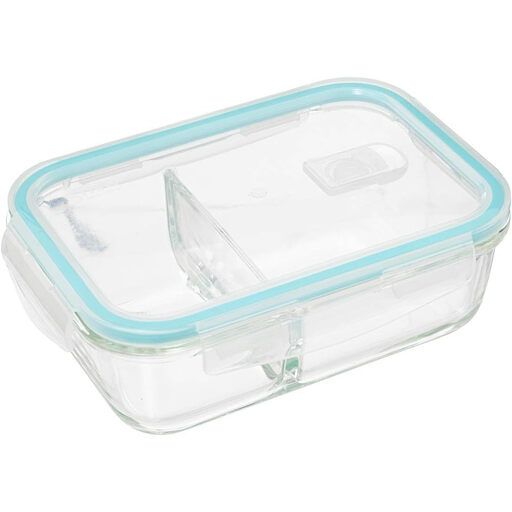
Why this container stands out: This model from 5five combines a generous volume with a practical divider. The two compartments allow you to store and transport a main course and a side dish, or different snacks, separately without flavours mixing.
Advantages:
Who is this product for? Ideal for professionals and students who meal prep and want to take their lunch to work or class in an organised way. The dividers keep components fresh and appealing until it's time to eat.
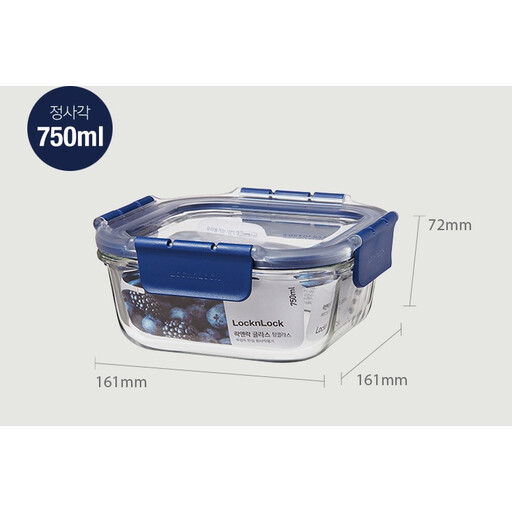
Why this container stands out: This square container from Lock&Lock's "Top Glass" series is a compact all-rounder. The body, made of heat-resistant glass, is designed for temperatures up to 400°C, while the transparent Tritan lid provides a clear view of the contents.
Advantages:
Who is this product for? Perfect for individuals or smaller households. The 750 ml size is ideal for storing leftovers, a medium-sized portion of soup, or as a glass lunch box for the office.
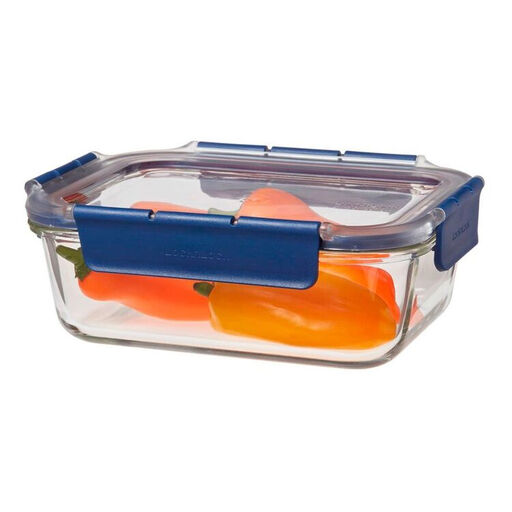
Why this container stands out: This rectangular 1-litre model from Lock&Lock is a classic for versatile use. It functions as a casserole dish with a lid (for storage), a generous glass meal prep container, and a reliable storage jar. The raised lid rim allows for exceptionally stable stacking of multiple containers.
Advantages:
Who is this product for? A universal helper for families and anyone who enjoys batch cooking. Its size and shape make it ideal for lasagne, gratins, or larger quantities of leftovers that can go straight from the oven to the table and then into the fridge.
The models presented here cover common use cases. However, you might be looking for a different size, a round shape, or a complete set of various containers. To find the solution that perfectly matches your needs, it's worth exploring the wider range.
? Discover more glass food storage containers here
No, as a rule, the lids are not suitable for the oven. They are usually made of plastic (polypropylene or Tritan) and would melt or warp at high temperatures. The glass container itself is oven-safe, but the lid should always be removed before heating in the oven. Always follow the specific manufacturer's instructions.
The main difference lies in the chemical composition and the resulting physical properties. Borosilicate glass contains boron trioxide, which gives it very high resistance to thermal shock. It expands less when heated than normal soda-lime glass, making it less susceptible to sudden temperature changes. This makes it the ideal material for glass food containers that go from the fridge to the oven.
Most oven-safe glass containers and their lids are dishwasher-safe, which makes cleaning very easy. For stubborn, baked-on residue, the container can be soaked in warm, soapy water. A paste made of baking soda and water can also help loosen encrustations. On many models, the silicone seal in the lid can be removed for separate, thorough cleaning.