
Lieferung heute & morgen

Qualitätsgarantie

Willkommens-Angebote freischalten: KOSTENLOSE Lieferung | Bis zu 80 % RABATT | Kostenlose 30-Tage-JoyPlus-Testphase
App herunterladen
A versatile, oven-safe glass food container is a cornerstone of the modern, health-conscious kitchen. It serves not just as a simple storage container, but also as a baking dish, meal-prep container, and microwave-safe dish. However, the market is flooded with products whose marketing promises often fail to deliver in practice. Many consumers invest in containers that crack after a short time, have lids that warp, or turn out to be unsuitable for the oven.
As your Joybuy Product Recommendation Officer, I'm here to help you identify these pitfalls. Instead of falling for marketing hype, we will focus on the verifiable features that distinguish a great container from a useless one.
Before we get to the solutions, let's identify the three most common problems that lead to frustration and wasted money:
To make an informed decision, you only need to pay attention to a few crucial technical specifications.
The most important factor for an oven-safe glass container is the material. Here, there is a clear technical standard: borosilicate glass. Unlike conventional soda-lime glass, which is used in many cheaper products, a borosilicate glass container is distinguished by its extremely high resistance to temperature and thermal shock.
Making a food container airtight and leak-proof is the lid's job. Look for a system with a four-sided locking mechanism and a surrounding silicone gasket. This gasket should ideally be removable to allow for hygienic cleaning and prevent mould growth. Such a seal guarantees that your glass meal prep container will stay sealed on your commute and keep aromas locked inside.
Instead of making a one-size-fits-all recommendation, we have identified products tailored to specific user profiles.
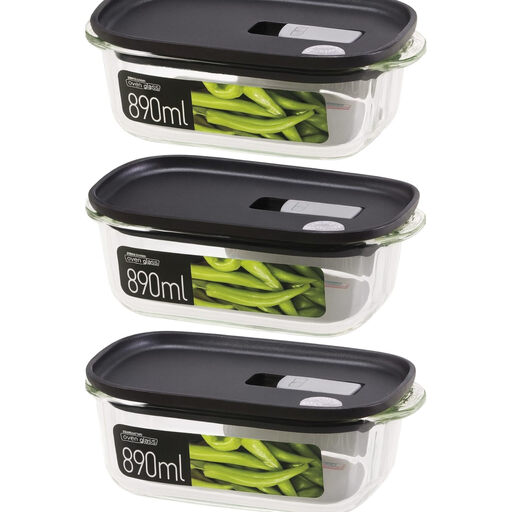
Why This Fits Their Persona: This set is ideal for those who prepare meals for several days at a time. The three identical 890 ml containers allow for efficient organisation and are perfect for portioning main courses.
The containers are explicitly oven, microwave, and freezer safe. According to the manufacturer, the lids are BPA-free and feature a steam vent, which bypasses the common weak point of many lids when heating in the microwave.
A practical 3-piece set for systematic batch cooking. The steam vent in the lid allows for convenient reheating in the microwave without having to remove the lid.
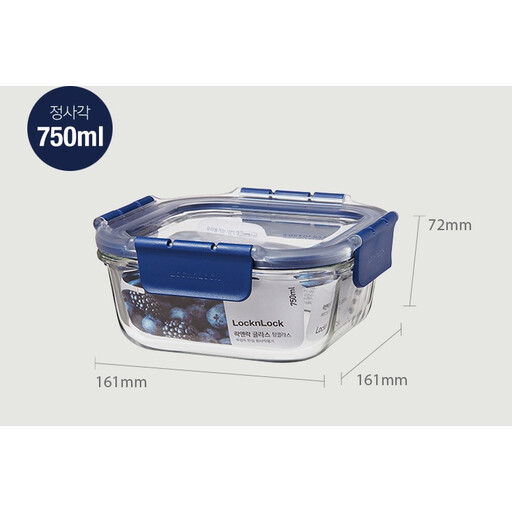
Why This Fits Their Persona: For home cooks looking for a single, extremely versatile container for everything—from baking and freezing to use in an air fryer. The 750 ml glass container with lid is an ideal universal size.
This container is made of heat-resistant borosilicate glass and is oven-safe up to 400°C (without the lid), according to the manufacturer. Its explicit suitability for air fryers eliminates any ambiguity about heat resistance.
Extreme heat resistance up to 400°C and suitability for air fryers. The four-sided locking system with a silicone gasket ensures a completely airtight and leak-proof seal.
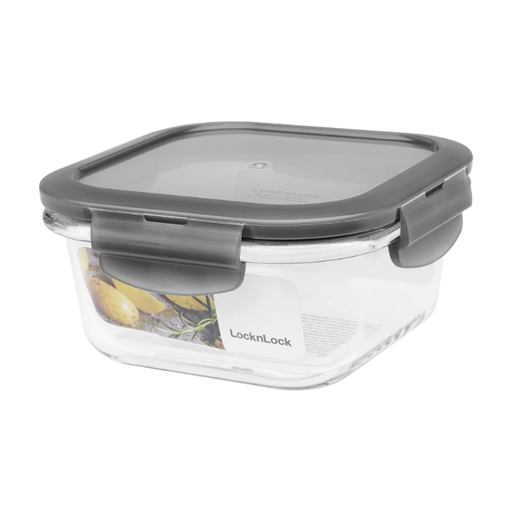
Why This Fits Their Persona: The compact 500 ml size is perfect for storing leftovers, individual lunches, or side dishes. As a square glass storage container, it's space-saving and ideal for smaller fridges and kitchen cupboards.
Even at this smaller size, the container uses high-quality borosilicate glass that is oven-safe up to 400°C. The lid is BPA-free according to the manufacturer, and the locking mechanism provides a reliably tight seal.
Compact and space-saving design with full functionality (oven, microwave, freezer safe). The 100% airtight and watertight seal reliably protects the contents.
The main difference lies in the chemical composition. Borosilicate glass contains boron trioxide, which gives it a lower coefficient of thermal expansion. Simply put: it is significantly more resistant to sudden temperature changes (thermal shock) and higher temperatures than conventional soda-lime glass. This makes it the safer material choice for oven use.
No, as a general rule, they cannot. The plastic lids, even if they are BPA-free, are not designed for the high temperatures of an oven. They would melt or warp. The "oven-safe" claim always refers only to the glass container itself. Many lids are suitable for the microwave, often with an open vent. Always read the manufacturer's instructions for this.
The glass container itself is usually dishwasher-safe and very easy to care for. For a particularly thorough cleaning of the lid, it is advisable to remove the silicone gasket (if it's removable) and clean all parts separately. This prevents moisture build-up and the formation of mould under the gasket. Allow all parts to dry completely before reassembling and storing the container.