
Lieferung heute & morgen

Qualitätsgarantie

Willkommens-Angebote freischalten: KOSTENLOSE Lieferung | Bis zu 80 % RABATT | Kostenlose 30-Tage-JoyPlus-Testphase
App herunterladen
If you are looking to buy ovens and baking dishes for the kitchen, you should consider more than just colour, design or the longest possible list of features. The key factors are suitable dimensions, clear material specifications, safe temperature ranges and a level of cleaning effort that fits your daily routine. This applies just as much to a ceramic baking dish as to a freestanding cooker with an electric oven.
A baking dish with a large capacity is not automatically suitable for every kitchen. High sides can make it harder to place the dish in the oven, while a dish that is too shallow may overflow when used for bakes or gratins. With a 72-litre oven, you should also check whether the internal dimensions are compatible with your existing trays, racks and dishes.
For baking dishes, it is therefore important to consider the external dimensions, internal dimensions, height and capacity together. A rectangular oven dish with a capacity of 4.5 litres, for example, is suitable for larger portions but needs enough space in both the cupboard and the oven.
A general statement about heat resistance is only of limited use when comparing products. Look for a specific temperature range and check whether the dish is approved for use in the oven, under the grill, in the microwave and in the freezer. These types of suitability are not automatically interchangeable.
With ceramic, you should also avoid thermal shock. Placing a dish straight from the freezer into an oven that is already very hot can cause cracks. Direct contact with a hob or naked flame is also not intended for the ceramic dishes mentioned here.
A glazed surface can make cleaning easier, but it does not replace the manufacturer’s care instructions. Baked-on residue, damaged glazing or significant temperature changes can shorten the product’s lifespan. An oven with steam cleaning loosens dirt, but it generally still needs to be removed manually afterwards.
A ceramic baking dish with a glazed surface is suitable for many dishes, including gratins, bakes and desserts. Clear information about temperature resistance is important, as are details on suitability for use in the microwave, freezer and dishwasher. With ramekins, the glaze should ideally be even throughout. Pay particular attention to the edges and handles, as these are areas where chips can occur.
The product details for the dishes featured here specify ceramic materials and suitability for direct contact with food. Nevertheless, you should check dishes for cracks, chips and visible damage before every use.
For everyday household use, several sizes are often more practical than one very large dish:
A baking dish set with graduated sizes can make better use of storage space if the dishes are stackable. Handles make it easier to carry dishes from the oven to the table, but they increase the external dimensions.
If you are looking for a freestanding cooker, you should clarify the connection, ventilation, available space and installation requirements in addition to the width. An electric cooker with a ceramic hob requires suitable cookware with a flat base. The hob must not be used if the glass surface is damaged.
The Beko models mentioned specify energy efficiency class A, a 72-litre oven cavity, a width of 60 cm, four ceramic cooking zones and eight heating functions. The stated consumption for the FBM67320WS is 0.99 kWh with conventional heating and 0.81 kWh with fan-assisted cooking. These figures are useful for comparison; actual consumption depends, among other things, on the temperature, programme, preheating and length of use.
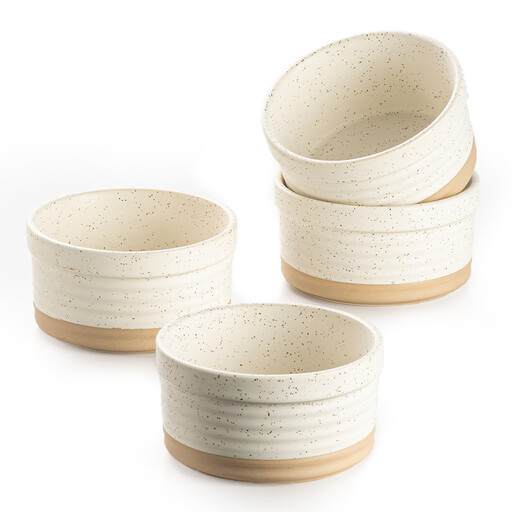
Why this product suits the profile: Four small ceramic dishes, each holding 8 fl oz or around 240 ml, are ideal for typical individual portions and take up very little storage space.
The specifications state the exact capacity and confirm suitability for the oven, freezer and dishwasher. Extreme temperature changes should still be avoided.
Set of four, glazed ceramic, 8 fl oz capacity and stated dishwasher suitability.
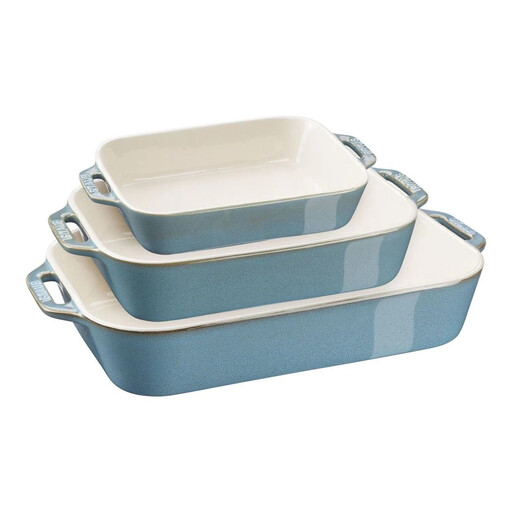
Why this product suits the profile: With capacities of 1.1, 2.4 and 4.5 litres, the set covers a range of portion sizes and is suitable for the oven, grill, microwave and freezer.
Specific dimensions from 20 × 16 to 34 × 24 cm and information on temperature resistance make it easier to match the dish to the recipe and oven cavity.
Three graduated sizes, stackable design, ergonomic handles and glazed ceramic.
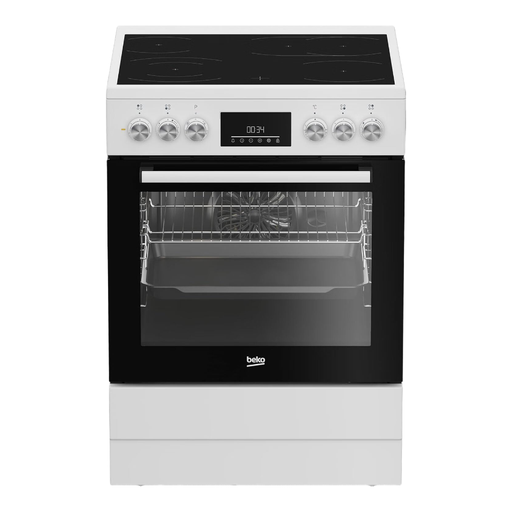
Why this product suits the profile: This freestanding electric cooker combines a 72-litre oven cavity with a four-zone ceramic hob and eight heating functions for regular cooking and baking.
The specifications provide precise dimensions, functions and consumption figures. SteamShine steam cleaning loosens residue, but does not replace wiping the oven clean afterwards.
72-litre oven cavity, eight heating modes, four ceramic cooking zones, removable door and pull-out storage drawer.
We have put together a complete, regularly updated list of products that fully meet these strict selection criteria and the safety regulations applicable in the EU.
This depends on the recipe and the size of your household. Around 1 to 1.5 litres is often enough for side dishes or small bakes. For several people, 2 to 4.5 litres is more practical. Before buying, compare the internal dimensions of your oven with the available space in your kitchen cupboard.
Ramekins with a capacity of around 240 ml are commonly used for individual portions such as crème brûlée, pudding, dips or soufflés. However, the manufacturer’s specific information about oven, microwave and freezer suitability, as well as the temperature range, is decisive. A bain-marie may be useful depending on the recipe, but it should be used in accordance with the relevant instructions.
An oven with steam cleaning can loosen residue with water vapour, making subsequent manual cleaning easier. It normally does not replace a full clean and will not remove every type of dirt by itself. For frequent users, however, the function can still be practical when used regularly and in accordance with the operating instructions.