If you want to bake several tins or trays in one go and have a suitable space for a built-in appliance, a built-in oven with an explicitly stated multi-level function could be a good option. If you’re baking a smaller tin and are happy to bake batches one after another, a freestanding mini oven may suit you. What matters is the usable interior space, the right heating function and a safe place to position it – not just the oven’s capacity.
Which type of oven is right for you?
Baking several batches at once
If you want to bake prepared tins or trays together, check the usable space and the shelf levels specified for the model in question. Bosch says the HBA571BB4 features 3D hot air for up to three levels; Bauknecht makes the same claim for the BBARS85HU1I.
Baking without a built-in space
If a built-in appliance isn’t an option and you can bake smaller quantities one after another, the interior space and a suitable position are important for a freestanding oven. Rommelsbacher gives the BG 1805/E a usable interior area of 34 × 28 cm and refers to the safety clearances in the manual.
Occasional bakers who follow recipes
If you usually bake one tin at a time, choose the heating function and preheat the oven according to the specific recipe and the oven manual. A FOOBY flapjack recipe uses a tin around 30 cm long and an oven preheated to 160 °C; this isn’t a general recommendation for other recipes.
What to look for when buying
Built-in oven with multi-level function
A good fit if: You’ve prepared several tins or trays and have a suitable kitchen space and the necessary connections.
Consider: The space, accessories and installation all need to suit your kitchen. A larger oven cavity isn’t automatically the more economical choice for one small tin.
Freestanding mini oven
A good fit if: You don’t have a suitable space for a built-in appliance and a smaller tin baked in successive batches will do.
Consider: The usable area may mean you need to bake in more batches. The position and safety clearances depend on the instructions for the model in question.
| What matters to you |
What to check before buying |
Who should pay particular attention |
| Usable baking space |
Measure the outside of your tins and compare them with the usable interior space and the levels specified for the model. |
If you want to bake your prepared quantity in as few batches as possible, the usable area matters more than the capacity in litres. That’s why around 36 % of consumers put having enough space to bake everything together first. |
| Installation or positioning |
Check the dimensions of the space or appliance, along with the positioning instructions for the specific model. For example, Bosch gives a niche width of 560–568 mm and a niche depth of 550 mm for the HBA571BB4. |
If you don’t have a suitable built-in space, you need an appliance that can be positioned safely in the spot you’ve chosen. Around 29 % of consumers prioritise a suitable built-in space or position. |
| Heating function and recipe |
Check the heating functions of the specific model against your recipe and the instruction manual; only preheat as instructed. |
If you’re baking one tin to a particular recipe, choose a suitable heating function rather than buying for features you’ll rarely use. Around 21 % of consumers first consider whether the heating function, tin and recipe are a good match. |
| Energy and running costs |
For ovens with the relevant label, compare consumption per standard cycle using the same heating function. This isn’t a measurement of your own flapjack recipe. |
If you bake often, you’ll want to weigh up energy information and any extra effort over the course of use. Around 14 % of consumers put running costs first. |
Common buying mistakes
-
Assuming the capacity in litres tells you whether your tin will fit
The oven cavity’s capacity alone won’t tell you whether a particular tin will fit. Rommelsbacher gives the BG 1805/E a usable interior area of 34 × 28 cm and recommends using a slightly smaller tin.
Measure the outside of your tin and compare its dimensions with the usable interior area and the manufacturer’s guidance.
-
Assuming shelf levels mean you can bake everything at once
The number of shelf levels alone doesn’t prove that you can bake several tins of flapjacks at the same time. Bosch explicitly specifies 3D hot air for up to three levels on the HBA571BB4; this isn’t a baking test for every recipe.
Check how multi-level baking is described for the specific model and whether your tins are suitable for it.
-
Assuming the energy rating tells you how much your recipe will use
The stated consumption figures relate to standard cycles and specific heating functions, not to the actual energy use of a batch of flapjacks. Small portable ovens may fall outside the scope of EU oven energy labelling.
Only compare figures that use the same units and heating function, and take into account how many batches you’ll bake.
Brands and suitable oven ranges to consider
Bosch
For the built-in HBA571BB4, Bosch specifies a 71 l capacity and 3D hot air for up to three levels.
- The specified multi-level heating function could be useful if you’re baking several prepared tins.
- The dimensions of the built-in space, suitable tins and actual flapjack baking results all need to be assessed separately.
Bauknecht
Bauknecht specifies a 71 l capacity and use on up to three levels for the built-in BBARS85HU1I.
- The multi-level specification could be useful when baking several tins at once.
- This is the manufacturer’s claim and doesn’t prove any particular benefit for flapjacks; optional installation should also be factored in separately.
Rommelsbacher
According to Rommelsbacher, the freestanding BG 1805/E has a 42 l capacity, top and bottom heat, and fan-assisted cooking options.
- The separately stated usable interior area of 34 × 28 cm helps you check whether a particular tin will fit.
- The interior area limits the size of tin that will fit; refer to the instruction manual for safety clearances.
Severin
For the freestanding baking and toast oven TO 2068, Severin specifies a 20 l capacity and a fan function.
- A compact appliance could be suitable for a smaller tin.
- Capacity and shelf levels alone don’t tell you whether the baking area will fit your tin or whether you can bake several flapjack tins at once.
Siemens
Siemens specifies a 71 l capacity and 4D hot air for the built-in HR776G1B1.
- The specified heating function could be useful if you want to bake on several levels.
- Extra functions aren’t automatically necessary for a particular batch of flapjacks; the specifications don’t prove how it compares with mini ovens or provide a flapjack baking test.
Oven models at Joybuy
This selection includes built-in ovens, a freestanding mini oven and a freestanding cooker with an oven. Before choosing, check that the tin, available space and heating function you want are all right for your baking plans.
 No image available
Bosch HBA571BB4 Series 2 built-in oven
Could suit baking several tins at once, provided the built-in space and tins are suitable.
71 l; 3D hot air for up to three levels, according to Bosch.
View at Joybuy
 No image available
Comfee built-in oven, 60 cm, 70 l
Could suit you if a built-in appliance with several heating functions works with your recipe and kitchen.
3 kW; grill; AquaClean cleaning; LED display with timer.
View at Joybuy
 No image available
Woltu BF12sz mini oven, 32 l
Could be an option if you’re looking for a freestanding appliance, provided the tin fits in the oven and there’s a safe place to position it.
1.600 W; timer; temperature range 100 to 250 °C.
View at Joybuy
 No image available
Haier H6 ID23T3HTB built-in oven
Could suit you if a built-in appliance with several cooking functions works with your recipe and the available space.
78 l; 9 cooking functions.
View at Joybuy
 No image available
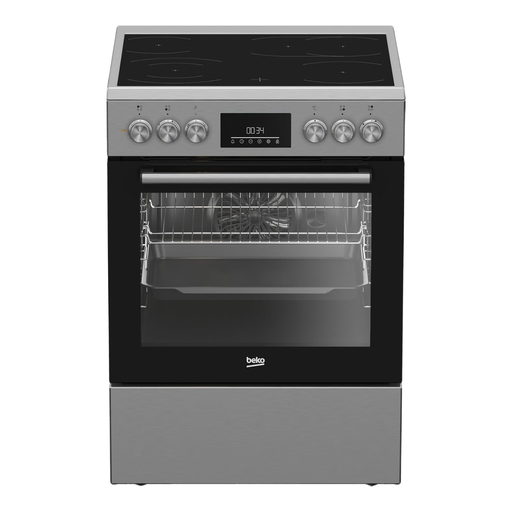
Beko FBM67320XS freestanding cooker with oven, 72 l
Could suit you if you’re looking for a freestanding cooker with an oven rather than a separate built-in appliance, and have a suitable space for it.
72 l; 8 heating functions.
View at Joybuy
Frequently asked questions
Is top and bottom heat enough for flapjacks?
Top and bottom heat can be enough for a suitable single tin if that’s what the recipe calls for. A FOOBY recipe uses a tin around 30 cm long and an oven preheated to 160 °C; other recipes may differ.
Do I always need to preheat the oven?
No, not as a rule: the European Commission recommends preheating when the recipe or cooking tables call for it. The FOOBY flapjack recipe specifically says to preheat the oven.
What should I look for when checking the tin size and oven cavity?
Compare the outside dimensions of your tin with the usable interior area of the specific oven. Rommelsbacher gives the BG 1805/E a usable interior area of 34 × 28 cm and recommends a slightly smaller tin; the capacity in litres alone won’t tell you whether your tin will fit.
How do I position a freestanding mini oven safely?
Follow the positioning instructions and safety clearances in the manual for the model in question. For the BG 1805/E, Rommelsbacher warns that the back of the casing gets very hot and refers to the clearances in the instruction manual.
Does every mini oven need an EU oven energy label?
No. The European Commission excludes small and portable ovens from the scope of the oven energy labelling described here. The absence of label figures doesn’t, by itself, prove that actual consumption is either low or high.


