
Lieferung heute & morgen

Qualitätsgarantie

Willkommens-Angebote freischalten: KOSTENLOSE Lieferung | Bis zu 80 % RABATT | Kostenlose 30-Tage-JoyPlus-Testphase
App herunterladen
A practical over-the-door kitchen bin can significantly streamline your cooking workflow and help keep your countertops tidy. However, not every model lives up to its promise. Many users get frustrated with unstable mounts, poorly closing lids, or materials that quickly absorb odours. As your Joybuy Product Recommendation Officer, I'll help you identify these common pitfalls and make an informed decision.
Before you decide on a model, you should be aware of the three most common design flaws that often lead to frustration in practice:
To avoid a bad purchase, focus on three objective features. These determine whether a small kitchen bin will truly be a help in your daily routine.
The most critical component is the mount. Before buying, check the maximum door thickness the product is designed for. A common standard is a door thickness up to 2.2 cm. High-quality models often offer an additional adhesive mount, allowing the bin to be fixed to a smooth wall or the inside of the cabinet door. This provides greater stability and flexibility. A cabinet door bin should sit firmly and not move when the door is opened and closed.
The bin's material is crucial for hygiene and durability. Look for products made from polypropylene (PP). This material is robust, shatterproof, food-safe, and, most importantly, smooth and non-porous. This prevents odours and discolouration from setting in, and cleaning is straightforward with water and mild detergent. Cheaper plastics tend to become brittle and absorb odours over time.
Consider what you will primarily use the bin for. For collecting organic waste while cooking, a volume of 8 to 10 litres is often sufficient, as it should be emptied daily anyway. A well-designed bin with a lid closes flush and can be easily opened with one hand. Some models feature a sliding or flip-top lid that stays open, making your work easier.
Here are some recommendations tailored to different user profiles and kitchen setups.
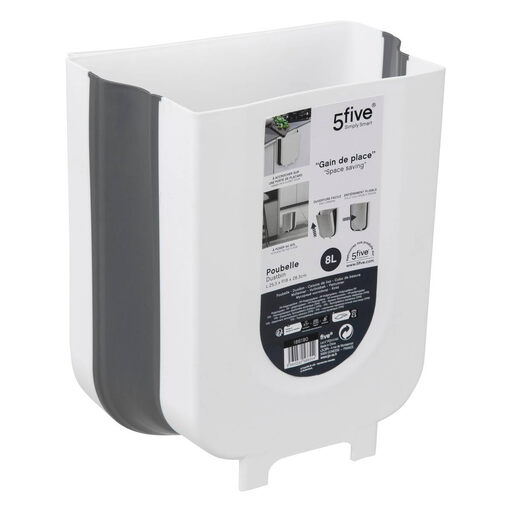
Why This Fits Their Persona: Ideal for users in small kitchens, campervans, or offices where every inch counts. The collapsible design allows the bin to lie flat against the door when not in use, maximising freedom of movement.
The sturdy polypropylene material is durable and easy to clean, avoiding the trap of odour-prone, low-quality plastics.
Collapsible design for maximum space-saving; Lightweight yet durable material.
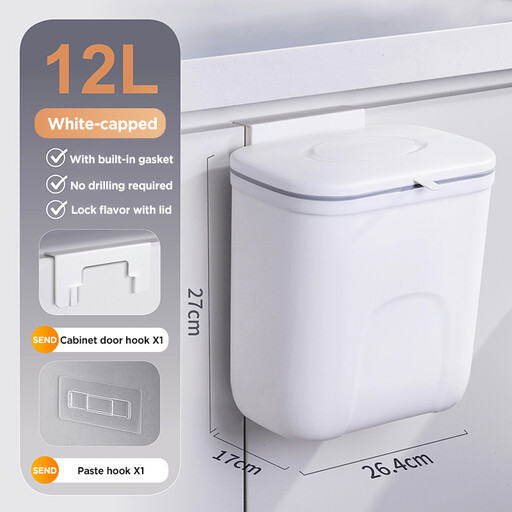
Why This Fits Their Persona: Perfect for anyone looking for a clean and odour-free solution for organic waste right at the countertop. The lid is the key feature here for maintaining a hygienic kitchen environment.
This model directly addresses the weakness of poor odour control with a snug-fitting lid. The dual mounting option (hook and adhesive pad) bypasses the problem of incompatible hooks.
Included lid for effective odour containment; Flexible mounting options (hanging or adhesive).
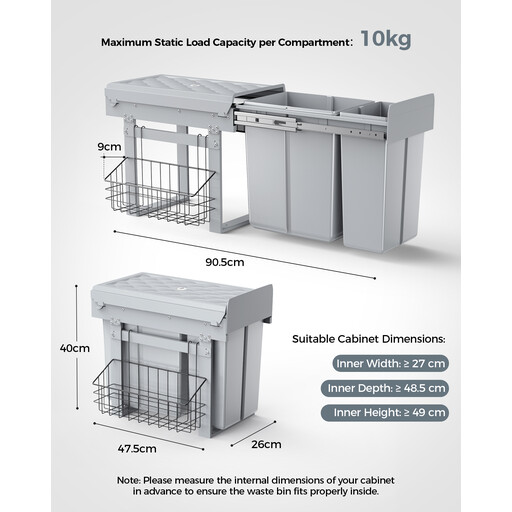
Why This Fits Their Persona: For homeowners and renters who prefer a permanent, hidden, and organised waste separation solution directly in the base cabinet. This is not a hanging model, but a full-fledged under-cabinet waste system.
As a permanently installed pull-out system, it completely bypasses the issue of unstable hooks. The full-extension runner ensures smooth and stable operation for years.
Permanently mounted in the base cabinet for maximum stability; Two containers (10 L + 20 L) for direct waste separation.
We have compiled a complete, up-to-date list of products that fully meet these strict selection criteria and quality standards.
Most models are designed for standard kitchen cabinet doors with a thickness of up to 2.2 cm. However, it is essential to check the exact specifications in the product description to ensure a perfect fit. Measure your door thickness before purchasing.
The most effective method is a combination of a model with a tight-fitting lid and daily emptying. Using compostable bin liners made from paper or cornstarch also helps to keep the container clean and minimise odours.
Yes, models made from high-quality polypropylene (PP) are non-porous and very easy to clean. Rinse the bin with warm water and a mild detergent. It's important to let it dry completely before folding it again to prevent moisture build-up.