
Lieferung heute & morgen

Qualitätsgarantie

Willkommens-Angebote freischalten: KOSTENLOSE Lieferung | Bis zu 80 % RABATT | Kostenlose 30-Tage-JoyPlus-Testphase
App herunterladen
Oyster sauce is a foundational ingredient in many Asian cuisines, particularly Cantonese. Its signature characteristic is a deep, savoury-sweet umami flavour that lends remarkable complexity and depth to dishes. This viscous, dark liquid serves as a base for marinades, a seasoning in stir-fries, or a dipping sauce. Today's market offers both traditional products based on oyster extract and innovative plant-based alternatives that aim for a similar flavour profile. Selecting the right product depends on specific culinary needs and personal dietary preferences.
The decision for an Asian seasoning sauce should be based on an analysis of its composition and sensory properties. The following criteria are relevant for making an informed choice.
The flavour profile of an oyster sauce is determined by the interplay of saltiness, sweetness, and umami. A look at the ingredient list reveals the origin of these flavour components.
The viscosity of the sauce is crucial for its use. A thicker sauce adheres better to ingredients, making it a great wok sauce for stir-fries or a glaze. A slightly thinner version can be more easily incorporated into marinades or dressings.
Based on an analysis of product specifications, we present two varieties from the Haday Oyster Sauce brand that cater to different needs.

This sauce is a modern interpretation and a vegetarian oyster sauce, built on a base of brewed soy sauce and a blend of four different mushroom varieties.
Why We Feature This Product: The recipe combines a traditional soy sauce base with a complex mushroom blend of king oyster, shiitake, matsutake, and black truffle. This composition creates a multi-layered umami flavour that gains exceptional depth from the earthy notes of the truffle. It effectively doubles as a truffle sauce.
Key Benefits:
Best For:
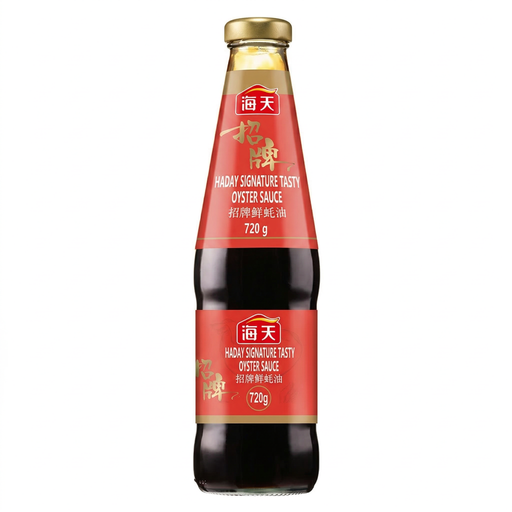
This product represents the traditional style of oyster sauce, made with a significant amount of oyster extract.
Why We Feature This Product: With a declared 11% oyster extract content, this sauce delivers a robust and authentic flavour experience characteristic of Cantonese cuisine. Its thick consistency ensures it coats ingredients well, giving dishes an appealing colour and a beautiful sheen.
Key Benefits:
Best For:
If the featured products do not exactly meet your requirements, or if you are looking for other varieties for specific dishes, you can find a broader selection of seasoning sauces and related products in our Oysters category.
1. What is the difference between oyster sauce and vegetarian oyster sauce? The fundamental difference lies in the main ingredient responsible for the umami flavour. Traditional oyster sauce is made from an extract of cooked oysters. Vegetarian oyster sauce, on the other hand, uses plant-based sources, typically extracts from mushrooms (like shiitake) and fermented soy products, to create a flavourfully similar but purely plant-based product.
2. How do you use oyster sauce in the kitchen? Oyster sauce is extremely versatile. It can be added as a finishing touch to stir-fries (especially in a wok) to add flavour and shine. It serves as a base for marinades for meat, poultry, or tofu, as a seasoning in soups and stews, or is mixed with other ingredients to create a dipping sauce. A well-known dish that relies heavily on oyster sauce is Cantonese beef with broccoli.
3. How long does opened oyster sauce last? Once opened, oyster sauce should always be stored in the refrigerator. The exact shelf life after opening can vary depending on the product and its composition. It is recommended to follow the manufacturer's instructions on the packaging. As a rule, it will maintain its quality for several months when stored correctly in the fridge.