
Lieferung heute & morgen

Qualitätsgarantie

Willkommens-Angebote freischalten: KOSTENLOSE Lieferung | Bis zu 80 % RABATT | Kostenlose 30-Tage-JoyPlus-Testphase
App herunterladen
The range of pacifiers is huge and can often be overwhelming for expecting or new parents. As a Joybuy Product Recommendation Officer, I'm here to help you distinguish essential features from superfluous ones and make an informed decision. In this guide, we'll highlight common pitfalls to avoid when buying a pacifier and show you which objective criteria really matter.
Many parents invest in products that later turn out to be impractical or unsuitable. Pay attention to these three points to make a conscious choice.
To make the right choice, focus on three key features that determine a pacifier's quality, safety, and suitability.
Most modern pacifiers are made of silicone or latex. A silicone pacifier is a popular choice for many parents.
Regardless of the material, the BPA-free (Bisphenol A-free) label is an indispensable standard for products that come into contact with the mouth.
An orthodontic pacifier is designed to support the natural development of the jaw, palate, and teeth. Look for the following features:
Pacifiers are offered in different sizes that are tailored to the child's age. Common classifications are:
Using the correct size is important, as a teat that is too small will not sit properly in the mouth, and one that is too large can put excessive strain on the jaw.
Here are some recommendations tailored to the specific needs of parents and babies.
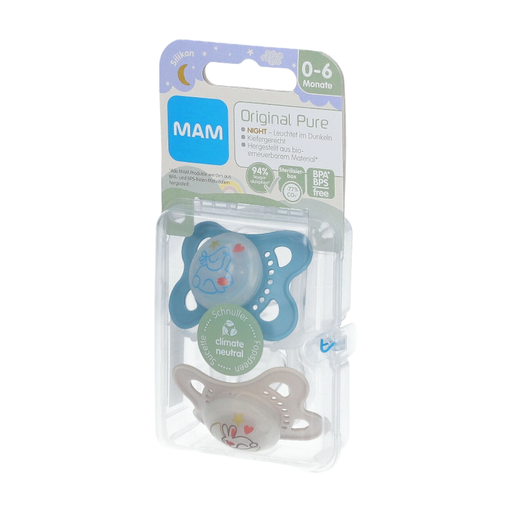
Why this model is a great fit: Ideal for parents who want to avoid searching for the pacifier at night. The design is tailored to the needs of newborns and babies up to 6 months.
This model solves the problem of impractical everyday details. The button's glow-in-the-dark effect makes the pacifier easy to find in the dark. Large air holes and nubs on the inside of the shield help prevent skin irritation.
The pacifier button glows in the dark. A sterilising and travel box for the microwave is included, which simplifies cleaning.
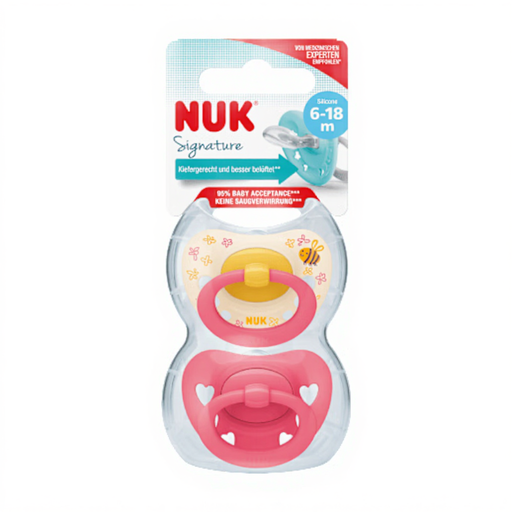
Why this model is a great fit: For parents who place special emphasis on the healthy development of teeth and jaw and are looking for a product specifically designed for this purpose.
This model avoids the "one-shape-fits-all" trap through its special design. The thin and narrow teat neck minimises pressure on the jaw and teeth, while the flat underside leaves enough room for the tongue.
According to the manufacturer, the shape is modelled on a mother's nipple during breastfeeding to support a natural sucking motion. The design aims to minimise the impact on tooth and jaw alignment.
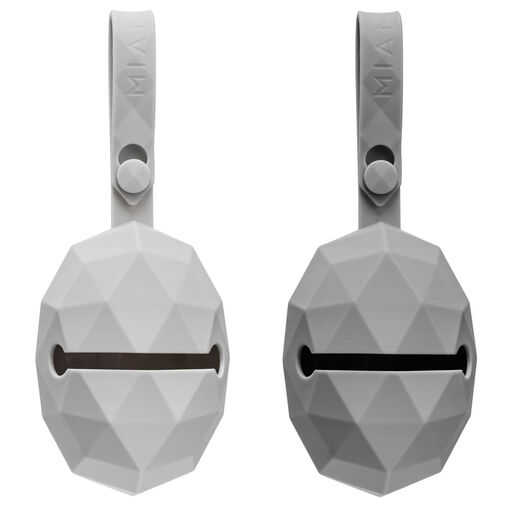
Why this accessory is a great fit: For all parents looking for a clean and practical solution for storing pacifiers on the go. A pacifier box is an indispensable accessory.
This product solves the problem of hygiene. Instead of carrying the pacifier loosely in a diaper bag, the box provides a protected space, preventing contamination from dirt and germs.
The box, made of food-grade silicone, is dishwasher-safe and can be easily attached to a stroller or bag with a practical loop. It holds up to three pacifiers.
We have compiled a complete, up-to-date list of products that fully meet these strict selection criteria and safety regulations.
1. How often should you replace a pacifier? For hygiene and safety reasons, it is recommended to replace a pacifier every one to two months. Before each use, check the teat for cracks, holes, or other signs of wear. The pacifier should be discarded immediately at the first sign of damage.
2. What exactly does 'orthodontic' mean for a pacifier? 'Orthodontic' means that the shape of the pacifier is designed so that it does not negatively affect the natural development of the jaw and teeth. This is typically achieved through an especially thin and narrow teat neck, as well as a teat shape adapted to the anatomy of the mouth, which leaves sufficient room for the tongue.
3. How do you clean and sterilise pacifiers correctly? Before first use, a pacifier should be sterilised in boiling water for five minutes. For daily cleaning, rinsing with warm water and mild soap is sufficient. For regular sterilisation, you can use steam sterilisers, boil them in water, or use special microwave sterilising boxes that often come with the pacifiers. Always follow the manufacturer's instructions.