
Lieferung heute & morgen

Qualitätsgarantie

Willkommens-Angebote freischalten: KOSTENLOSE Lieferung | Bis zu 80 % RABATT | Kostenlose 30-Tage-JoyPlus-Testphase
App herunterladen
As a Joybuy Product Recommendation Officer, I see the vast number of options available on the baby product market every day. When it comes to pacifiers, in particular, the selection can be overwhelming. Many parents focus on cute designs, but in doing so, they overlook crucial features that are vital for their child's health and comfort. This guide will help you distinguish the important features from the trivial ones and make an informed decision.
The most common pitfalls when buying a pacifier are:
To avoid making the wrong choice, you should focus on three core aspects. These parameters are the foundation for a good decision that goes beyond short-term trends.
An orthodontic pacifier is designed to minimise pressure on the jaw and teeth. Look for the following features:
Most modern pacifiers, like those from MAM or NUK, are based on these principles. The material of choice today is usually silicone. A silicone pacifier is taste-neutral, temperature-resistant, and more hygienic than latex, as its smooth surface offers less grip for bacteria.
The size specification is not just a recommendation. It is adapted to the developmental stages of a child's jaw. A 0-6 month pacifier is smaller and softer to avoid overwhelming a newborn's delicate palate. Models for older babies are more robust to withstand the first little teeth. Using the wrong size can reduce acceptance and, in the worst case, negatively affect tooth alignment.
Safety is the top priority. All pacifiers sold in the EU must comply with the EN 1400 standard. This standard ensures that the products are BPA-free and meet mechanical safety requirements, such as ventilation holes in the shield to ensure breathing in an emergency.
Additional comfort features are not just marketing; they can make daily life noticeably easier:
Based on the criteria above, we have selected a few products from our range that are suitable for different requirements.
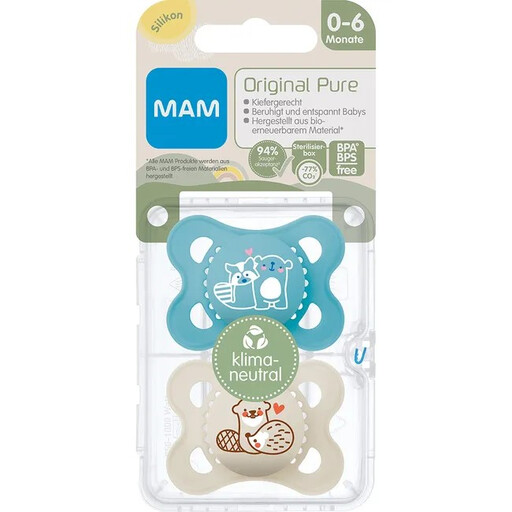
Why This Fits Their Persona: This model combines safety, sustainability, and practical handling. It is the first climate-neutral MAM pacifier, with its shield and button made from bio-renewable material. Ideal for parents who value certified quality and conscious consumption.
Instead of just focusing on design, this product highlights verifiable features: it's climate-neutral, orthodontic-friendly, and comes with a steriliser box that simplifies daily routines.
The included box allows for microwave sterilisation, which the manufacturer claims saves up to 77% in energy and CO?. According to MAM, the SkinSoft silicone is instinctively accepted by 94% of babies.
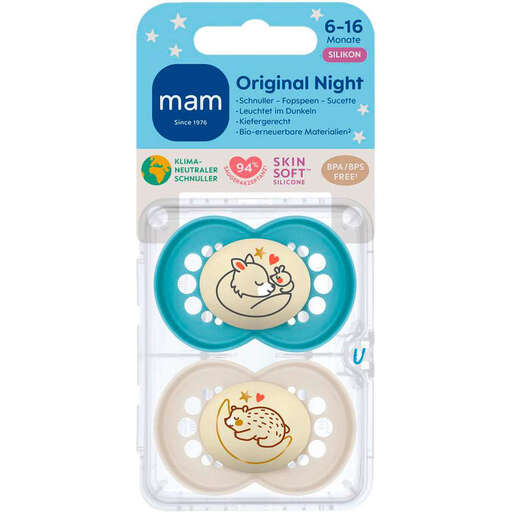
Why This Fits Their Persona: For parents whose sleep is disturbed by the nightly search for a pacifier, this model is a huge help. The knob glows in the dark, making it easy for both parents and baby to find.
This product solves a very practical, everyday problem that is often overlooked during the initial purchase. It combines an orthodontic shape with a feature that improves sleep for the whole family.
The glow-in-the-dark button is the main feature. Additionally, the pacifier is orthodontic-friendly, skin-friendly thanks to large air holes, and also comes in a practical steriliser box.
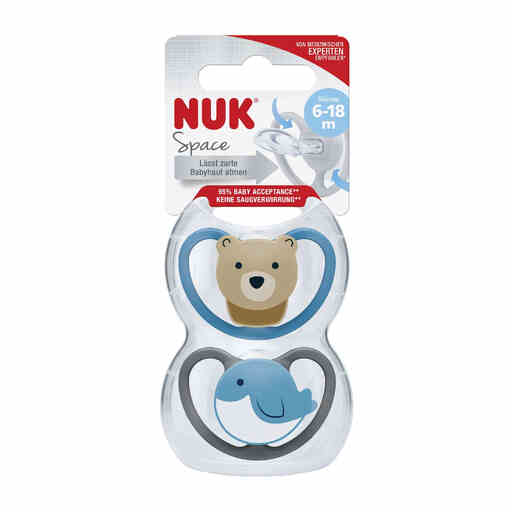
Why This Fits Their Persona: The NUK Space was specially developed for babies with sensitive skin. Redness and irritation from saliva build-up under the shield are common problems. This model counters that with an especially airy design.
This model addresses a specific comfort issue that goes beyond the basic soothing function. It shows that the shape of the shield can be just as important as the shape of the teat.
The extra-large openings in the shield let the skin breathe. According to an independent market research study in Germany (2018) cited by NUK, 98% of mothers confirm this effect.
We've compiled a complete, up-to-date list of products that fully meet these strict selection criteria and European safety regulations.
1. How often should you replace a pacifier? For hygiene and safety reasons, it is recommended to replace a pacifier every one to two months. Check the teat before each use by pulling it in all directions. At the first sign of cracks, bite marks, or stickiness, the pacifier should be discarded immediately.
2. What does "orthodontic pacifier" really mean? An orthodontic pacifier is shaped to interfere as little as possible with the natural development of the palate, jaw, and teeth. It is characterised by a very narrow teat neck, which minimises pressure on the dental arches, and a flat teat that gives the tongue enough space for its natural sucking movements.
3. What should be considered for accessories like pacifier clips and teethers? A pacifier clip is practical for keeping the pacifier handy and clean. Make sure it complies with the EN 12586 standard to rule out the risk of strangulation from a cord that is too long. A baby teether is a useful addition, especially when the first teeth are coming in. It is used to massage the gums and is not intended as a pacifier substitute. Here, too, materials free of harmful substances, such as natural rubber or food-grade silicone, are important.