
Lieferung heute & morgen

Qualitätsgarantie

Willkommens-Angebote freischalten: KOSTENLOSE Lieferung | Bis zu 80 % RABATT | Kostenlose 30-Tage-JoyPlus-Testphase
App herunterladen
Choosing the right pacifier can be a challenge for expecting and new parents. The market offers a bewildering array of shapes, materials, and brands, all promising to be the best for your child. However, not every model is suitable for every baby. Making the wrong choice not only leads to unnecessary expenses but, in the worst-case scenario, can also negatively impact healthy jaw development. This guide will help you navigate the most common pitfalls and make an informed decision.
Before you decide on a model, you should critically examine the typical marketing promises and product features. Many parents invest in products that later turn out to be impractical or unsuitable.
To avoid a bad buy, focus on objective and verifiable criteria. These three parameters are crucial for your child's safety and comfort.
The material of the teat is a central selection criterion. Most models available on the market are made of silicone or latex.
Regardless of the material, the BPA-free (Bisphenol A) label is an indispensable standard for all newborn essentials.
The term orthodontic describes a shape intended to support the natural development of the jaw, palate, and teeth. Look for the following features:
Some features make daily life significantly easier:
Instead of making a blanket recommendation, we have identified products tailored to the specific needs of parents.
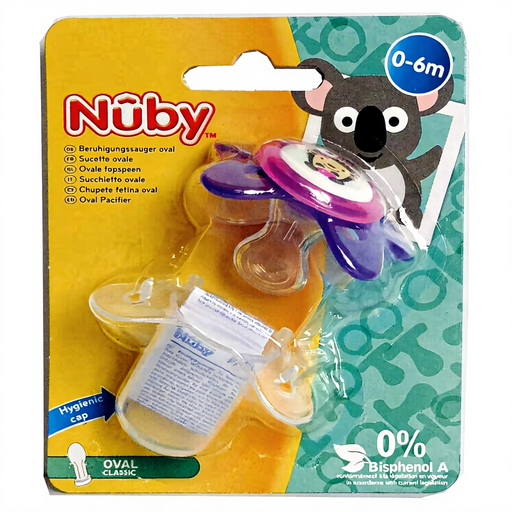
Why this model is a great fit: Ideal for newborn essentials when basic functionality and great value are the priority. It meets all the key requirements without costly extras.
This model is explicitly designed for the 0-6 month age group, thus avoiding the "one-size-fits-all" mistake. The butterfly design ensures good air circulation and prevents skin irritation.
The unique butterfly-shaped shield allows maximum airflow to the skin and is made from BPA-free silicone and polypropylene.
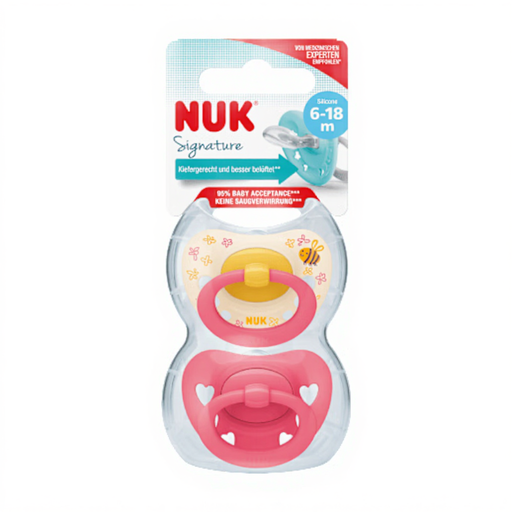
Why this model is a great fit: For parents who place special emphasis on healthy jaw development and trust the recommendations of orthodontists. NUK is a well-established brand in this segment.
This model goes beyond vague "jaw-friendly" promises and offers a concrete design feature: a thin and narrow teat neck that demonstrably minimises pressure on the jaw and teeth.
The orthodontic NUK shape is modelled on a mother's breast during breastfeeding. The flat teat and smooth underside provide more room for the tongue's natural sucking movements.
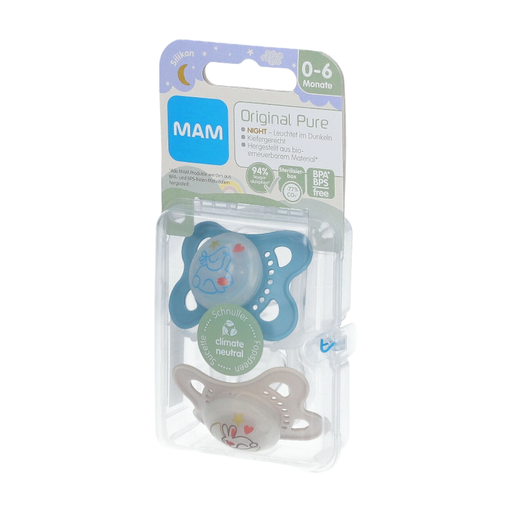
Why this model is a great fit: A practical solution for parents who want to minimise nighttime disruptions from searching for a lost pacifier. The glow-in-the-dark effect is a simple but effective helper.
This product solves a specific, practical problem instead of just relying on general design features. It demonstrates the value of a thoughtful extra function that makes daily life noticeably easier.
The pacifier's button glows in the dark, making it easy to find. According to MAM, the soft SkinSoft silicone teat is accepted by 94% of babies. Includes a steriliser/travel case.
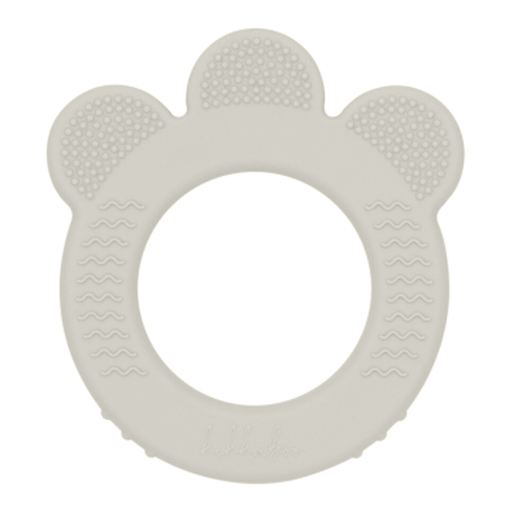
Why this model is a great fit: When a baby is teething, a regular pacifier often isn't enough. This teether serves as a targeted teething aid to soothe irritated gums and relieve itching.
This product shows that there are specialised solutions for specific phases like teething. Instead of just another pacifier, it offers a functional alternative that addresses the problem more directly.
Three different surface textures massage the gums. The teether can be chilled in the refrigerator to enhance the soothing effect. Made from 100% food-grade platinum silicone.
We've compiled a complete, up-to-date list of products that fully meet these strict selection criteria and UK safety regulations.
For hygiene and safety reasons, it is recommended to replace a silicone pacifier every one to two months. For a latex pacifier, replacement may be necessary after four to six weeks. Replace any pacifier immediately if you notice the first signs of damage, such as cracks, holes, or stickiness.
An orthodontic pacifier is designed to minimise pressure on the jaw and teeth compared to standard round teats. Models with a particularly narrow and flat teat neck can reduce the risk of dental misalignment. However, there is no guarantee. Dental and orthodontic associations also advise weaning the child off the pacifier by their third birthday, if possible.
Before first use, the pacifier should be sterilised in boiling water for about five minutes. For daily cleaning, rinsing under warm running water is sufficient. Many models from brands like MAM or NUK come with a travel case that can also be used for easy sterilisation in the microwave. Cleaning in a dishwasher is not recommended by most manufacturers, as the detergents can damage the material.