
Lieferung heute & morgen

Qualitätsgarantie

Willkommens-Angebote freischalten: KOSTENLOSE Lieferung | Bis zu 80 % RABATT | Kostenlose 30-Tage-JoyPlus-Testphase
App herunterladen
Preparing for a baby's arrival is an exciting time, but it can quickly become overwhelming. When it comes to choosing baby's first essentials like pacifiers and baby bottles, parents-to-be are faced with a flood of products and marketing promises. As your Joybuy Product Recommendation Officer, I'm here to help you separate the essential facts from exaggerated advertising claims and make an informed decision.
Many parents invest in products that later turn out to be impractical or unsuitable. Two common pitfalls are:
This guide focuses on the objective parameters that truly matter, so you can confidently and purposefully select the right baby products for newborns.
Before making a purchase, you should examine three fundamental aspects. These criteria form the basis for safety and functionality, regardless of brand or price.
The BPA-free label is standard on baby products today, but it's important to understand what it means. Bisphenol A (BPA) is a chemical compound previously used to make polycarbonate plastics and is suspected of being harmful to health.
The shape of the teat on pacifiers and bottles is crucial for the healthy development of the jaw and teeth. An orthodontic pacifier or teat is designed to minimise pressure on the jaw and teeth.
Brands like NUK and MAM have specialised in developing these orthodontic shapes.
An anti-colic baby bottle aims to reduce the swallowing of air during feeding, which is considered a cause of colic and discomfort. There are various technical approaches:
These systems can be helpful, but they are not a guarantee against colic. The choice often depends on the baby's individual drinking style.
Instead of making a single, general recommendation, we have selected products that meet the specific needs of parents.
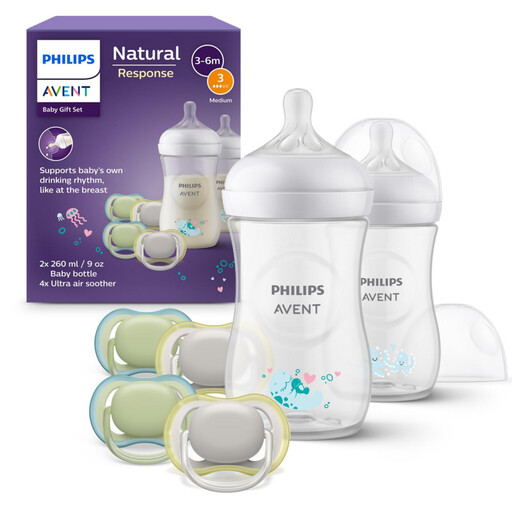
Why this product is a great fit: This set is perfect for parents looking for a coordinated and well-thought-out starter kit. It combines bottles and pacifiers designed for the 0-6 month age range and supports the baby's natural feeding rhythm.
It bypasses the "one-size-fits-all" mistake by bundling age-appropriate components (teats from 1 month+, pacifiers for 0-6 months) in one package.
The Natural Response teat only releases milk when the baby actively drinks, which mimics breastfeeding and makes it easier to combine breast and bottle feeding.
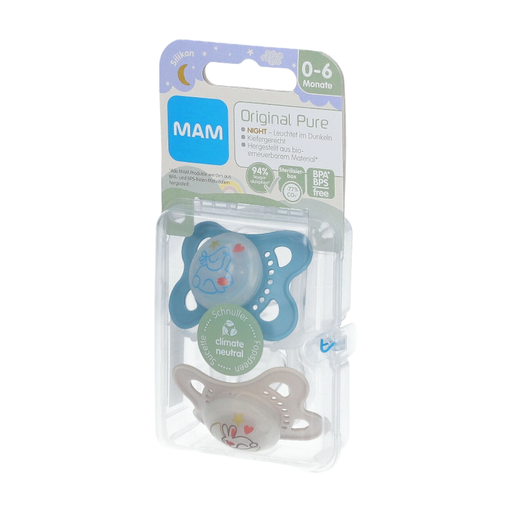
Why this product is a great fit: For parents who don't want to spend the night searching for a dropped pacifier. This model solves a very specific, everyday problem in a simple and effective way.
Instead of focusing on a purely aesthetic design, this pacifier offers a clear function: the button glows in the dark, making it easy to find.
Combines the practical glow-in-the-dark feature with proven MAM qualities: a jaw-friendly design and the soft SkinSoft Silicone, which the manufacturer claims is accepted by 94% of babies.
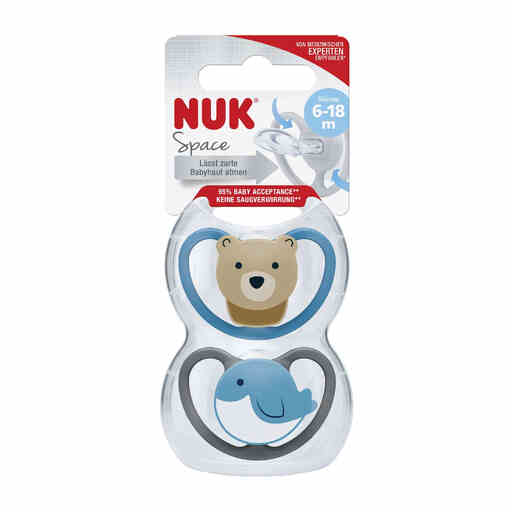
Why this product is a great fit: This pacifier was specially developed for babies with sensitive skin. Skin irritation from saliva build-up is a common problem that is specifically addressed here.
Instead of a standard design, the NUK Space offers a functional solution for a specific need. The aesthetics follow the function, not the other way around.
The design with extra-large openings in the shield ensures maximum air circulation, allowing the skin to breathe and stay dry. According to the manufacturer NUK, 98% of mothers confirm this effect.
In addition to teats and bottles, accessories like a teething ring to relieve teething discomfort or a hygienic pacifier case for on-the-go are also sensible additions. A pacifier clip prevents the pacifier from falling on the floor but should always be used according to safety warnings (EN 12586) to eliminate any risk of strangulation.
We have compiled a complete, up-to-date list of products that fully meet these strict selection criteria and German safety regulations.
For hygiene and safety reasons, it is recommended to replace pacifiers and teats every one to two months. Inspect the products for cracks, bite marks, or stickiness before each use and discard them at the first sign of wear.
No, as a rule, teats and bottles are only compatible within the same brand. The threads and ventilation systems are manufacturer-specific. It is therefore advisable to stick with one brand to ensure proper function, especially with anti-colic systems.
Silicone is a synthetic, transparent material that is very heat-resistant, tasteless, and hygienic. It is dimensionally stable but less bite-resistant than latex. Latex is a natural material (rubber) that is yellowish, very elastic, and tear-resistant. However, it ages more quickly due to light and heat and has a slight inherent taste. The choice is often a personal preference of the baby.