
Lieferung heute & morgen

Qualitätsgarantie

Willkommens-Angebote freischalten: KOSTENLOSE Lieferung | Bis zu 80 % RABATT | Kostenlose 30-Tage-JoyPlus-Testphase
App herunterladen
Paint and art sets differ significantly in their intended use, materials, recommended age and how easy they are to clean. An affordable children’s paint set may be fine for pictures on paper, but it won’t automatically suit fabric, glass or walls. Conversely, a comprehensive brush set won’t add much value if you’re simply after finger paints for children.
Three common buying mistakes often lead to poor choices:
Start by checking what you’ll be painting on:
For children, parents should consider the stated age limit, any small parts and the level of supervision required. According to product information, the KREUL Mucki set is intended for children from two years; the Pelikan school paint set states suitability from three years. These notes don’t replace supervision and should be weighed against your child’s abilities.
For face paints: only use products designed for skin. Do not apply to irritated or broken skin and avoid contact with eyes and mucous membranes. Nail varnish belongs on nails only and should be kept out of reach of young children.
For painting tools, measurable specifications are more helpful than general marketing claims. The ROLLINGDOG paint roller set, for example, features a 50 mm roller with 9.5 mm pile and, according to the product description, is suitable for smooth to semi-smooth surfaces. For narrow areas, this size offers more control than a wide wall roller.
For brushes, consider:
A paint sprayer can coat larger areas evenly but involves more preparation and clean-up. Specifications such as wattage, nozzle diameter, spray pattern, container volume and permissible viscosity should be matched to your planned material before you buy.
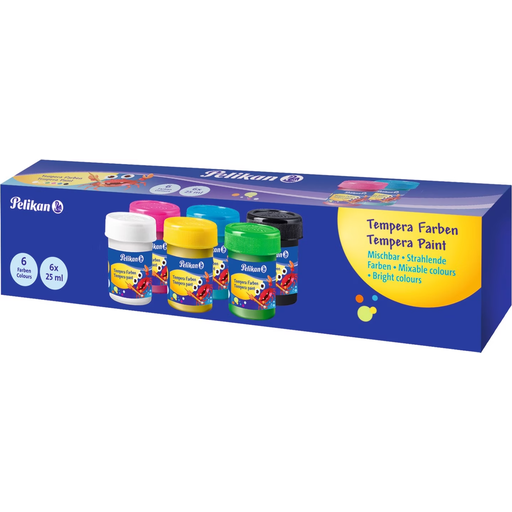
Why this product suits the profile: Six 25 ml paint pots, a brush and a mixing palette cover simple school and craft projects.
The clearly defined scope helps you avoid buying unnecessary shades and accessories for straightforward paper work.
Water-dilutable tempera colours, six core shades and compact accessories.
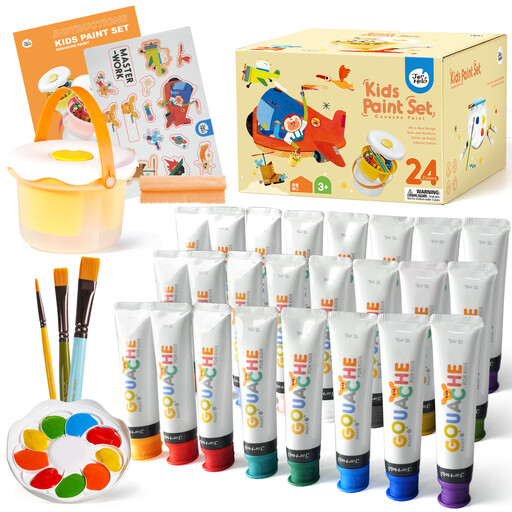
Why this product suits the profile: The set combines 24 paint tubes with three brushes, a palette, rinse cup and storage bucket for organised creative time.
The specified surfaces—paper, canvas and craft materials—sensibly define the scope of use.
24 gouache colours, resealable tubes and integrated storage with mixing palette.
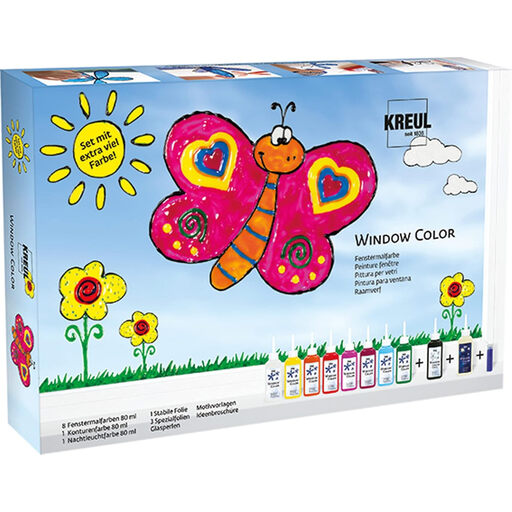
Why this product suits the profile: For decorating windows, mirrors and tiles, the set includes ten 80 ml colours, contour paint, foils, templates and glass beads.
The intended use on smooth surfaces is clearly stated; it’s therefore not designed for textiles or absorbent substrates.
Water-based, blendable colours and accessories for an immediate start; age recommendation from six years.
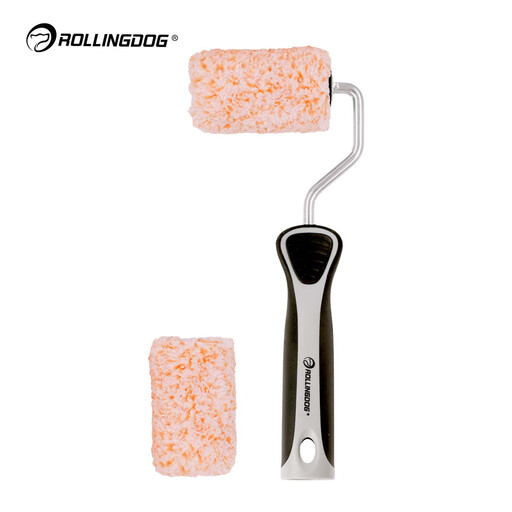
Why this product suits the profile: This three-piece paint roller set is designed for doors, furniture, cabinets and smooth to semi-smooth surfaces.
The 50 mm roller width and 9.5 mm pile make the intended detail and surface range clear.
One frame and two roller covers; according to the product information it’s compatible with all paints and suitable for tapered extension poles.
We’ve compiled a complete, continuously updated list of products that fully meet these strict selection criteria and the safety regulations in force in the EU.
For fabric projects with children, a dedicated children’s paint set can be a smart choice. The KREUL Mucki Fabric Finger Paint Set includes four 150 ml colours and, according to the product information, is intended for light and dark cotton fabrics as well as blends with up to 20 percent synthetic fibre. Follow the stated fixing and washability instructions precisely.
For marbling paints, preparation is key: a water bath, protective surfaces and protective clothing help reduce mess. With face paints, it’s worth doing a small patch test in an inconspicuous area before an event. Nail varnish, meanwhile, needs a well-ventilated environment and must be kept away from ignition sources due to its ingredients.
For paper and card, tempera or gouache paints are suitable. With younger children, age recommendations, closures, small parts and supervision are especially important. Finger paints for children should only be used on the surfaces specified by the manufacturer.
Shelf life depends on product type, closure and storage. Tubes and bottles should be tightly closed after each use and stored frost-free, away from direct sunlight. Brushes and rollers should be cleaned immediately after use and dried completely.
A paint sprayer can make sense for larger, uniform areas or many similar components. For small touch-ups, a brush or roller is usually quicker to prepare. The decisive factors are the permissible paint viscosity, the nozzle, the spray pattern and protective measures such as respiratory protection, gloves and adequate ventilation.