
Lieferung heute & morgen

Qualitätsgarantie

Willkommens-Angebote freischalten: KOSTENLOSE Lieferung | Bis zu 80 % RABATT | Kostenlose 30-Tage-JoyPlus-Testphase
App herunterladen
A thorough car wash is the foundation of vehicle care, but often, the paint still feels rough to the touch afterwards. Stubborn contaminants like iron fallout, tar, tree sap, or insect residue embed themselves deep into the paint's surface and cannot be removed by a standard wash. Professional paint correction is the crucial step to eliminate these contaminants and create a perfectly smooth foundation for subsequent polishing, waxing, or ceramic coating.
This guide is for discerning car owners and professional detailers aiming for a deep paint decontamination. We will introduce you to proven methods and tools that will help you achieve optimal results.
The right equipment is crucial for effective and safe paint correction. Before making a purchase, consider the following points to find the products that best suit your needs.
The mechanical removal of surface deposits is a core component of paint correction. Two main tools are available for this task: the classic clay bar (also known as detailing clay) and modern clay towels with a polymer clay surface.
After a thorough decontamination, the next step is often polishing to remove fine scratches and restore gloss. The choice of polisher significantly impacts the final result and your working comfort.
Based on functionality and application, we have curated a selection of products suitable for a thorough paint correction process.
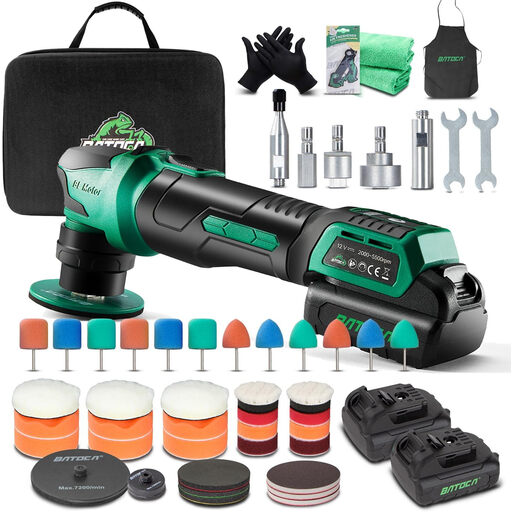
Why it stands out: The BATOCA S4 is a versatile tool that combines both rotary and dual-action (3mm and 12mm throw) polishing capabilities in one device. Its brushless motor ensures high performance and durability. Thanks to its compact design and cordless operation, it is ideal for detail work on hard-to-reach areas like bumpers, mirror caps, or wheels.
Advantages:
Who is it for? This polisher kit is an excellent choice for professional detailers and ambitious enthusiasts looking for a precise and flexible tool for detail work and spot repairs.
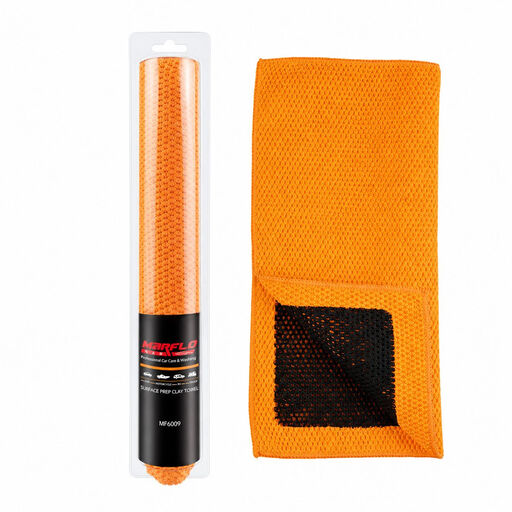
Why it stands out: This clay towel combines an advanced nano-polymer clay surface with a soft microfibre backing. It allows for fast and efficient decontamination of large areas. Compared to a traditional clay bar, it can significantly speed up the process on panels like the roof, bonnet, and doors.
Advantages:
Who is it for? Ideal for users who regularly decontaminate their entire vehicle and want to save time. It's a practical addition to any standard detailing kit for routine maintenance.
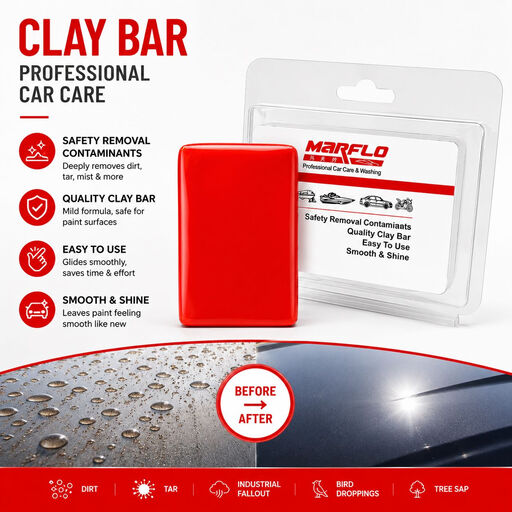
Why it stands out: The MARFLO detailing clay is the proven tool for the targeted removal of deep-seated contaminants. Its fine abrasive structure safely lifts particles like brake dust, industrial fallout, and tree sap without damaging the paint surface. The clay is soft and easy to mould into the desired shape.
Advantages:
Who is it for? This product is the right choice for detailers and car owners who strive for maximum purity and want to thoroughly remove even the most stubborn, localised contaminants before they begin to polish the car.
Paint correction requires a variety of specialised tools and materials. If the products featured here don't exactly meet your needs or you're looking to expand your kit, you can find a wider selection in our category.
? Discover More Professional Tools Here
1. What is the difference between paint decontamination and polishing?Paint decontamination, especially mechanical decontamination with a clay bar, is used to remove contaminants bonded to the paint's surface. The goal is a clean and smooth finish. Polishing, on the other hand, is an abrasive process that removes a thin layer of clear coat to eliminate scratches, swirl marks, and oxidation, thereby maximising gloss. Decontamination is therefore the preparatory step for polishing.
2. Can you remove iron fallout with a clay bar? Yes, removing iron fallout is one of the primary uses for a clay bar. The small, rust-coloured specks often found on the rear and doors are metal particles that have embedded themselves in the paint. With enough lubricant, the clay glides over the paint and safely pulls these particles from the surface.
3. How often should paint correction be performed? The frequency depends on the vehicle's use and environmental conditions. For vehicles that are parked outdoors daily and driven frequently, a thorough paint decontamination with a clay bar is recommended once or twice a year. A light decontamination can be done more often as needed, for example, before applying a new coat of wax. A simple test: after washing your car, run your fingertips over the paint. If it feels rough, it's time for decontamination.