
Lieferung heute & morgen

Qualitätsgarantie

Willkommens-Angebote freischalten: KOSTENLOSE Lieferung | Bis zu 80 % RABATT | Kostenlose 30-Tage-JoyPlus-Testphase
App herunterladen
A new painting project is on the horizon, whether it's refreshing your living room walls or lacquering a piece of furniture. Choosing the right paint kit is crucial for a clean and satisfying result. However, the market is flooded with options that promise more than they deliver. Many DIY enthusiasts invest in a painting set, only to be frustrated later by bristles in the fresh paint, uneven coverage, or tools that are useless after a single use.
This guide will show you which critical features to look for and how to navigate the typical pitfalls when buying a paint kit. This way, you can ensure your next project runs smoothly.
Before you decide on a brush set or a paint roller set, you should be aware of the most common quality defects, which often only become apparent during application.
To avoid the problems mentioned above, you should base your purchasing decision on objective criteria. Pay attention to the following three aspects to find a functional and durable renovation kit.
The material is decisive for paint absorption and release.
These two components determine the tool's longevity and comfort in use.
A good DIY painting kit is distinguished not by the sheer number of parts, but by a sensible combination. A versatile set should include a combination of brushes and paint rollers in various sizes. For wall painting, a large roller (e.g., 23 cm) is essential, supplemented by a small roller (e.g., 10 cm) for corners and edges. Lacquer brushes of different widths allow for precise work on windows, doors, and trim. Useful painting accessories like a paint tray and a stir stick complete a practical painting kit.
Based on the quality criteria mentioned, we have compiled a few products for different requirements.
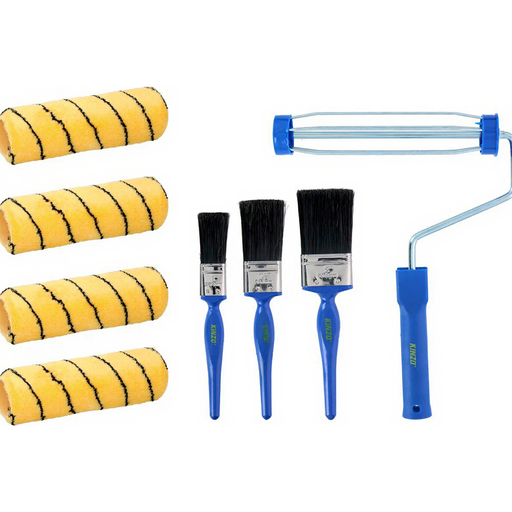
Why this kit fits: Ideal for a first renovation project, like painting a single room. It provides the basic equipment to tackle both walls and corners/edges without having to invest in multiple individual tools.
This set combines a large roller for the main surface with three different-sized brushes for detail work. This prevents the use of unsuitable tools for edges and corners, which leads to messy results.
Complete equipment for standard wall painting. Includes 1 frame, 4 paint rollers (23 cm), and 3 flat brushes (25 mm, 38 mm, 50 mm).
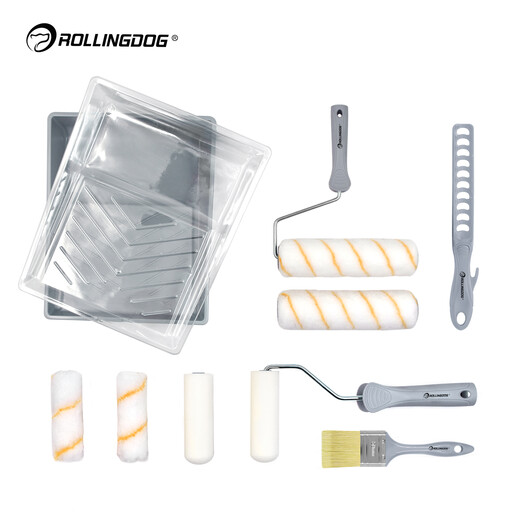
Why this kit fits: Perfect for comprehensive renovation projects. This set offers a thoughtful selection of tools for large surfaces, corners, and even smooth finishes, making it a complete solution for renovating entire rooms.
By combining polyester rollers for walls and foam rollers for smooth surfaces, it prevents patchy paint application on different substrates. The disposable tray liners minimize cleanup effort.
Comprehensive 14-piece set with 23 cm and 10 cm rollers, polyester and foam roller covers, a 50 mm brush, and accessories. The frames are compatible with extension poles.
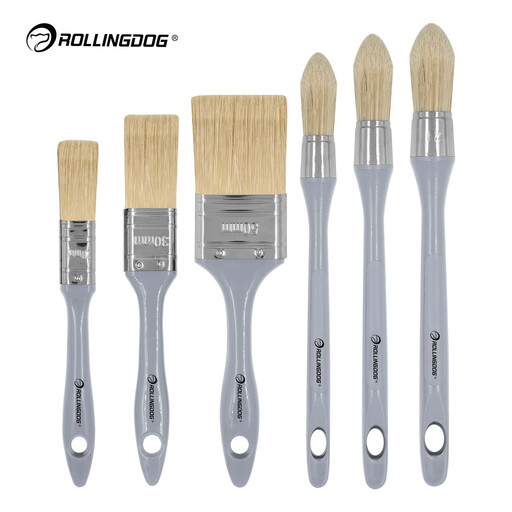
Why this kit fits: This set is designed for precision. It's the right choice for painting furniture, window frames, or for art projects where both broad application and fine lines are required.
The combination of flat brushes for surface coverage and round brushes for details prevents messy edges. The synthetic filaments are suitable for all paint types and minimize the risk of bristle loss with proper care.
Includes 3 flat brushes (20, 30, 50 mm) and 3 round brushes (15, 18, 21 mm) for maximum versatility in detail work. Compatible with all paint types.
We have compiled a complete, up-to-date list of products that fully meet these strict selection criteria.
1. How do you properly clean a paint set for reuse? Cleaning depends on the type of paint used. For water-based paints (e.g., acrylic, latex), wash brushes and rollers thoroughly with lukewarm water and a little soap immediately after use until the water runs clear. For solvent-based paints, use the cleaner recommended by the paint manufacturer (e.g., mineral spirits). Squeeze out excess liquid, reshape the bristles, and store the tools lying flat or hanging to dry.
2. Which brush size is suitable for which purpose? As a rule of thumb:
3. Do all brushes shed bristles, and how can this be minimized? A small amount of initial bristle loss can be normal for new brushes. To minimize this, you can vigorously rub a new brush over a rough surface (like your hand) before the first use to remove any loose bristles. High-quality brushes with firmly set bristles and a sturdy stainless steel ferrule are significantly less prone to shedding. Improper cleaning or leaving the brush to soak in water or solvent can weaken the bristle adhesive and lead to subsequent loss.