
Lieferung heute & morgen

Qualitätsgarantie

Willkommens-Angebote freischalten: KOSTENLOSE Lieferung | Bis zu 80 % RABATT | Kostenlose 30-Tage-JoyPlus-Testphase
App herunterladen
A paint set often looks like a simple purchase at first glance: several shades, a few brushes and attractive packaging. In practice, however, sets differ considerably in terms of paint type, quantity, accessories, age suitability and suitable surfaces. If you choose based solely on the number of colours, you may end up buying a set that is unsuitable for your planned project.
Parents often look for easy cleaning and an appropriate age recommendation. Schools and nurseries need robust, straightforward materials for use by many children. Hobby artists tend to be more interested in colour mixing, coverage and different painting surfaces. The following criteria will help you assess marketing claims objectively.
A large number of colours does not automatically mean a large quantity of materials. Some sets contain numerous small pans or tubes that are sufficient for individual projects but quickly run out with regular use. Alongside the number of colours, always check the quantity per colour and the total quantity.
A compact set can be a sensible choice for occasional craft projects. For school projects or frequent painting, larger containers or refill options are usually more practical.
Watercolours are primarily suitable for absorbent paper and transparent areas of colour. Gouache paints are generally more opaque and can be used on paper or card for solid-colour designs. Depending on the product, acrylic paints adhere to canvas, wood, paper or other suitable surfaces and generally dry to a water-resistant finish.
Tempera paints are often used in schools. Finger paints are intended for painting directly with your hands, while face paints should only be selected for their intended use on skin. Window Color is designed for smooth surfaces such as glass, film or tiles. A set that sounds versatile does not replace checking its specific intended use.
A paintbrush set with lots of brushes can be useful when different stroke widths are required. However, brush sizes, bristle shapes and suitability for the paint type are what really matter. Very small brushes are helpful for details, but they do not replace a wider brush for larger areas.
When buying a craft set, you should also check whether a palette, mixing surface, water cup or storage solution is actually included. A product photo alone is not reliable proof of this.
First, match your project to the appropriate paint:
Pay attention to information about drying time, water solubility and cleaning. Being water-soluble when wet does not necessarily mean that dried paint can be easily removed from textiles.
For children, the age recommendation, warnings and manufacturer’s information are more important than an especially large selection of colours. Small parts can pose a risk to younger children. The product should not be used by children below the stated age.
For toys and creative products, also check whether information is provided about CE marking, intended use and the materials included. With face paints, take note of use on mucous membranes, contact with the eyes and possible ingredients. A general description such as “non-toxic” does not replace checking the individual product information.
A suitable set should be easy to store neatly after use. Screw tops or tightly closing caps help reduce the drying out of liquid paints. With tubes, it is important to clean the cap properly. Brushes should be cleaned after use with the appropriate cleaning agent and dried thoroughly.
For use on the go or in different locations, a case, bucket or metal box can be useful. Larger sets should have sufficiently sturdy packaging and make the individual colours easy to access and identify.
The following products meet different requirements. The information is based on the product details provided for each item.
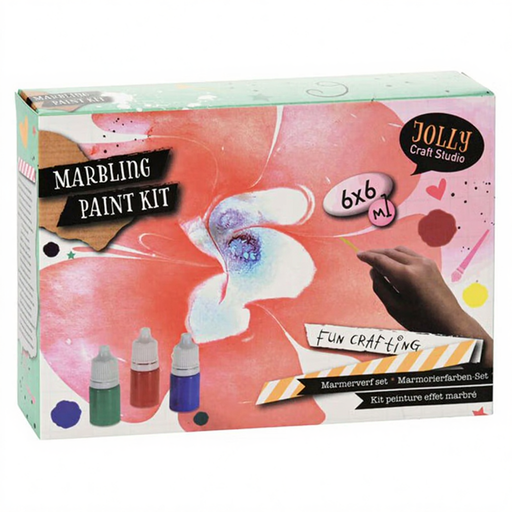
Why this product suits this profile: This compact set contains six 6 ml paint tubes and is suitable for first marbling projects using paper and marbles.
The manageable set contents make the actual quantity of paint clear and avoid an excessive selection of accessories for a single craft project.
Six colours with 6 ml per tube; designed for a specific marbling technique.
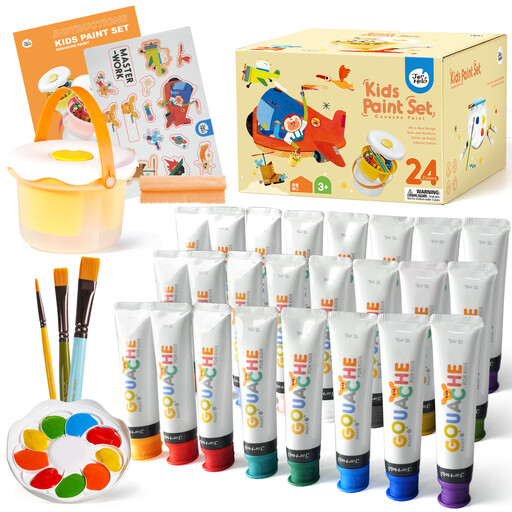
Why this product suits this profile: This set combines 24 gouache colours with three brushes, a storage bucket, a palette and a rinsing cup for children aged 4 to 12.
The listed set contents clearly show which accessories are included. According to the product information, the tubes have secure closures; they should nevertheless be closed carefully after use.
24 colours; integrated storage, mixing palette and rinsing cup.
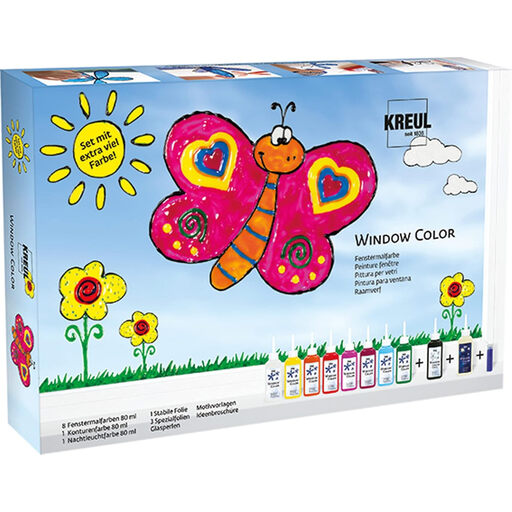
Why this product suits this profile: For window decorations and projects on glass, mirrors, tiles or film, this set contains ten 80 ml bottles, outlining paint, glow-in-the-dark paint, films, templates and glass beads.
The intended surface is clearly stated. This prevents Window Color from being mistakenly planned for paper or canvas projects.
Ten colours with 80 ml each; templates and films for getting started straight away.
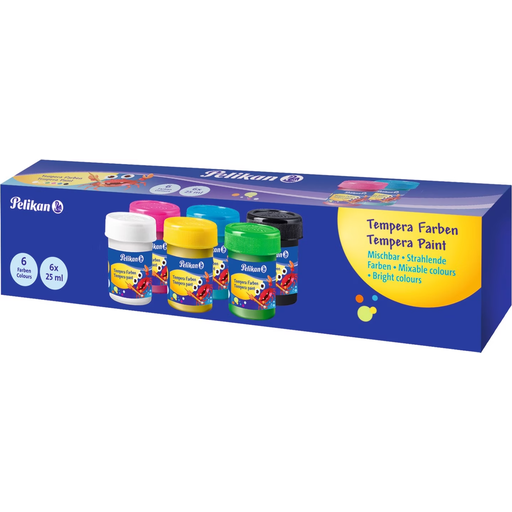
Why this product suits this profile: Six 25 ml paint pots, a brush and a mixing palette are neatly brought together for regular painting tasks at school or at home.
The quantity per pot is stated clearly. The product is also described as suitable for paper, card, wood and ceramics; check the specific surface beforehand.
25 ml per colour; six basic colours plus a brush and palette included.
Close paint containers immediately after use and remove any paint residue from the threads. Brushes should not be left in water for long periods, as the bristles and handles can become misshapen. With acrylic paints, prompt cleaning is particularly important because dried paint residue can be more difficult to dissolve.
For groups of children, it is advisable to provide painting mats, aprons and separate water cups. With finger paints and Window Color, wet paint should be removed from work surfaces as soon as possible. Fabrics can become permanently stained once the paint has dried.
We have put together a complete, regularly updated list of products that fully meet these strict selection criteria and the safety regulations applicable in the EU.
For younger children, age-appropriate watercolours, tempera paints or finger paints are often suitable. The age recommendation, warnings, closures and intended painting surface are the key considerations. Use should be supervised where small parts are involved.
The lifespan depends on the paint type, quantity and frequency of use. Liquid paints can dry out if containers are left open or are not airtight. Dry materials such as oil pastels generally last longer, but they can break or soften in warm conditions. Follow the information on the packaging and store paints in a dry, frost-free place away from direct sunlight.
The price is not determined by the number of colours alone. Compare the total quantity, accessories, paint type, packaging and intended use. A small set may be sufficient for a single project, while frequent users may benefit from larger paint pots or an additional paintbrush set.