
Lieferung heute & morgen

Qualitätsgarantie

Willkommens-Angebote freischalten: KOSTENLOSE Lieferung | Bis zu 80 % RABATT | Kostenlose 30-Tage-JoyPlus-Testphase
App herunterladen
A paint sprayer can deliver a more even finish and, on larger surfaces, often work faster than a brush or roller. However, not every electric paint sprayer is suitable for every type of paint or location. Key factors include the permitted viscosity, nozzle size, spray pattern and ease of cleaning.
A high wattage alone tells you little about the results you can expect. An 800 W paint sprayer can perform differently depending on its design, paint feed and nozzle. When choosing a model, it’s also important to consider its flow rate, pressure control and viscosity range.
If you’re using a paint sprayer on walls or ceilings, reach is another important factor. A longer hose and power cable can make it easier to move around as you work.
Paint that’s too thick can result in an uneven finish or clog the nozzle. On the other hand, paint that’s too heavily diluted can run and create more overspray. Measurements such as DIN-S offer a guide to viscosity, but they’re no substitute for testing the spray on cardboard or an inconspicuous area.
Also check whether the sprayer is designed for water-based paints only, or whether it can also handle varnishes, wood stains and solvent-based materials.
Paint can quickly dry in the nozzle, needle and paint channel. A removable container with a wide opening, along with a cleaning brush and needle, makes maintenance easier. Clean the sprayer immediately after each use, following the manufacturer’s instructions. For solvent-based products, use a suitable cleaning agent rather than automatically reaching for water.
A paint sprayer with interchangeable nozzles gives you more flexibility. Smaller nozzles are generally better suited to varnishes, edges and furniture surfaces, while larger diameters can help cover bigger areas. It’s useful to have at least two or three spray patterns:
A furniture paint sprayer usually needs to deliver a fine, controllable spray. For fences, garden sheds or larger walls, a higher flow rate may be more useful.
An HVLP paint sprayer uses a high volume of air at relatively low pressure. This can help you control the amount of paint applied, but the paint needs to be the right consistency. Check whether the manufacturer specifies a viscosity range, such as 100 or 120 DIN-S, and whether the paint may need to be diluted.
For longer jobs, the weight of the spray gun affects how comfortable it is to use. A separate motor connected by a hose can reduce the weight you’re holding. A cordless paint sprayer gives you more freedom to move around, but you’ll need charged batteries and a realistic idea of the run time. For corded models, hose and cable length matter both indoors and out.
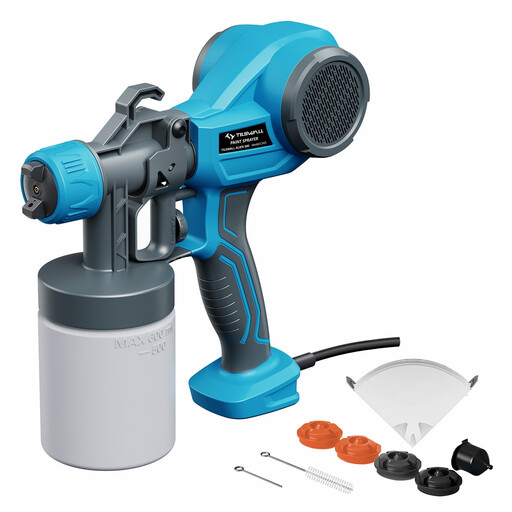
Why it suits this type of user: Weighing just 0.7 kg, this sprayer comes with four nozzles and three spray patterns. It’s designed for everyday DIY jobs on furniture, cupboards, walls and fences.
Interchangeable nozzles and three spray patterns give you more options than a sprayer with just one setting. The paint must be adjusted to a maximum of 100 DIN-S.
Weighs 0.7 kg, tool-free assembly, removable container and four nozzles ranging from 1.0 to 2.0 mm.
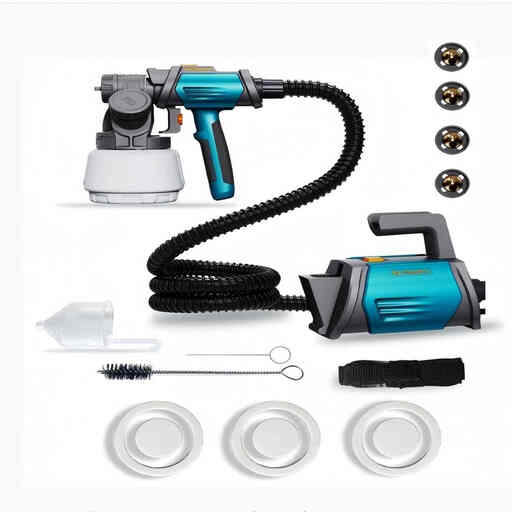
Why it suits this type of user: This 800 W HVLP system combines four brass nozzles, three spray patterns and a stated compatibility of up to 120 DIN-S, making it suitable for a range of renovation jobs.
The stated viscosity range and included viscosity measuring tool help you set up the material more accurately. Clean the sprayer immediately after use.
Brass nozzles measuring 1.0, 1.5, 2.0 and 3.0 mm, a 2.5 m hose and a 3 m power cable.
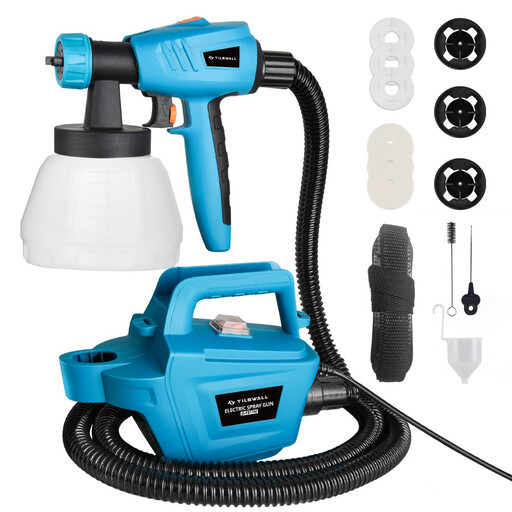
Why it suits this type of user: The 1,300 ml container, 2.5 m hose and suitability for indoor and outdoor use make this sprayer a good fit for longer projects on walls, fences, furniture or doors.
Three nozzles, three spray patterns and pressure control let you adjust the sprayer to suit different materials. You’ll still need to clean it with a suitable product.
800 W motor, flow rate of up to 1,100 ml/min, 1,300 ml container and nozzles measuring 1.0, 1.8 and 2.6 mm.
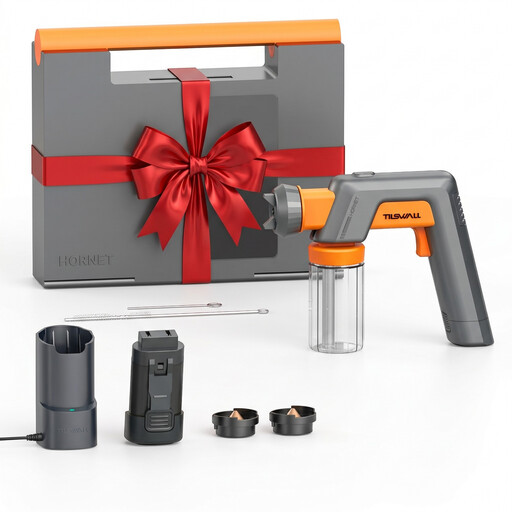
Why it suits this type of user: Its cordless design is ideal for smaller outdoor jobs, hard-to-reach areas and projects where a power cable would get in the way.
The cordless design means you’re less reliant on sockets and extension leads. Before you start, check the battery charge and make sure the material is compatible.
Stated weight of 450 g, three modes, two nozzle sizes and two batteries according to the product name.
We’ve put together a complete, regularly updated range of products that meet these strict selection criteria and comply with the safety regulations in force in the EU.
Before you start, mask off nearby surfaces and prepare the area by removing dust. Make sure the room is well ventilated when spraying indoors. Wear safety goggles, a suitable respirator and chemical-resistant gloves. Never point the sprayer at people, animals or electrical sockets.
Unplug the sprayer or remove the battery before assembling, dismantling or cleaning it. Solvent-based paints require extra care because they are flammable and can ignite near sources of ignition. Always follow the instructions on the paint and the sprayer.
It depends on the model. Water-based wall paints, varnishes, wood stains and sealants can all have different viscosities. Check the manufacturer’s guidance, measure the DIN-S viscosity if needed, and only dilute the paint according to the paint manufacturer’s instructions.
Start by spraying onto a test area, then clean the sprayer as soon as you’ve finished. Remove all paint residue from the container, nozzle, needle and paint channel. Use a cleaning agent that’s suitable for the material.
In principle, one sprayer can be suitable for both jobs, as long as the nozzle, spray pattern and viscosity range are right. Furniture calls for finer settings and controlled movements. For walls, a larger nozzle or higher flow rate may be more suitable.