
Lieferung heute & morgen

Qualitätsgarantie

Willkommens-Angebote freischalten: KOSTENLOSE Lieferung | Bis zu 80 % RABATT | Kostenlose 30-Tage-JoyPlus-Testphase
App herunterladen
A fresh coat of paint can breathe new life into a room or a piece of furniture. But before any project begins, every DIY enthusiast faces a fundamental decision: should the paint be applied traditionally with a paint roller set, or sprayed on with a modern paint spray system? Both methods have their merits and specific use cases. This guide clarifies the differences and helps you find the right painting tool for your project, whether you're painting walls or varnishing furniture.
The choice between a roller and a spray gun depends on several factors. A well-considered decision not only saves time and effort but is also crucial for the quality of the final result.
The type and size of the surface to be painted is the first key criterion.
Not every tool is suitable for every type of paint. Viscosity—the thickness of the paint—is the decisive factor here.
User comfort and subsequent maintenance should also be considered. Rolling paint is more physically demanding, especially when working on ceilings. An electric spray system can make the job easier, but it requires thorough cleaning after each use to prevent nozzle clogs and ensure the device's longevity.
Based on the diverse needs of DIYers, we've compiled a selection of tools that cover different types of projects.
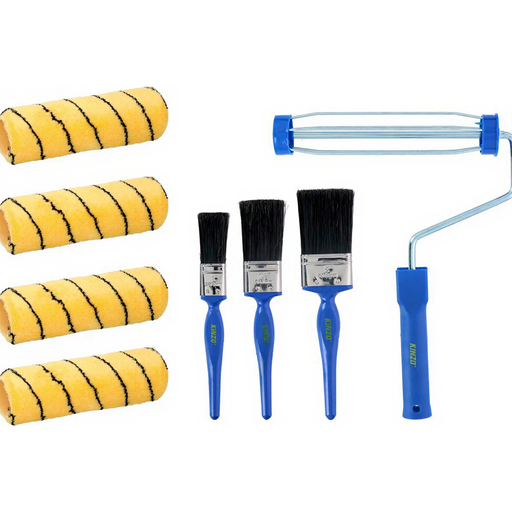
View Product: Kinzo 8-Piece Paint Roller Set
Why It Stands Out This set offers a straightforward, all-in-one solution for classic interior painting jobs. It combines tools for large surfaces with brushes for precise edges and details, all without needing a power source or technical expertise.
Pros
Who Is It For? This paint roller set is a great choice for beginners and for small to medium-sized interior renovation projects, like painting single walls, doors, or stairs. It's ideal for anyone who prefers a proven, controllable method.
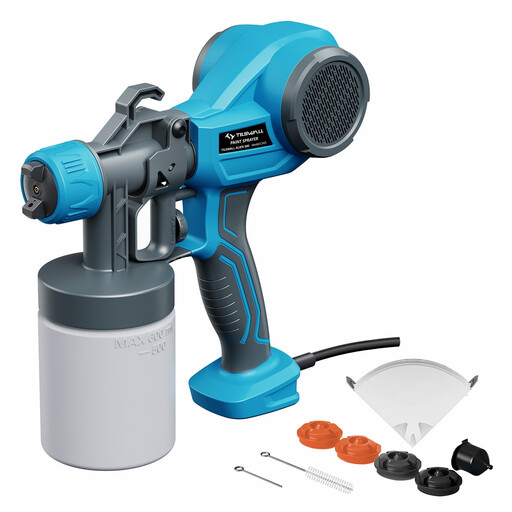
View Product: Tilswall Lightweight Electric Paint Sprayer
Why It Stands Out This model stands out for its low weight and ergonomic design, which allows for one-handed operation. It's designed as a beginner-friendly paint spray gun that makes the transition from brush to sprayer easy.
Pros
Who Is It For? Ideal for DIYers looking for an efficient solution for painting furniture, cabinets, fences, or other small-scale projects. It's a great entry point into the world of paint spraying for anyone wanting to achieve a smooth finish without brush strokes.
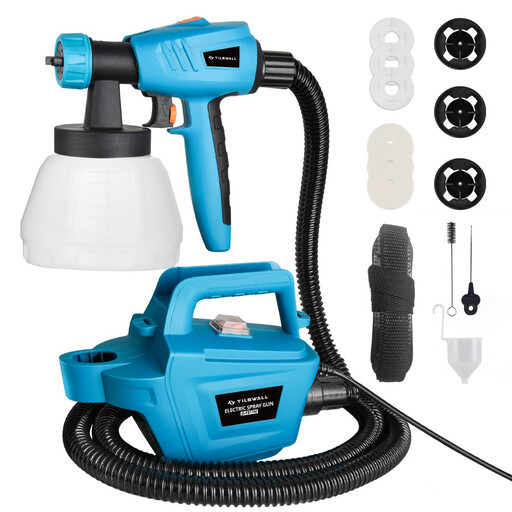
View Product: Tilswall 800W Paint Spray System with 2.5M Hose
Why It Stands Out This powerful system separates the motor from the spray gun. The 800W motor sits on the floor, while the lightweight gun is connected via a 2.5-metre hose. This design significantly reduces the weight in your hand, allowing for fatigue-free work on large projects.
Pros
Who Is It For? This paint spray system is aimed at advanced DIYers planning larger indoor and outdoor projects. It's the right choice for quickly and evenly painting entire rooms, facades, large fences, or garden sheds.
Haven't found the right tool for your specific project yet? Every project has unique requirements. Discover a wider range of solutions, from specialised brushes to other accessories, in our comprehensive Painting Tools category.
That depends on the paint sprayer and the paint being used. Many devices have a maximum viscosity rating (in DIN-s). If the paint exceeds this value, it must be thinned to produce an even spray pattern and avoid overloading the unit. A quick look at the device's user manual and the paint's technical data sheet will provide the answer.
Both tools can produce excellent results when used correctly. A paint sprayer often creates a smoother, more professional-looking surface without streaks or brush marks, especially on textured surfaces. A paint roller, on the other hand, is more forgiving and requires less prep work (masking). The choice depends on the desired finish and the object being painted.
Cleaning is crucial for the function and longevity of a paint spray gun. It should be done immediately after each use. Typically, the paint container, nozzle, and air cap are disassembled and cleaned with water (for water-based paints) or a suitable solvent (for solvent-based lacquers), depending on the paint type. Many devices come with cleaning brushes and needles to thoroughly remove any paint residue. The process usually only takes a few minutes.