
Lieferung heute & morgen

Qualitätsgarantie

Willkommens-Angebote freischalten: KOSTENLOSE Lieferung | Bis zu 80 % RABATT | Kostenlose 30-Tage-JoyPlus-Testphase
App herunterladen
A paintbrush set can save a great deal of time when painting walls, working on furniture, doing craft projects or building models. The key is to choose sizes, bristles and applications that genuinely match. A high number of brushes alone says little about how practical a set is. As a Joybuy Product Recommendation Officer, I’ll explain the most important buying criteria and show which sets suit different requirements.
A set containing ten or twelve brushes may sound versatile. However, what matters is whether the sizes included are suitable for your project. For painting walls, you need wide flat brushes or a paint roller. Smaller formats are more useful for edges, corners and furniture. An artist paintbrush set with fine round brushes is therefore not automatically suitable for renovation work.
Terms such as “professional” or “suitable for all paints” should be supported by specific material information. According to product descriptions, synthetic filaments made from polyester or PET may be intended for various water- and solvent-based paints. With natural bristles, it is important to check whether they are suitable for your chosen paint and the subsequent cleaning process.
If details of bristle material, ferrule and handle are missing, it is difficult to assess durability. Terms such as “Anti Shedding” are no substitute for a precise description of the construction.
Painting a large wall with a small brush is time-consuming and can leave visible brush marks. For smooth to lightly textured surfaces, a paint roller set is often the more practical choice. A paintbrush set for painting is mainly suitable for corners, trim, doors, furniture and touch-ups.
For versatile applications, synthetic bristles are often practical, as the product details for various sets state that they are suitable for acrylic paint, wall paint, varnish or wood stain. Always check the specific manufacturer’s information and the details on the paint container.
With an acrylic paintbrush or watercolour brush, fine filaments that allow controlled work are important. For walls and furniture, paint capacity, even application and a sturdy ferrule are more significant.
For renovation work, graduated widths of around 20 to 50 mm are practical for many edge and furniture-painting tasks. Wider models can cover surfaces more quickly, but are less manoeuvrable in narrow corners. Artist’s brushes are often designated by numbers such as #1, #4 or #10. These numbers are not identical across all brands, so check the millimetre measurement as well.
A non-slip handle can make brushes easier to use during longer jobs. Stainless steel or nickel-plated ferrules are often described as corrosion-resistant in product details. This is a verifiable material characteristic, but it is not a guarantee of unlimited service life.
Clean brushes immediately after use:
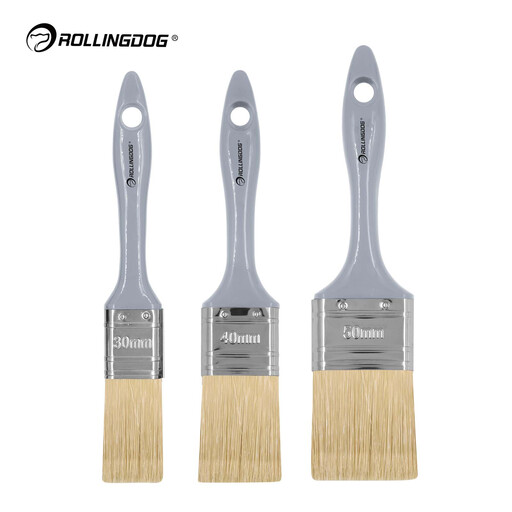
Why this product suits the profile: The set contains three flat brushes, 30, 40 and 50 mm wide, covering typical edging, furniture-painting and touch-up jobs.
The sizes are clearly specified, so buyers do not receive an unspecified mixture of similar brushes.
100% hollow synthetic filaments and stainless steel ferrules according to the product details; three graduated widths.
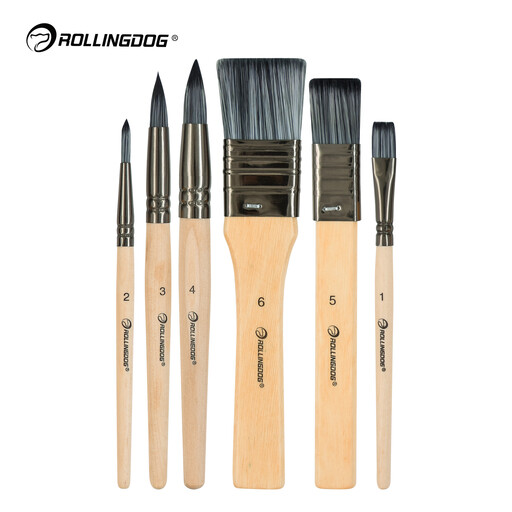
Why this product suits the profile: Flat and round brushes in several sizes offer different options for lines, areas and colour gradients on paper or canvas.
The product description lists brush types, numbers, filament and ferrule materials rather than making only general marketing claims.
Six brushes, including flat and round options; synthetic filaments, nickel-plated ferrules and wooden handles.
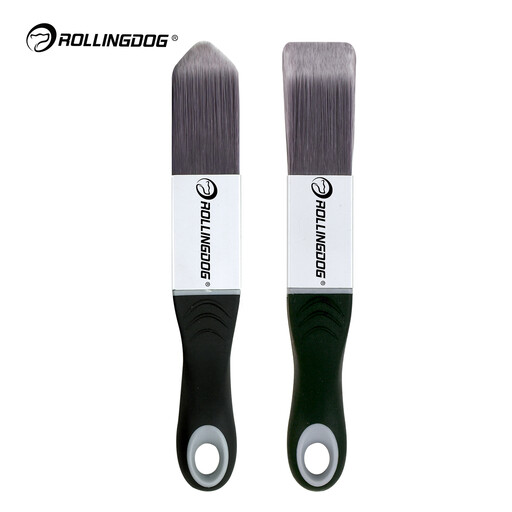
Why this product suits the profile: Model makers, hobby crafters and artists receive two specially shaped brushes for precise work and small touch-ups.
The two head shapes are specifically identified as 22 and 24 mm, rather than simply being labelled “detail brushes” without further information.
Durable, round-tipped filaments and aluminium ferrules; two different head shapes for varied strokes.
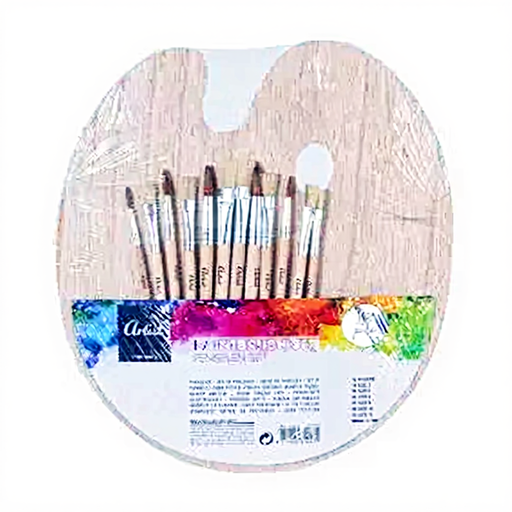
Why this product suits the profile: The set includes twelve brushes in fine, medium and larger sizes, as well as a wooden palette for painting activities at home, at school or in art class.
The division into fine, medium and thick brushes makes it easier to choose the right option for shared painting projects.
Twelve-piece set and wooden palette; intended for children and adults according to the product description.
For large, smooth walls and ceilings, a paint roller is usually more efficient. The ROLLINGDOG Paint Tool Set 4PC contains a paint tray, a roller frame and two 4-inch roller covers with 12-mm polyester pile. According to the product details, it is intended for smooth to lightly textured surfaces and small to medium-sized areas. A paintbrush is still required for corners, frames and narrow edges.
We have compiled a complete, regularly updated list of products that fully meet these strict selection criteria and the safety regulations applicable in the EU.
For wall paint, flat brushes around 30 to 50 mm wide are practical for edges, corners and smaller areas. Large walls can usually be painted more evenly with a suitable paint roller. Also check whether the manufacturer approves the set for the paint you intend to use.
Service life depends on the bristle material, frequency of use, type of paint and cleaning method. Remove paint residue immediately after use, avoid prolonged soaking and only store brushes once they are completely dry. Damaged or frayed bristles should no longer be used for precise work.
The price is mainly determined by the number of pieces, materials, handle design and intended use. For occasional DIY jobs, a three-piece paintbrush set may be sufficient. If you work with different techniques, materials or surfaces, you are more likely to benefit from a varied selection containing flat, round and detail brushes.