
Lieferung heute & morgen

Qualitätsgarantie

Willkommens-Angebote freischalten: KOSTENLOSE Lieferung | Bis zu 80 % RABATT | Kostenlose 30-Tage-JoyPlus-Testphase
App herunterladen
A fresh coat of paint can breathe new life into a room or piece of furniture. However, the final result depends heavily on the quality of the tools you use. Streaks, uneven coverage, or bristles shed in fresh paint are common problems caused by poor-quality brushes. Choosing the right paintbrush set isn't just a minor detail—it's the foundation for a clean and efficient project.
This article serves as your guide. We'll introduce different types of paintbrush sets and explain the key criteria to consider for your specific project—whether it's a wall, ceiling, or piece of furniture. Our goal is to provide you with the information you need to make an informed decision and find the right professional painting tools for your needs.
Before you decide on a renovation kit, there are a few fundamental features to consider. These objective criteria will help you evaluate a set's suitability for your project.
The type of bristles, also known as filaments, is crucial for the final paint finish.
paint brush with synthetic bristles ensures a smooth, stroke-free finish.For most interior renovation projects, a set with high-quality synthetic filaments is the most versatile choice.
A single brush is rarely enough. A good painter's set offers a selection for various applications:
paint roller set is essential. It allows for fast and even paint application.Make sure the set includes the tools you need for your planned project. A versatile DIY brush set often combines different types of brushes.
Two details reveal a lot about a brush's durability:
Here you'll find a selection of sets that are well-suited for different projects due to their specific features.

Why it stands out: This set is designed for efficiency on larger projects. The professional Polyester filaments are engineered for high paint pickup and smooth release, which speeds up the painting process. The construction is focused on durability and preventing bristle loss.
Advantages:
Who is it for? This set is aimed at DIY enthusiasts and professionals looking for a reliable and durable painting brush set for medium to large renovation projects.
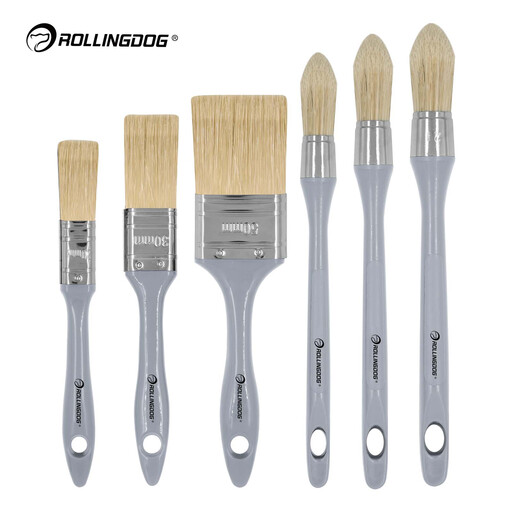
Why it stands out: This set's strength lies in its versatility for detail work. It combines flat brushes for surfaces with round brushes for precise edges, corners, and trim. This makes it a practical detailing brush set for furniture and fine finishing.
Advantages:
Who is it for? Perfect for DIY enthusiasts and craftspeople who need a set for projects requiring both surface coverage and precision, such as furniture restoration or painting decorative trim.
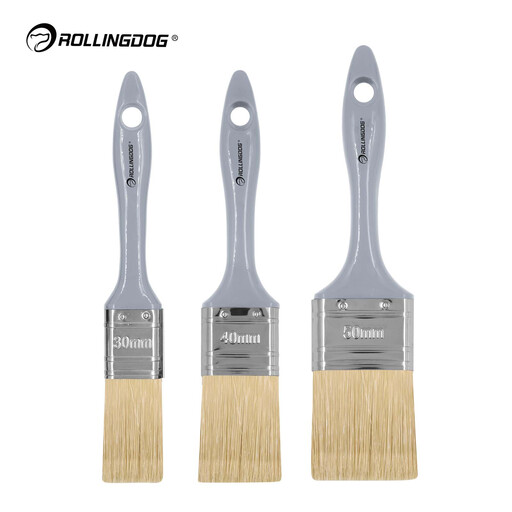
Why it stands out: This set focuses on the essentials, offering a solid starter kit for common painting tasks. Its special feature is the 100% hollow synthetic filaments, which the manufacturer claims hold more paint for a smooth, drip-free application.
Advantages:
Who is it for? An excellent choice for DIYers who need a reliable basic kit for general renovation tasks like painting walls, trim, or smaller pieces of furniture.
A fresh coat of paint is often just the first step in a redesign. For example, if you're painting a dresser or cabinet, replacing the hardware can dramatically upgrade its appearance. A small detail like a new handle can change the entire style.
If you're looking for inspiration for these finishing touches, consider our selection of gold furniture handles to give your furniture a modern and elegant accent.
1. Which paintbrush set is best for walls? A combination is ideal for painting walls. Use a paint roller set for the large surface areas to apply paint quickly and evenly. For corners, edges, and areas around light switches or outlets, a set with flat and angled brushes (approx. 30-50 mm wide) is the perfect complement.
2. How do you clean paintbrushes properly so they can be reused? Proper cleaning significantly extends the life of your tools. For water-based paints, wash the brush immediately after use with lukewarm water and a little soap until the water runs clear. For solvent-based paints, use the brush cleaner or mineral spirits recommended by the paint manufacturer. Afterwards, squeeze out the excess liquid, reshape the bristles, and store the brushes flat or hanging to dry.
3. Are synthetic or natural bristle brushes better? It's not a question of "better," but "more suitable." For the most common latex and acrylic paints (water-based), synthetic brushes are the right choice. They are shape-retentive, durable, and deliver a smooth finish. Natural bristle brushes are specialists for oil-based paints and varnishes, as they hold and release paint well. For general DIY use, a set with high-quality synthetic bristles is the more flexible solution.