For those who want to capture painted details
If you want eyes, edge highlights or textures to fill the frame, choosing the right lens is an important part of the decision. Warhammer Community describes miniatures as very small and rich in detail.


For full-figure shots and the occasional close-up without changing lenses, a compact camera with a dedicated close-up mode may be a good fit. For very small painted details, a mirrorless camera with a compatible macro lens gives you more choice over magnification. What matters is the specific lens, a stable setup and a white balance suited to the artificial light – not just the megapixel count.
If you want eyes, edge highlights or textures to fill the frame, choosing the right lens is an important part of the decision. Warhammer Community describes miniatures as very small and rich in detail.
For consistent shots of full figures, a stable setup and consistent lighting are key. Adobe and Nikon Germany explain that artificial light can affect how colours look, so you should adjust the white balance to suit changing light conditions.
A built-in close-up mode could be a good fit if you want to photograph full figures and the occasional detail without fitting a different lens. OM SYSTEM lists macro modes for the TG-7, while Ricoh Imaging describes a Digital Microscope mode for the PENTAX WG-90.
A good fit if: you want to photograph figures and the occasional detail without changing lenses.
The trade-off: The framing and lighting need to suit the close-up mode in question; a built-in LED doesn’t automatically provide lighting that’s right for your colours.
A good fit if: you mainly photograph full figures and may want to add a different lens to the system later.
The trade-off: At 45 mm, the Canon RF-S 18–45 mm achieves a maximum magnification of 0.16x with autofocus, according to Canon Germany. Very small details may therefore require a separate macro lens.
A good fit if: you want individual painted features to appear as large as possible in the frame and would like to choose your lens and setup carefully.
The trade-off: The lens and mount need to be compatible. Sony states that, at maximum magnification, the SEL30M35 leaves just 2.4 cm between the front of the lens and the subject, which can affect how you position the lighting.
| What matters to you | What to check before buying | Who is this important to? |
|---|---|---|
| Colours under artificial light | Check whether you can adjust the white balance to suit your lighting. Keep the lighting as consistent as possible for comparable shots. | If I want to compare painted colours between shots, I look for consistent lighting. Around 25% of consumers put accurate, consistent colour reproduction first. |
| Size of the details | Compare the magnification ratio of the specific lens. Sony lists 1:1 for the SEL30M35, as does Nikon for the Z MC 50 mm; Canon lists 1:2 for the RF 35 mm. | If you want small highlights or textures to fill the frame, choose your lens and mount together. Around 25% of consumers prioritise detail size. |
| Sharpness across the figure | Check whether a single shot will do or whether focus bracketing or focus stacking might be suitable. A stable setup is important for this. | If I want the front and back of a three-dimensional figure to appear sharp, I plan for the shooting process and stability. Around 20% of consumers prioritise sharpness throughout. |
| Ease of taking the shot | Check whether a built-in close-up mode suits your framing, or whether the choice of interchangeable lenses is worth the extra setup for you. | If you regularly document figures and want to minimise adjustments or lens changes, look for a suitable process that’s easy to repeat. Around 15% of consumers put ease of use first. |
| What the setup involves | Compare what’s actually included in the kit and, if needed, factor in a macro lens, a stable surface and lighting. | If I mainly want to know which components I need for the framing I’m after, I check the whole setup rather than just the camera body. Around 15% of consumers prioritise having the right setup. |
Magnification also depends on the lens you use. Canon Germany lists a maximum magnification of 0.16x with autofocus at 45 mm for the RF-S 18–45 mm, compared with 1:2 for the separate RF 35 mm.
First, think about how large you want the smallest detail to appear in the frame. Then check the magnification ratio of the specific lens and whether it’s compatible with the camera body.
Ricoh Imaging lists six macro LEDs for the PENTAX WG-90. However, LEDs alone don’t tell you how the colours of your paintwork will look in the finished image; Adobe explains that artificial light can cause colour casts.
Test the white balance and lighting with the actual colours on your figures. For comparable images, keep the lighting conditions as consistent as possible.
Sony lists a distance of 2.4 cm between the front of the SEL30M35 and the subject at maximum magnification. This can limit the space available for a light source close to the figure.
Before choosing a lens, check that the figure, background and lighting will all work together at your preferred shooting distance.
The EOS R system offers options for photographing full figures with a zoom lens, or taking more targeted close-ups with a compatible RF macro lens.
The Z system lets you choose the camera body and lens separately for full figures or close-ups.
The E-mount system is an option for those who are considering video as well as photographing figures.
The Tough TG-7 is a compact camera option for close-ups without interchangeable lenses.
The WG-90 is a compact camera option with a Digital Microscope mode and built-in macro LEDs.
This selection includes compact cameras with photo and video features. Before buying one for close-ups of figures, check the focus range and how easily you can control the lighting.
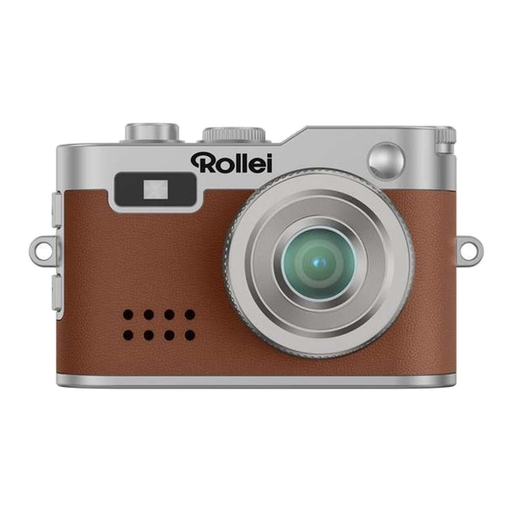 No image available
The compact digital camera is described as supporting JPG photography. According to the product description, it weighs 18 g and has a 2 MP sensor.
The fixed focal length is 5.49 mm, according to the description. A built-in LED can be used as a flash or continuous light. For close-ups of figures, check that the focus range suits the framing you want.
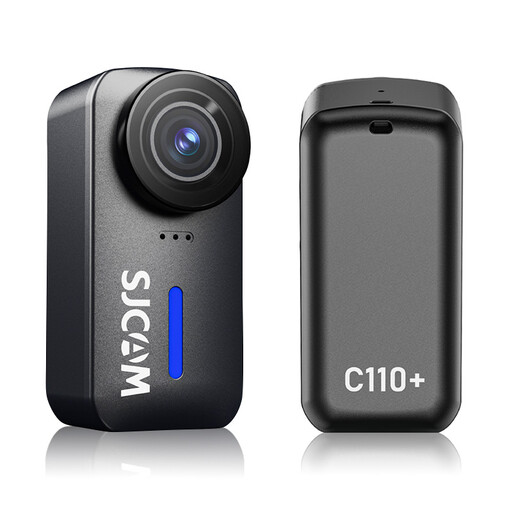 No image available
The product description lists photos up to 20 MP, a 170° wide-angle lens and white balance presets.
For small figures, check that the focusing distance and framing are suitable before buying. A wide-angle specification doesn’t mean the camera has a macro function.
A standard zoom may be suitable for full figures; it all depends on the framing you want. Canon Germany lists a maximum magnification of 0.16x with autofocus at 45 mm for the RF-S 18–45 mm. For very small details, check the magnification ratio of the specific lens: the separate RF 35 mm achieves 1:2, according to Canon.
Keep the lighting as even as possible and adjust the white balance to suit the light you’re using. Adobe explains that artificial light can cause colour casts, while Nikon Germany recommends adjusting the white balance when lighting conditions change. RAW can be useful for colour correction later, but it takes up more storage space than JPEG.
A stable surface is especially useful for close-ups and focus bracketing. Canon Academy points out that even small camera movements can affect a macro shot. For focus bracketing with the TG-7, OM SYSTEM recommends using a tripod or another stable surface.