Which camera is right for you?

Close-up photographers

If you want to show small painted details and surface textures at a larger scale, the lens, its magnification ratio and the working distance from the figure are all important considerations. Canon Academy explains that the depth of field in macro photography is shallower than at a normal shooting distance.

Diorama photographers

With stationary figures that have protruding parts or several planes of depth, the question is whether a single shot will do or whether focus bracketing would be useful. Canon Academy describes focus bracketing as taking several shots with different focus points; OM SYSTEM and Sony document these features for specific cameras and lenses.

Studio setup photographers

If you want to reproduce the colours of painted figures against a dark background, pay particular attention to lighting, white balance and exposure. Canon Germany explains how light colour affects colour reproduction, while Nikon Germany describes exposure metering in different shooting situations.

What should you look for when buying?

Compact camera with close-up modes

A good fit if: You want to get started without changing lenses and plan to photograph mostly whole figures, with the occasional detail. OM SYSTEM lists macro photo modes for the Tough TG-7 and describes features including focus bracketing and focus stacking.

Bear in mind: Check the framing and whether there is room to position a light near your figure. A close-up mode alone does not tell you what magnification an interchangeable-lens system can achieve.

Interchangeable-lens camera with a standard zoom

A good fit if: You want to start by photographing whole figures or groups and choose another lens later if needed. The Canon EOS R50 with the RF-S 18–45 mm is one documented example of this type of starter kit.

Bear in mind: Canon gives the RF-S 18–45 mm a maximum magnification of 0.16x at 45 mm with autofocus, or 0.26x with manual focus. The kit zoom is not a 1:1 macro lens.

Interchangeable-lens camera with a dedicated macro lens

A good fit if: You want to capture individual brushstrokes or decorations at a larger scale. Nikon, Sony and Fujifilm each specify a 1:1 magnification ratio for the macro lenses considered here.

Bear in mind: The lens and, where needed, the tripod must suit the camera body and your shooting workflow. A short working distance can also leave less room to light the figure.

Buying priority What to check Who is it most relevant to?
Control colour and exposure White balance under the intended lighting; test shot and exposure against a dark background If I want to reproduce painted colours consistently, controlling the lighting and exposure matters most to me. Around 29% of consumers put this priority first.
Enlarge small details Magnification ratio of the specific lens; mount and working distance available for lighting If I want to capture individual brushstrokes or decorations at a larger scale, the actual lens I use is what matters. Around 29% of consumers prioritise enlarging details.
Keep several parts of a figure in focus Focus bracketing versus in-camera focus stacking; compatible lens and a stable camera setup For arms, weapons or set pieces that project across several planes, I look at the focusing workflow. Around 24% of consumers prioritise keeping the whole figure in focus.
Get started with manageable equipment Fixed lens or compatible mount; what’s included, such as a lens, memory card and charging option If I want to get started without spending a long time choosing lenses and keep extra components to a minimum, a complete, straightforward setup is important. Around 18% of consumers prioritise an easy start.

Common camera-buying misconceptions

  • “Macro” automatically means 1:1

    Magnification depends on the specific lens. Canon states that the RF-S 18–45 mm reaches a maximum of 0.26x at 45 mm with manual focus, while the Nikon, Sony and Fujifilm macro lenses considered here are each specified at 1:1.

    Compare the lens’s stated magnification with the size of the details you want to photograph, rather than relying solely on the label or focusing distance.

    For very small details, you may need an additional macro lens that is compatible with your camera body.

  • Focus bracketing automatically creates a finished stacked image

    Focus bracketing captures images at different focus positions; that does not mean the camera will combine them automatically. OM SYSTEM documents in-camera stacking on the OM-5 Mark II with compatible lenses. Canon describes in-camera depth composition for the EOS R50 in the manual from firmware 1.5.0 onwards.

    Check the feature, firmware and lens compatibility for your specific setup, as well as the editing workflow required.

    Selecting and combining individual shots can take extra time.

  • A more expensive camera body will solve lighting and colour problems on its own

    The light source affects colour reproduction, and a large dark area in the image can make it harder to judge exposure. Changing the camera body will not automatically alter the lighting position, white balance or setup.

    First, test the lighting position, white balance and exposure with your figure. Then decide which camera feature you actually need.

    Changing camera bodies can add to your costs without changing your lighting setup.

Key camera brands at a glance

Canon

The EOS R system offers a starting point with a standard zoom, with the option to choose an RF macro lens later. The EOS R50 is the camera body considered here.

  • Canon gives a 1:2 magnification ratio for the separately sold RF 35mm F1.8 Macro. The EOS R50 manual describes focus bracketing and in-camera depth composition.
  • According to Canon, the RF-S 18–45 mm reaches a maximum magnification of 0.26x at 45 mm with manual focus. The documented depth composition feature applies to firmware 1.5.0 or later; check compatibility with your specific lens. These are manufacturer specifications, not an independent performance comparison.

OM SYSTEM

OM SYSTEM offers two different approaches here: the Tough TG-7 compact camera with close-up modes and the OM-5 Mark II interchangeable-lens camera.

  • The manufacturer describes macro modes for the TG-7 and in-camera focus stacking for the OM-5 Mark II.
  • Check which lenses are compatible with the OM-5 Mark II; the options listed include 30 mm and 60 mm macro lenses. The TG-7’s lens cannot be swapped for these M.Zuiko lenses. Manufacturer specifications do not constitute an independent performance comparison.

Sony

The E-mount system includes the α6700 considered here, along with the separately selected E 30 mm F3.5 Macro for APS-C.

  • Sony specifies a maximum magnification of 1x and a minimum focusing distance of 0.095 m for the E 30 mm F3.5 Macro.
  • According to its manual, the α6700 captures focus-bracketed shots that can be used for focus stacking; this does not mean the images are combined in-camera. Sony recommends using a tripod for this workflow. These specifications relate to the individual models.

Nikon

You can add a separately selected macro lens to the Z system for dedicated close-up photography.

  • Nikon gives a 1:1 magnification ratio for the NIKKOR Z MC 50 mm f/2.8; the lens is specified for the FX format.
  • The lens specification does not mean that any Z kit includes a macro lens, nor does it tell you whether a particular camera body has a stacking feature.

Fujifilm

The X system offers the XF30mmF2.8 R LM WR Macro as an option for dedicated close-up photography.

  • Fujifilm specifies a 1:1 magnification ratio for this lens and a minimum focusing distance of 10 cm from the sensor surface.
  • The focusing distance does not indicate how much clear space there is in front of the lens for a light. The camera body and what’s included must be chosen separately; these specifications relate to the lens, not the brand as a whole.

Related products at Joybuy

The following Joybuy options are compact cameras with built-in lighting. Before buying, check that the framing and close-focusing capabilities suit your figures.
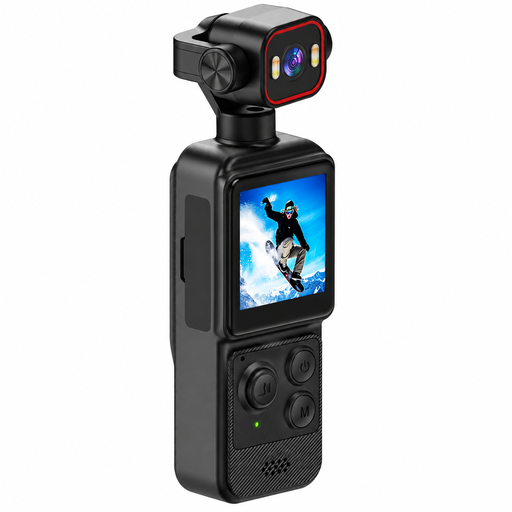
4K mini action camera with clip, 1.54-inch display and LED lighting

4K mini action camera with clip

If you’d like to try a built-in light source, the product title mentions two LEDs. It also lists a 1.54-inch display, 140° wide-angle lens, app control and a 1200-mAh battery. Check that the close-up capability suits your subject.

Joybuy
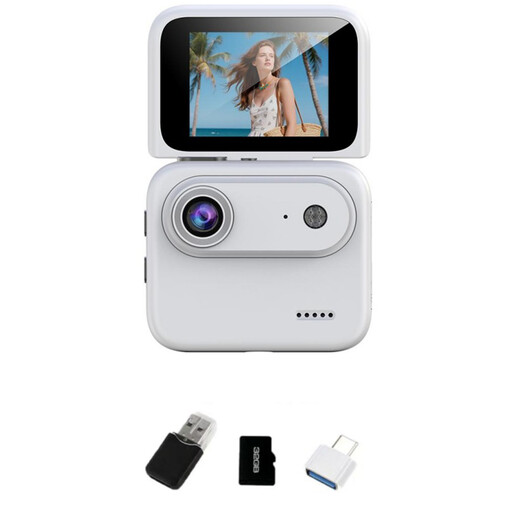
NAXSIR 4K mini action camera with 32 GB card and built-in LED light

NAXSIR 4K mini action camera with 32 GB card

If you’d like to try a built-in light source, the product description mentions an integrated LED light. The title also lists a 2.0-inch flip screen, a 143° wide-angle lens and image stabilisation. Check whether the available framing works for your figure.

Joybuy
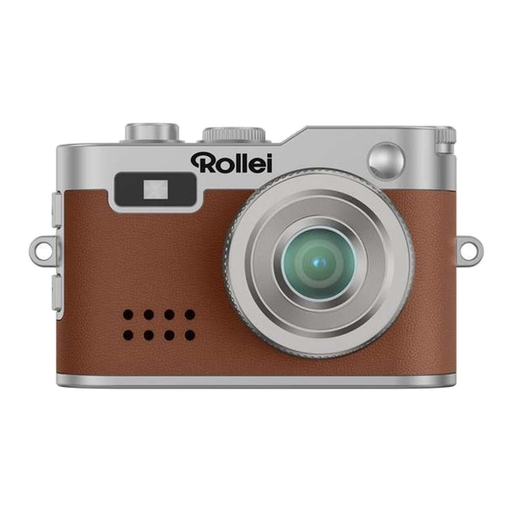
Rollei mini digital camera in brown

Rollei mini digital camera, brown

If built-in lighting matters to you, the product description lists LED flash and continuous-light modes. It also specifies a 5.49 mm focal length, F2.4 and a maximum photo size of 1920 × 1080 pixels.

Joybuy
Rollei mini digital camera in black

Rollei mini digital camera, black

If you want to use a built-in light source, the product description lists LED flash and continuous-light modes. The stated focus range starts at 1.5 m and extends to infinity, which limits its suitability for close-up details on painted figures. The 2 MP photo resolution is interpolated; the image sensor is specified as 1 MP.

Joybuy

Frequently asked questions

How do I get started photographing a painted figure against a dark background?

Set up the figure and camera securely, direct the light at the figure, then check the details, background and colours in a test shot. Set the white balance to suit the light you’re using, and don’t base your exposure solely on the large dark area. Consider focus bracketing only if a single shot doesn’t keep the planes of depth you want in focus; Canon Academy describes this as taking several shots with different focus points.

Should I stop down as far as possible to keep the whole figure in focus?

Not necessarily. Stopping down increases the depth of field at close range, but lets less light reach the sensor. For a stationary figure, you could consider a stable setup and, if needed, focus bracketing. Check whether your specific camera model combines the shots in-camera.

What ongoing costs and consumer rights should I consider when buying a camera?

Before ordering, check whether the specific offer includes a lens, memory card and the charging option you need. An interchangeable-lens camera may also require a macro lens. When you buy from a trader in the EU, you’re generally entitled to a minimum two-year legal guarantee from the date you receive the goods; this is separate from any voluntary warranty. Your Europe, the European Union’s consumer portal, explains this.

Can I return a camera bought online in Germany without giving a reason?

For a distance contract with a trader, you generally have a 14-day right of withdrawal from the date the goods are delivered. This right does not apply to purchases from private individuals. Check any return costs and the seller’s information before buying. Your Europe, the European Union’s consumer portal, explains the rules.