
Lieferung heute & morgen

Qualitätsgarantie

Willkommens-Angebote freischalten: KOSTENLOSE Lieferung | Bis zu 80 % RABATT | Kostenlose 30-Tage-JoyPlus-Testphase
App herunterladen
A painting set for children and adults can be a great introduction to creative projects – or quickly become impractical. What matters is not the number of colours included, but whether the set is suitable for the user’s age, the surface and the intended use. Parents, nurseries, schools and hobby artists should therefore check a few details carefully before buying.
Common purchasing mistakes arise from three points:
When buying painting materials for children, the age recommendation on the packaging should match the child’s stage of development. Sets with small paint pots, mixing palettes or accessories may be unsuitable for younger children. Products such as finger paints for children should only be used under supervision, especially where there is a risk of swallowing.
For example, according to the product information, KREUL Mucki Fabric Finger Paint is intended for children aged two and over. The set contains four 150 ml bottles in yellow, red, green and blue. According to the manufacturer, it is not suitable for children under two. Children under three may also require additional supervision when using wax crayons or craft accessories because of small parts.
The type of paint determines how a set can be used:
For KREUL Mucki Fabric Finger Paint, the manufacturer lists light and dark cotton fabrics, as well as blended fabrics containing up to 20 per cent synthetic fibres, as suitable materials. After a drying time of around 24 hours, the paint should be fixed. According to the product information, the fabric can then be washed at up to 40 °C. Read and follow the specific care instructions before starting your project.
A painting brush set should not be judged solely by the number of pieces. Brush types, sizes, handle material and cleaning instructions are all important. Broad or flat brushes are useful for covering larger areas, while round and fine brushes are used for outlines and details.
For children’s products, easy-to-hold shapes and a manageable selection are also important. A small tempera paint set with primary colours, a brush and a mixing palette may be sufficient for lessons or first craft projects. For adults and frequent users, however, a larger selection with different brushes or several types of paint offers greater flexibility.
You should also check the following before buying:
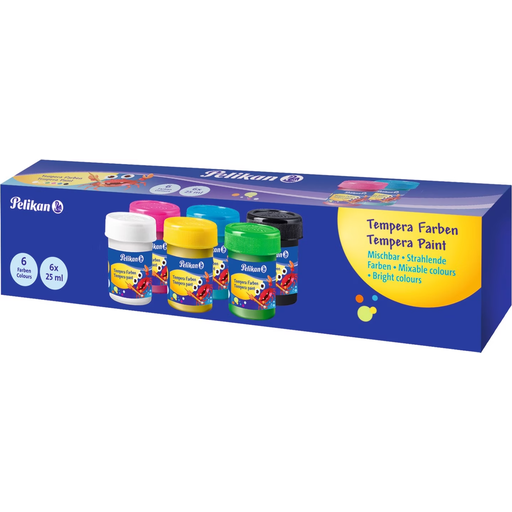
Why this product suits the profile: Six ready-to-use primary colours, each containing 25 ml, plus a brush and mixing palette provide a straightforward introduction for school, family use and first painting projects.
The number of colours and fill quantity are clearly stated. This makes it easier to assess the actual contents than with vague descriptions such as “large set”.
Six 25 ml paint pots, dilutable with water, including a small brush and mixing palette.
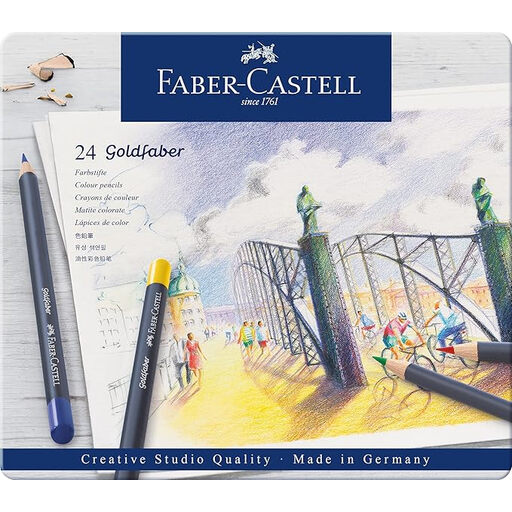
Why this product suits the profile: The 24 shades in a metal box are ideal for drawings, shading and free-flowing areas of colour. The format is convenient for storage and transport.
The product information states the number of pieces, the 3.3 mm lead diameter and the metal storage box. This makes the format and contents easy to understand.
24 oil pastels, a broad 3.3 mm stroke, water-resistant leads and a metal box for organised storage.
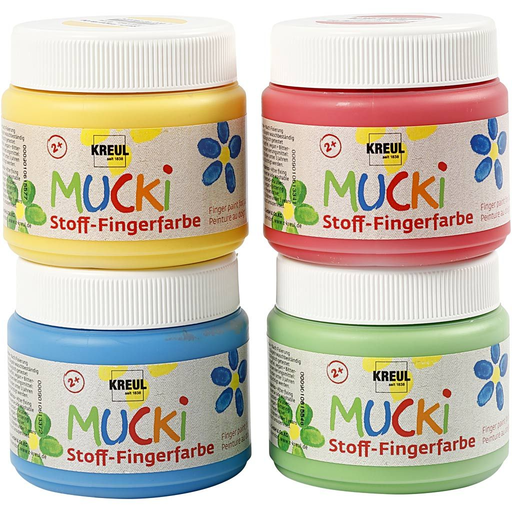
Why this product suits the profile: The set is designed for creative textile projects using fingers or a brush, making it suitable for families, nurseries and schools.
The product description specifies suitable fabric types, the required fixing process and the washing temperature. This makes its intended use clearer than with paints marketed as universal.
Four 150 ml colours, a water-based formulation and, according to the product information, washable at up to 40 °C after fixing.
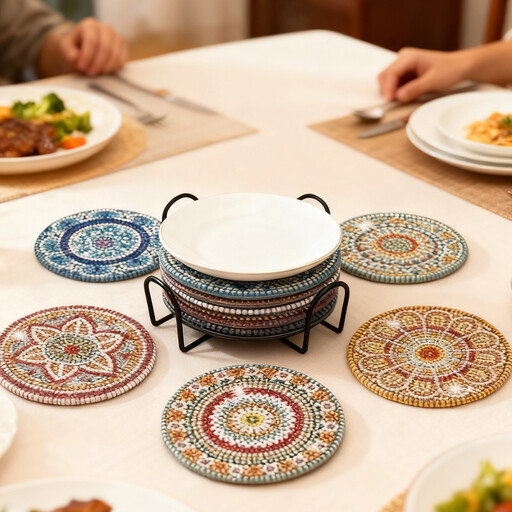
Why this product suits the profile: This mandala set with six coasters and a stand provides a clearly defined DIY project without liquid paints or a large, complicated painting kit.
The intended use and the 10 × 10 cm format for each coaster are clearly described. Buyers can assess the space required and the project size in advance.
Six coasters, a stand and a mandala design for a structured diamond painting project.
We have put together a complete, regularly updated list of products that fully meet these strict selection criteria and the safety regulations applicable in the EU.
Depending on their age, younger children may use children’s paints, finger paints or easy-to-grip, washable wax crayons. The age recommendation, information about small parts and the intended surface are all important. Paints should not be used without supervision if they could be swallowed or adhere permanently to surfaces.
How long it lasts depends on the quantity of paint, frequency of use and storage conditions. Water-based paints should be sealed after use and protected from frost and excessive heat. Brushes last longer when they are cleaned immediately, reshaped and not left standing in water for extended periods. For products with a best-before date, the information on the packaging is decisive.
For first projects, several primary colours, a painting brush set, mixing palette and suitable paper are often enough. Anyone wanting to try different techniques can choose an acrylic paint set, oil pastels or additional artists’ materials. Diamond painting sets offer a relaxing alternative without liquid paints. The key is to choose accessories based on the project you actually intend to undertake, rather than focusing solely on a high piece count.