
Lieferung heute & morgen

Qualitätsgarantie

Willkommens-Angebote freischalten: KOSTENLOSE Lieferung | Bis zu 80 % RABATT | Kostenlose 30-Tage-JoyPlus-Testphase
App herunterladen
A fresh coat of paint can completely transform a room. But the joy of a renovation project can quickly fade when the result is compromised by low-quality painting supplies. Streaks on the wall, lint in the fresh paint, or tools that become unusable after a short time—these problems are often due to poor product selection. As your Joybuy Product Recommendation Officer, I'll help you recognise the typical pitfalls and find the right painting accessories for your project.
Before you click "add to cart," you should be aware of the three most common problems that arise when choosing painting supplies:
To achieve a clean and efficient result, you should pay attention to a few technical features. These determine whether your painting tools are suitable for your specific project.
Choosing the right paint roller is crucial for the final result. The roller material must match the viscosity of the paint and the texture of the surface.
The frame is the link between you and the wall. Two aspects are important here:
A good brush is indispensable for corners, edges, and detail work. The bristles determine the quality of the paint application.
To make your decision easier, we have compiled products for typical application scenarios.
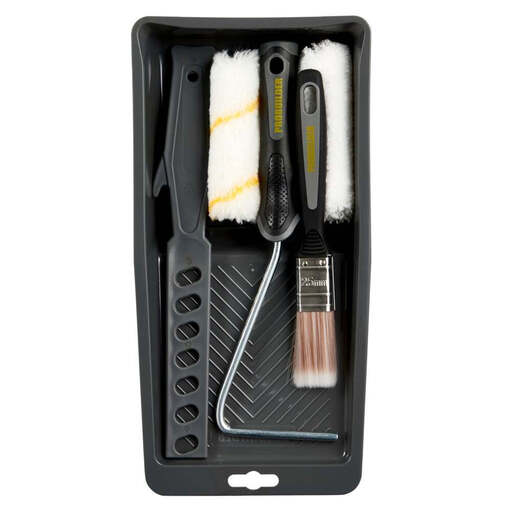
Why This Fits Their Persona: Ideal for DIYers painting a single wall, a small piece of furniture, or radiators. This set provides a solid basic kit without the hassle of selecting individual components.
Avoids the incomplete kit trap. It includes a paint tray, an ergonomic handle, two different roller types (microfiber and acrylic) for various surfaces, a brush for edges, and even a stirring stick.
Compact and ready to use out of the box. The soft-grip handle ensures good control for detail work.
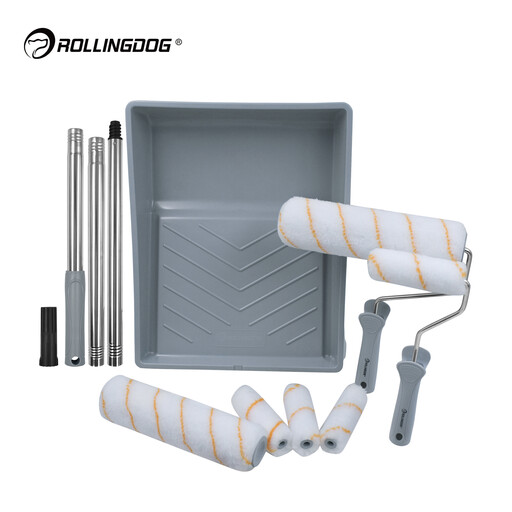
Why This Fits Their Persona: For anyone renovating an entire room or larger areas. This kit is designed for medium to large projects and offers the necessary flexibility for walls, ceilings, and detail work.
Solves the problem of flimsy tools and lack of reach. It includes a 3-piece extension pole (up to 90 cm) compatible with both included frame sizes (23 cm and 100 mm). The polyester rollers are designed for good paint pickup.
A comprehensive renovation kit with tools for large surfaces and precise edges. The included extension pole eliminates the need to buy an extra accessory.
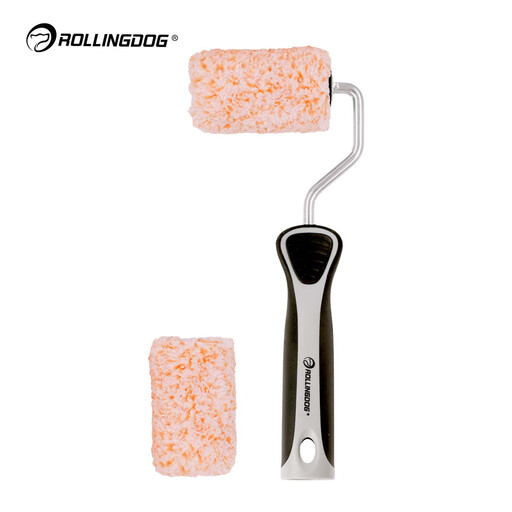
Why This Fits Their Persona: Perfect for painting doors, cabinets, furniture, or other smooth surfaces where a flawless finish is required. The small size allows for precise control.
Counteracts the problem of lint-shedding rollers. The high-density foam rollers are specially designed for a smooth finish and minimise the formation of bubbles or streaks in the lacquer.
The set includes a sturdy frame and two replacement rollers. The rollers are suitable for all paint types and ensure an even coating.
We've curated a full, up-to-date list of products that fully meet these strict selection criteria and European safety regulations.
1. How do I prevent lint from a new paint roller from getting into the paint? Before the first use, wash a new paint roller with lukewarm water and a little dish soap to remove loose production residue and fibres. Let it dry completely. Alternatively, you can wrap the dry, new roller with masking tape and pull it off sharply to remove loose particles.
2. Which brush is best for cutting in corners and edges with wall paint? For emulsion wall paint, a flat brush or a special angled sash brush with synthetic bristles (e.g., polyester) is a good choice. The bristles hold their shape, allow for a precise cut at edges, and are easy to clean with water after use. A width of 50 mm is a good all-rounder.
3. Can I use any extension pole with any roller frame? Not necessarily. Most roller frames and extension poles sold in Europe use a standardised screw thread. However, there are also systems with cone or click-fit connections. Check the product description before buying to ensure that the frame's handle and the extension pole's fitting are compatible.