
Lieferung heute & morgen

Qualitätsgarantie
App herunterladen
Kategorien
Choosing the right painting tool is a foundational decision that depends heavily on the parameters of your project. Factors such as surface area, texture, the type of paint being used, and the desired efficiency will determine whether a manual painting kit or an electric paint spray system is the more effective solution. This article analyses the technical criteria for making an informed decision and presents two product configurations for different use cases.
The choice of a tool system should be based on an objective analysis of your requirements. The following technical aspects should be considered.
A paint roller set or painting kit is the standard equipment for precise interior painting jobs. Its effectiveness depends on the quality and combination of its components.
An electric paint spray gun typically operates on the HVLP (High Volume Low Pressure) principle. This method uses a high volume of air at low pressure to finely atomise the paint. This reduces overspray and increases application efficiency.
Based on technical specifications and intended applications, we present two distinct tool systems.
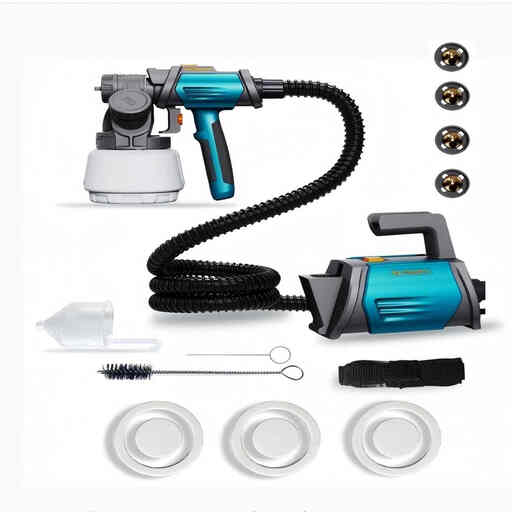
Why We Recommend This Product The Tilswall Shark 800 is an HVLP paint spray system designed for the rapid and even coating of large surfaces. Its split design, with a separate turbine and spray gun, reduces the weight of the handheld unit, making it easier to manage during extended use. The 1300 ml container's side-fill system allows you to refill paint without detaching the container, optimising your workflow.
Advantages
Who It's For This paint spray system is suitable for DIY enthusiasts and users looking to efficiently tackle large-scale projects such as painting interior and exterior walls, fences, decks, or garden sheds. Its high viscosity compatibility and large paint container are designed for rapid work progress.
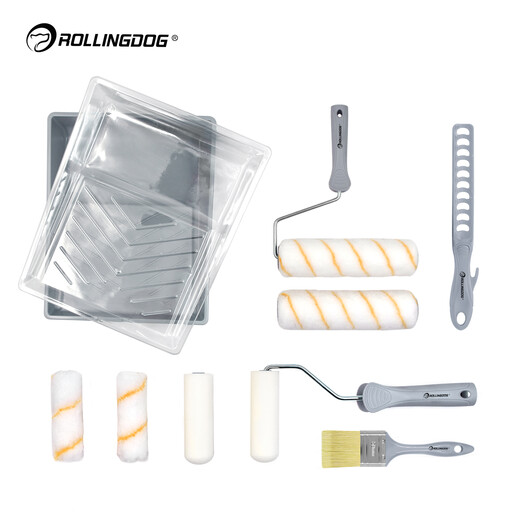
Why We Recommend This Product This 14-piece renovation kit from ROLLINGDOG provides a comprehensive collection of tools for traditional painting jobs. It combines tools for large surfaces with those for detail work, covering the entire process from preparation to the final coat. The disposable paint tray liners significantly reduce cleanup time.
Advantages
Who It's For This painter's kit is ideal for DIY enthusiasts looking for a complete painting set for a DIY renovation project. It is suitable for painting entire rooms, where both large wall surfaces and precise edges, corners, and trim need to be addressed.
The products featured here cover two common use cases. If your project has more specific requirements, such as special brushes for stains or tools for decorative techniques, you can find a wider selection in our Painting Tools & Accessories category.
1. Paint Sprayer or Roller – Which is the Better Choice? The decision depends on the project. A roller offers high control, creates a classic surface texture, and requires less masking. It is ideal for single walls or furnished rooms. A paint spray system is significantly faster on large, empty surfaces (walls, ceilings, fences) and produces a very uniform, smooth finish. However, it requires more meticulous preparation (masking) and cleanup.
2. What Should a Basic Painter's Kit Include? A functional basic kit for wall painting includes: a paint roller with a suitable sleeve, a paint tray with a roll-off grid, a flat or sash brush for corners and edges, painter's tape for masking borders, and a drop cloth or dust sheet to protect floors and furniture.
3. What Nozzle Size is Suitable for Which Paint in a Spray System? As a general guideline: Smaller nozzles (approx. 1.0 mm - 1.8 mm) are used for thin-bodied materials like lacquers, stains, and primers. Larger nozzles (approx. 2.0 mm - 3.0 mm) are required for thicker materials such as emulsion and latex paints for walls. It is crucial to follow the specifications from both the paint and the device manufacturer, as the optimal setting depends on the specific viscosity of the material.