
Lieferung heute & morgen

Qualitätsgarantie

Willkommens-Angebote freischalten: KOSTENLOSE Lieferung | Bis zu 80 % RABATT | Kostenlose 30-Tage-JoyPlus-Testphase
App herunterladen
Paints and creative sets vary considerably in terms of materials, application, clean-up and age suitability. A large number of colours alone says little about whether a set is suitable for nursery, a school project, a party or professional artwork. If you focus only on product images and terms such as “premium”, you can quickly end up buying paints that are unsuitable for the surface, difficult to clean or impractical after just a few uses.
A children’s paint set with 24 or 48 colours may look comprehensive. However, the amount of each colour, opacity and the ability to mix shades are also important. Small paint wells may be sufficient for occasional pictures, while schools, studios and frequent users can work more economically with larger tubes or refill paints.
Washable wax crayons or finger paints are generally easier to remove from skin and suitable fabrics. This does not automatically mean that every paint will disappear from untreated wood, carpets or already-dried clothing stains. Details such as washing temperature, fixing and suitable surfaces should be checked before buying.
Watercolours, gouache and acrylic paints differ in how they dry and how easily they can be removed later. Window Color is designed for smooth surfaces, while acrylic paints can adhere to canvas, wood or paper. Face paints and temporary tattoo pens, on the other hand, are intended for use on the body and require their own application guidance. An extensive artist’s supply set is therefore not automatically a sensible choice for a young child.
When choosing children’s paints, the age recommendation, warnings and information about intended use are essential. Products containing small parts are often unsuitable for children under three. For school and nursery supplies, you should also be able to verify the manufacturer’s details, the responsible person in the EU and the information provided on the packaging.
A CE marking may be relevant for toys in the appropriate classification, but it does not replace checking the specific product. Paints should never be put in the mouth. For face paints, the rule is simple: use them only on skin intended for this purpose, avoid the eye and mouth area, and stop using them if irritation occurs.
Check whether the paint is water-soluble, washable or permanent once dry. Textile paints may need to be fixed by ironing or heating. Tubes and bottles should be closed securely after every use. Brushes are best cleaned immediately with water, before any remaining paint hardens.
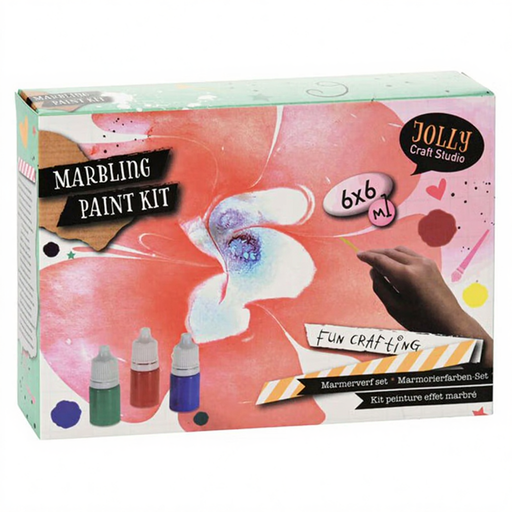
Why this product suits this profile: The set contains six paint tubes of 6 ml each and is suitable for simple marbling projects using paper and marbles. Its relatively compact size makes it manageable for first attempts.
The fixed number of colours and fill quantity make it clear that this is a small project set rather than a large supply.
Six colours, compact tubes and a clear focus on creating marbled pictures.
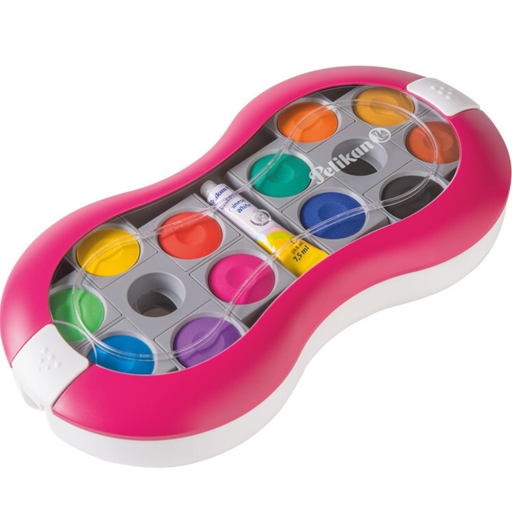
Why this product suits this profile: With 24 paint wells, additional mixing areas and white paint, this colour palette is designed for regular school and creative projects.
The replaceable paint wells allow individual used-up colours to be replaced, so you do not necessarily have to buy the entire palette again.
24 colours, ten mixing areas and pots made from 95% recycled plastic according to the product information.
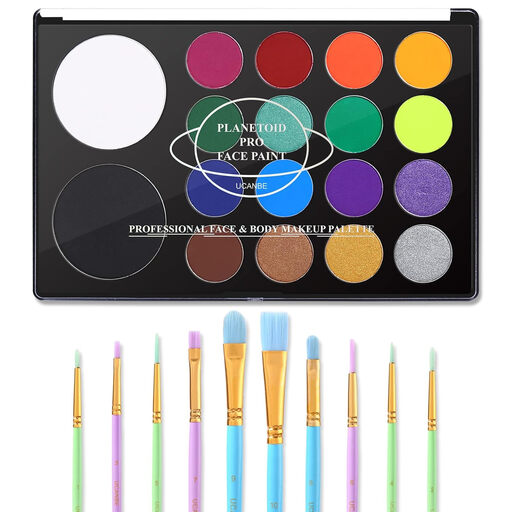
Why this product suits this profile: For carnival, Halloween, stage performances, themed parties or cosplay, this palette offers 18 water-activated colours in individual wells.
The product description states that it is for external use, can be removed with soap and water, and includes specific warnings. These details should be checked against the labelling on the packaging before use.
18 colours and ten brushes in the set; the paint is picked up with a damp brush.
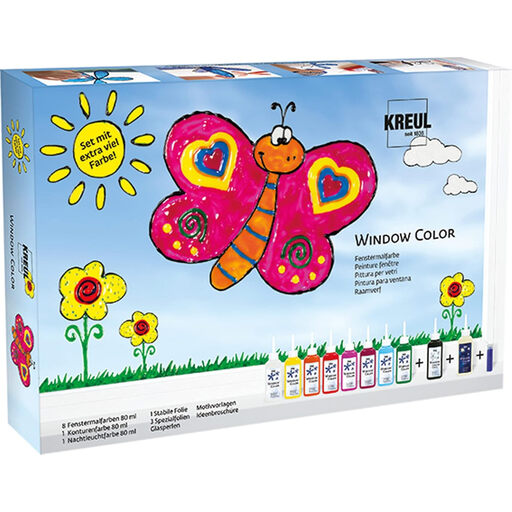
Why this product suits this profile: The Window Color set contains ten 80 ml bottles, as well as outline paint, films, templates and instructions for shared crafting sessions.
The intended surfaces are clearly specified: smooth surfaces such as glass, mirrors, tiles and film. This helps prevent unsuitable use on absorbent paper.
Water-based, mixable paints, ten bottles, outline paint and four films according to the product description.
We have put together a complete, regularly updated list of products that fully meet these strict selection criteria and the safety regulations applicable in the EU.
For first drawing exercises at home, washable wax crayons with a thick, easy-to-grip shape can be a sensible choice. The Jar Melo sets are available with 24 or 48 jumbo wax crayons; the product information states that they are made from washable materials and intended for toddlers. Even so, you should check the specific age recommendation on the packaging before use.
A children’s craft set with gouache paints offers more creative possibilities than a classic watercolour set. The Jar Melo Kids Paint Set contains 24 paint tubes, brushes, a mixing palette, storage bucket and rinsing cup. The stated age range is four to twelve years.
The KREUL Mucki Fabric Finger Paint, with four 150 ml colours, is designed for use on textiles. According to KREUL’s product information, the paint must be fixed after drying by ironing or in the oven; it can then be washed at up to 40 °C. These steps must be carried out by children under adult supervision.
Hobby artists can choose an acrylic paint set such as “Acrylic Paint (5ml, 6 Colors)”. The six tubes are described as suitable for surfaces including canvas, wood and paper. If you would like to try out different techniques, the Artico Art & Paint Set contains 174 pieces, including watercolours, acrylic and oil paints, coloured pencils, oil pastels and brushes.
For children, the recommended age, warnings, easy-to-handle shapes and straightforward cleaning are important criteria. Depending on the manufacturer’s information, finger paints or thick wax crayons may be suitable for younger children. When using small paint wells, brushes or stencils, watch out for possible small parts.
Watercolours are generally used with more water and create transparent areas of colour. Gouache paints are typically more opaque and can produce vivid, solid areas of colour. The actual properties depend on the formula, paper and amount of water used.
There is no single shelf life that applies to all paints. Sealed tubes and bottles last longer when stored in a dry, cool place protected from frost and direct sunlight. Paint wells should be allowed to dry before the palette is closed. Dried acrylic paint on brushes is usually difficult to remove; cleaning them immediately helps reduce wear and tear.