Anyone who wants to prepare authentic Asian dishes quickly discovers that regular household sugar often doesn't deliver the desired results. The characteristic depth and complexity of many curries, sauces, and desserts come from special, unrefined sweeteners. However, the variety of names like palm sugar, jaggery, or yellow rock sugar can be confusing.
This guide is designed to bring clarity. As your Joybuy Product Recommendation Officer, I have compiled the essential information to provide you with a solid basis for making an informed decision on your next purchase. We will look at the differences, applications, and present a selection of products suitable for authentic cooking.
What to Look for When Buying Asian Sweeteners
To find the right product for your recipe, three criteria are crucial: botanical origin, consistency, and the resulting flavour profile.
1. Origin: Palm or Sugarcane?
Although often used interchangeably, these sweeteners come from different sources, which significantly influences their taste.
- Palm Sugar: Extracted from the boiled-down sap of the flower buds of various palm species, most commonly the coconut, date, or palmyra palm. It is characterized by a deep, caramel-like, and sometimes slightly smoky aroma.
- Jaggery (Gur) and Rock Sugar: These products are made from the juice of the sugarcane plant. Jaggery, also known as Gur or whole cane sugar, is an unrefined sugar created by boiling pure sugarcane juice. It has a robust, molasses-like flavour. Yellow rock sugar is also derived from sugarcane but crystallizes in large chunks and has a milder, cleaner sweet profile.
2. Consistency and Form: From Solid Blocks to Soft Paste
The form factor affects how the product is handled in the kitchen.
- Solid Blocks: Palm sugar and yellow rock sugar are traditionally pressed into hard, solid blocks or cylinders. This cane sugar block often needs to be grated, chopped, or dissolved directly in hot liquid before use. The solid form ensures excellent shelf life.
- Soft Blocks/Pastes: Some jaggery varieties, like Pesi Gur, have a softer, fudge-like consistency. They are easier to portion with a knife or stir directly into dishes.
3. Flavour Profile and Use
Each sweetener has its ideal place in the kitchen.
- For Southeast Asian Cuisine: The complex caramel flavour of palm sugar is an essential ingredient for Thai curries (e.g., Massaman or green curry), dips like Nam Jim Jaew, and desserts like mango sticky rice.
- For Indian Cuisine: Jaggery is the foundation for countless Indian sweets (Mithai), chutneys, and is also used to balance the heat in lentil and vegetable curries.
- For Chinese Cuisine: Yellow rock sugar is frequently used in braised dishes like "Hong Shao Rou" (red-braised pork belly) to add subtle sweetness and a beautiful glaze. It is also a popular choice for sweetening teas, soups, and desserts.
Featured Asian Sweetener Products
Based on these criteria, we have curated a selection of products suitable for various culinary projects.
Cock Brand Palm Sugar 454g
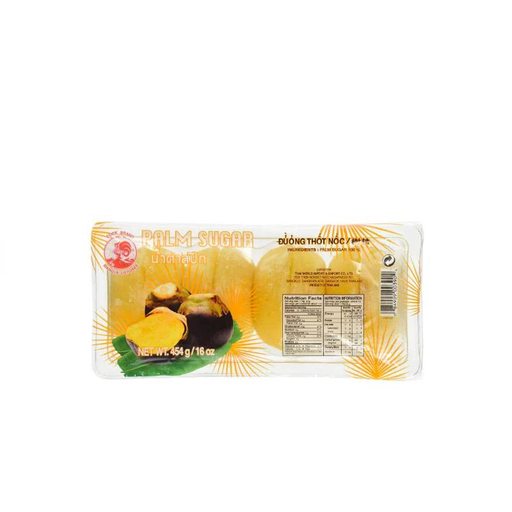
- What makes it special: This palm sugar is produced in Thailand from palm sap and pressed into a traditional block form. It delivers the authentic, deep caramel and toffee notes characteristic of Southeast Asian cuisine. At 376 kcal per 100g, it is fat-free and low in salt.
- Benefits: The solid block has a long shelf life and is easy to portion by grating or scraping off the required amount. Its complex aroma gives dishes a depth that is unachievable with refined sugar.
- Who it's for: Ideal for home cooks who want to replicate the authentic taste of Thai curries, dips, and desserts.
Nature's Best Harvest Yellow Rock Sugar 400g
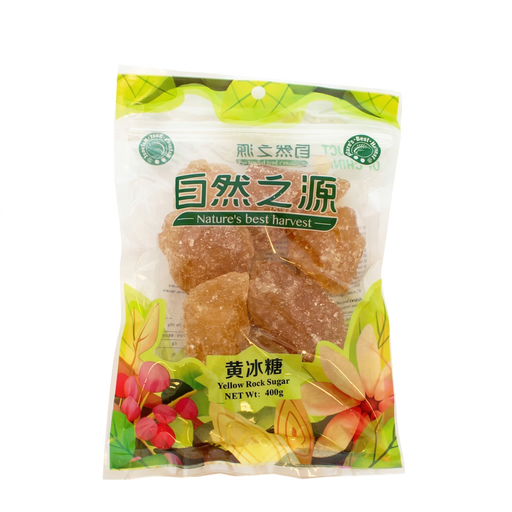
- What makes it special: An unrefined sugar from sugarcane, formed into large, golden-yellow crystals. Its flavour is mild and caramel-like, without the intense molasses note of jaggery.
- Benefits: Dissolves well in hot liquids, making it practical for teas, soups, and broths. In braised dishes, it provides not only sweetness but also an appetizing glaze.
- Who it's for: An excellent choice for preparing traditional Chinese dishes, especially red-braised (Hong Shao) recipes, as well as for sweetening drinks and dessert soups.
Nitya Foods Pesi Gur (Jaggery) 500g
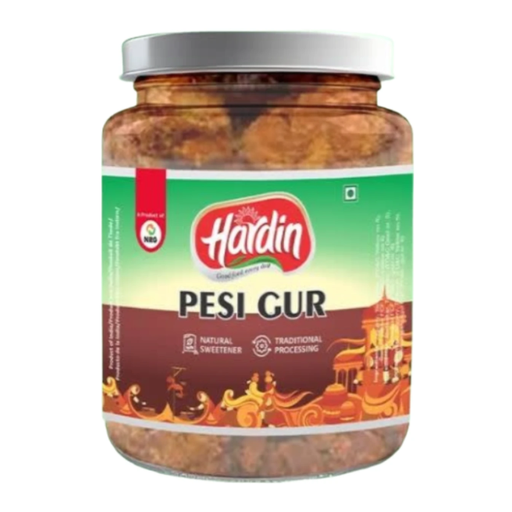
- What makes it special: This Gur is made from 100% pure sugarcane juice and has a soft, fudge-like consistency. Its flavour is deep, earthy, and rich in molasses. As it is traditionally processed, it retains traces of naturally occurring minerals.
- Benefits: The soft texture makes it easier to portion compared to hard blocks. It is a versatile sugar alternative for daily use and adds a special depth of flavour to both sweet and savoury Indian dishes.
- Who it's for: Perfect for lovers of Indian cuisine for making desserts like Ladoo or Halwa, for balancing curries and dals, or as a sweetener in tea and coffee.
Explore More Options
If our selection doesn't include the perfect product for your needs, you can find more varieties in our broader category. Discover different types of whole cane sugar and other specialty sugars to enrich your cooking.
Browse Our Cane Sugar Category Now
Frequently Asked Questions (FAQ)
What is the difference between palm sugar and jaggery (Gur)?
The fundamental difference lies in their origin. Palm sugar is derived from the sap of palm blossoms. Jaggery, also known as Gur, is an unrefined sugar made from boiled-down sugarcane juice. Both are traditional Asian sweeteners but differ in taste: palm sugar is often more caramel-like, while jaggery has a more robust, molasses-like profile.
How do you use a solid cane sugar block?
A solid cane sugar block can be processed in several ways. For precise amounts, it's best to grate it with a kitchen grater. Alternatively, you can chop or shave off pieces with a sturdy knife. If the sugar is being used in a sauce, curry, or soup, the block can also be added whole, where it will slowly dissolve.
Is unrefined sugar a healthier sugar alternative?
Unrefined sugar like palm sugar or jaggery undergoes fewer processing steps than white refined sugar. This allows it to retain small amounts of minerals (e.g., iron, calcium, magnesium) and vitamins that were present in the original plant sap. However, its calorie and sugar content is comparable to that of conventional sugar. It is therefore a more natural, flavourfully complex sugar alternative, but not a low-calorie one.


