
Lieferung heute & morgen

Qualitätsgarantie

Willkommens-Angebote freischalten: KOSTENLOSE Lieferung | Bis zu 80 % RABATT | Kostenlose 30-Tage-JoyPlus-Testphase
App herunterladen
Leaking nappies at night, a waistband that is too tight or a bulk pack left unused because the size is wrong: when buying Pampers Baby-Dry nappies, it is not just the brand name and number of nappies that matter. Weight, fit and intended use all need to match. This buying guide explains what parents and carers in Germany should look out for and which options suit different everyday situations.
The right nappy size is primarily based on body weight, not age or clothing size. For example, a child may still wear small clothes but already need size 4 nappies. The information on the packaging is the key guide:
The weight ranges overlap in some cases. If leaks occur, the next size up may be worth trying; however, if there are gaps around the legs or the waistband feels loose, the nappy may be too large.
A bulk pack of nappies is convenient, but the total price alone says little about value for money. Divide the pack price by the number of nappies and also consider how often your child needs changing. The available packs differ considerably, for example:
For fast-growing babies, a smaller pack may be the more sensible choice, even if a bulk pack has a lower cost per nappy.
Statements such as “up to 12 hours” or “up to 100% leak protection” refer to the product description and do not guarantee the same results for every sleeping position, amount of fluid or period of use. According to the brand’s product information, selected Baby-Dry models feature a fast-absorbing core, flexible side wings, double leg cuffs and, in some cases, a Stop-&-Protect pocket at the back. Even so, a correct fit and regular changing remain essential.
The nappy should fit snugly around the tummy without digging in. Check that the leg cuffs lie smoothly outwards and do not crease. Red pressure marks, frequent leaks or a waistband that remains open may indicate that the size is not suitable.
For night-time nappies, an absorbent core, secure leg cuffs and a well-fitting back section are important. A wetness indicator can show when a change may be needed. However, it does not replace checking a nappy that is visibly wet or soiled.
The Baby-Dry product information states that, depending on the model, the nappies can absorb liquid over several hours. This should be treated as a guide. Babies and toddlers should be changed sooner when necessary, particularly after a bowel movement or if skin irritation occurs.
According to the brand’s product information, several Baby-Dry variants are dermatologically tested, contain no intentionally added EU fragrance allergens in accordance with Regulation (EC) No 1223/2009 and carry the OEKO-TEX STANDARD 100 certification. These details describe the product features but do not provide individual proof of suitability for every child.
For children with sensitive skin, parents should monitor the skin after changing. If redness or discomfort occurs, stop using the product and seek medical advice if symptoms persist. The ingredients lists and safety information on the current packaging are the authoritative source.
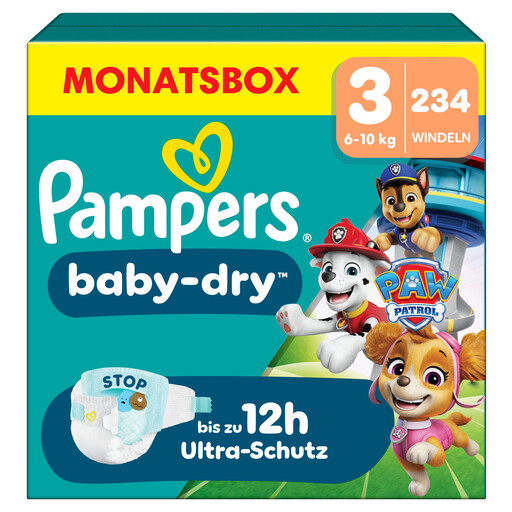
Why this product suits the profile: The large pack is suitable for families whose child is already within the weight range for size 3 and needs changing regularly. The Paw Patrol design may appeal to children moving towards a more active routine.
The clearly stated 6–10 kg range makes it easier to check the size. The wetness indicator, flexible side wings and specified back section support a practical fit check.
234 nappies per pack, a fast-absorbing core according to the product information and OEKO-TEX STANDARD 100 certification.
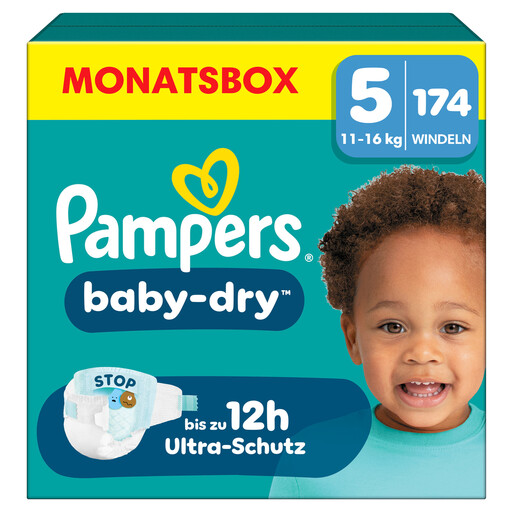
Why this product suits the profile: Size 5 is suitable for children in the mid-range weight category. This model is worth considering for families who value fit details and use nappies during both the day and night.
Double leg cuffs and flexible side wings address common weak points around the legs and waistband. The size information helps prevent choosing based on age alone.
174 nappies, a ComfortTouch outer layer according to the product description and a wetness indicator.
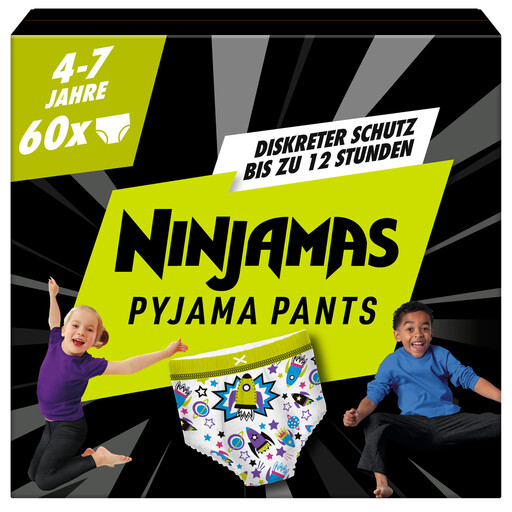
Why this product suits the profile: These pyjama pants are intended for children aged around 4 to 7 years who weigh 17–30 kg, and are pulled on like underwear. They are therefore suitable for families looking for night-time nappies or pyjama pants for children who wet the bed.
The separate age and weight information helps prevent baby nappies being used for an older child. A correct fit around the 360° waistband and properly positioned leg cuffs remain important.
60 disposable pyjama pants, a 360° FormFit waistband and QuietCloth material according to the product information.
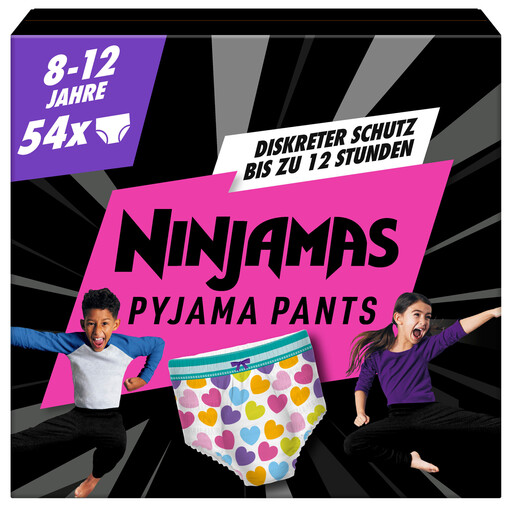
Why this product suits the profile: This variant is designed for older children weighing around 27 kg or more. It can be a discreet alternative to traditional baby nappies for children who wet the bed at night.
The higher weight range helps prevent choosing an unsuitable baby nappy size. The pants are pulled up over the hips and should neither slip down nor cause pressure marks.
54 pairs, an absorbent core and a 360° waistband according to the product description.
We have put together a complete, regularly updated list of products that fully meet these strict selection criteria and the safety regulations applicable in the EU.
Before placing your order, check the following:
Used nappies and pyjama pants belong in general household waste, not down the toilet. Packaging materials should be kept out of the reach of babies and children.
Pampers nappies size 4 are intended for this weight range. As the weight ranges overlap, you should also consider the fit, leg cuffs and leakage performance.
The product information for several Baby-Dry models states protection for up to 12 hours. This is not a fixed changing schedule. The nappy should be changed sooner if it is wet, soiled or causes a skin reaction.
According to the product information, Ninjamas pyjama pants are designed for specific weight and age ranges and are intended to be disposable. They can be used for nights when bedwetting occurs, but do not replace medical advice. If symptoms persist or you are unsure of the cause, it is advisable to seek medical assessment.