
Lieferung heute & morgen

Qualitätsgarantie

Willkommens-Angebote freischalten: KOSTENLOSE Lieferung | Bis zu 80 % RABATT | Kostenlose 30-Tage-JoyPlus-Testphase
App herunterladen
As a Joybuy Product Recommendation Officer, I see parents every day trying to make the right choice for their little ones. Buying baby diapers, especially in bulk, might seem straightforward, but it has its pitfalls. The wrong choice can lead not only to unnecessary costs but also to discomfort for your baby. This guide is designed to help you avoid the most common mistakes when buying a Pampers Premium Protection Monthly Box and make an informed decision.
Many parents focus on the total price, but overlook crucial details. Here are three typical scenarios to avoid:
To avoid these mistakes, you should focus on objective criteria. These three parameters are essential when buying baby diapers.
The right size is the foundation for leak-proof diapers. The weight recommendations on the packaging (e.g., for Pampers Size 4 or Pampers Size 5) are a good starting point, but they aren't the only factor.
A well-fitting diaper should fit snugly without digging in, offering plenty of freedom of movement.
The materials are especially crucial for sensitive baby skin. Look for specific features that enhance comfort and protection. For example, the Pampers Premium Protection line claims to have the following properties:
Buying a bulk pack of diapers is often economical, but only if the price per individual diaper is right. The calculation is simple:
Total Box Price ÷ Number of Diapers = Price Per Unit
Compare this value with smaller packs or offers from other retailers. This ensures you're actually saving money and not just buying a larger quantity at once.
Based on these objective criteria, we have selected some products from the Pampers range that suit different life stages and parental needs.
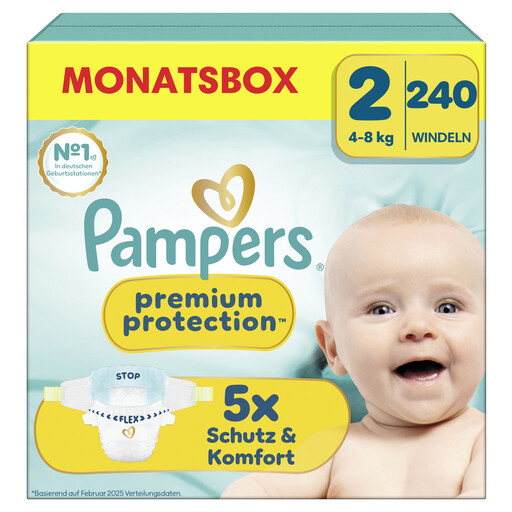
Why This Fits Their Persona: In the first few months, diaper consumption is high and skin is especially sensitive. This bulk pack covers your needs for a longer period and is specifically designed for newborns.
Addresses the skin sensitivity pitfall with features like the DermaComfort inner fleece and the absence of EU perfume allergens, according to the manufacturer.
The wetness indicator shows when a change might be due. According to Pampers, the materials are exceptionally soft.
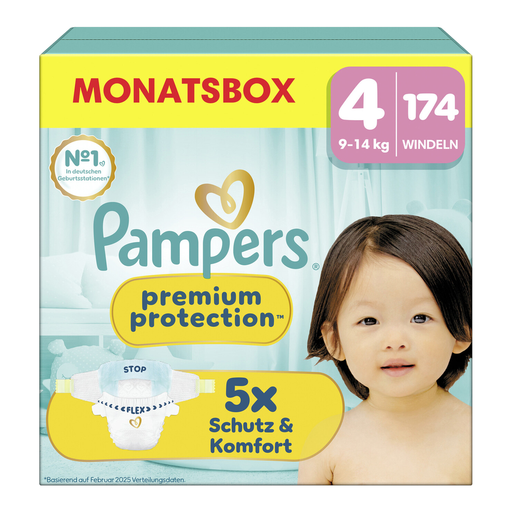
Why This Fits Their Persona: Many babies wear Size 4 for an extended period. Buying a monthly box in this size is a strategic decision to lower the cost per diaper and reduce the frequency of shopping trips.
Minimises the "growth trap" risk, as this size covers a longer period of use. The bulk pack allows for an effective reduction in the price per unit.
According to the manufacturer, it offers all-around leak protection thanks to a Stop & Protect pocket at the back and secure leg cuffs.
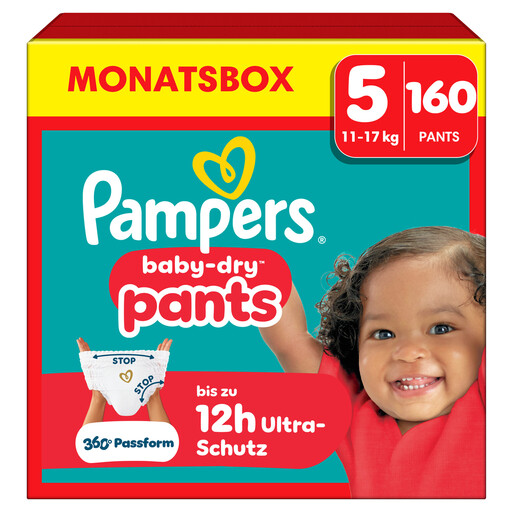
Why This Fits Their Persona: Once children become mobile, changing them while they're lying down becomes a challenge. Diaper pants, which pull up like underwear, make changes significantly easier for active toddlers.
Solves a practical usability problem that goes beyond just price. The ease of use saves time and stress in daily life with a mobile child.
The 360° stretchy waistband adapts to movement. For removal, the side seams can be easily torn open.
We have compiled a complete, real-time list of products that fully satisfy these strict selection criteria and UK safety regulations.
The term "Monthly Box" is a manufacturer's guideline. The actual duration depends heavily on your child's age and individual needs. A newborn might need 8–10 diapers per day, while a toddler gets by with 5–7. To determine how long a box will last for your situation, divide the total number of diapers in the box by your child's daily usage.
Look for repeated leaks, especially at night or during movement. Red marks on the belly, back, or thighs are a clear sign that the diaper is too tight. If the fastening tapes can barely meet in the middle of the waistband, it's also time to move up to the next size.
In most cases, yes. The deciding factor is the price per unit. Calculate this value before buying a bulk pack of diapers and compare it to smaller packs. Also, consider how quickly your child is likely to outgrow the current size to avoid getting stuck with diapers that don't fit.