Weekday meal preppers
You often make pancake batter for lunchboxes during the week and want beaters and speed settings that are easy to use. Dr. Oetker’s recipe also explains how to whisk the batter until smooth by hand.


You don’t necessarily need a hand mixer for everyday pancake batter for lunchboxes: Dr. Oetker’s basic recipe adds the milk gradually, whisking as you go. If you often make batter during the week, a hand mixer with beaters and easy-to-use speed settings can be a practical option. When it comes to cleaning and using the mixer for other batters, check the details for the specific model and attachments.
You often make pancake batter for lunchboxes during the week and want beaters and speed settings that are easy to use. Dr. Oetker’s recipe also explains how to whisk the batter until smooth by hand.
You want to keep the effort involved in cleaning the attachments you’ve used to a minimum. Philips, Bosch and Severin have different care instructions depending on the model.
If you make stiffer doughs as well as pancakes, check whether the mixer comes with dough hooks and review the quantities specified for the exact model. Bosch and Krups provide model-specific dough quantities.
First, consider whether a whisk is all you need. If you use a mixer often, think about how easy its specific attachments are to use and clean. Dough hooks are mainly worth considering if you also make stiffer doughs.
| What matters | What to look for | Who will find this especially important? |
|---|---|---|
| Mixing batter with control | Check which beaters are included and whether the speed settings are easy to reach. | When I make batter during the week, I want to be able to control the beaters and speed settings easily. Around 36% of consumers put control while mixing first. |
| Cleaning the attachments | Check the care instructions for the beaters actually included. | When I mix often, I want the attachments I’ve used to be easy to clean. Around 29% of consumers prioritise cleaning the attachments. |
| Comfortable handling | Compare the weight and cable length in relation to your bowl, work surface and socket. | When I mix at the same work surface regularly, I want the mixer to be comfortable to handle there. Handling is the top priority for around 21% of consumers. |
| Making other types of dough | Check for dough hooks and the quantity limits for the exact model. | If I want to use the mixer for stiffer doughs too, I need the right attachments and clear information for the specific model. Around 14% of consumers focus on making other types of dough. |
A higher rated power on its own doesn’t prove that a mixer is better for making everyday pancake batter. Dr. Oetker’s recipe uses a whisk for this.
Start by comparing the beaters, how easy the speed settings are to use and the care instructions. Information about stiffer doughs is mainly relevant if you plan to make them too.
Philips lists an eject button for the Philips HR3741/00, but states that none of its parts are dishwasher-safe.
Check the care instructions for the exact model and attachments rather than assuming that removable parts can go in the dishwasher.
Tefal’s German product page lists dough hooks as included with the Prep’Mix HT450B, but elsewhere says “Dough hooks: No”. The dishwasher-suitability information is also contradictory.
If these features matter to you, check the instructions for the exact version before buying.
Storing and transporting the cooked pancakes needs to be planned separately from choosing a mixer. The Federal Office of Consumer Protection and Food Safety advises eating cooked food promptly or chilling it again quickly, especially in warm weather and when serving it with perishable fillings.
As well as preparing the food, plan how you’ll keep it cool and transport it in a way that suits the filling.
The MFQ4030 is one example of a hand mixer with five speeds, beaters, dough hooks and an eject button.
According to Philips, the HR3741/00 from the 5000 Series has five speeds, a turbo function and removable beaters.
Severin says the HM 3832 combines five speeds and a spiral cable with beaters and dough hooks.
According to Krups, the 3Mix 7000 F60858 has variable speed settings and comes with dough hooks as well as beaters.
According to Braun, the MultiMix 5 HM 5000 offers nine selectable speeds and a turbo mode.
This selection includes hand mixers with beaters for making pancake batter. Models with dough hooks also give you the option of making other types of dough.
 No image available
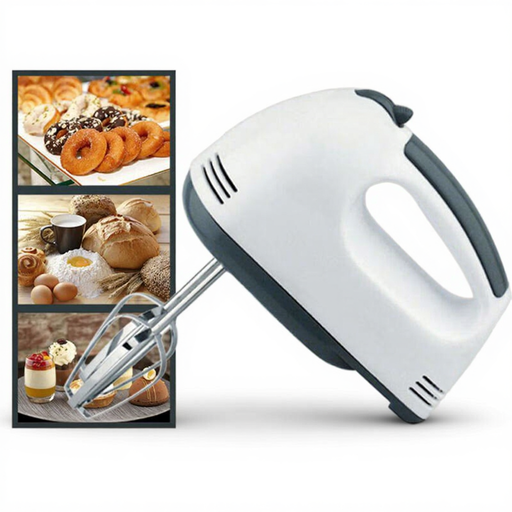
For pancake batter, the description lists a whisk and seven speed settings.
It also lists removable, dishwasher-safe attachments, plus two whisks and two dough hooks.
 No image available
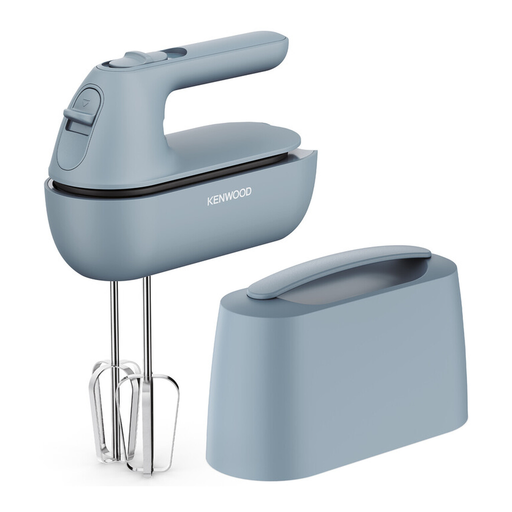
For pancake batter, the description lists a dual whisk and a five-speed control.
It also lists dishwasher-safe beaters and a storage case with a cable compartment.
 No image available
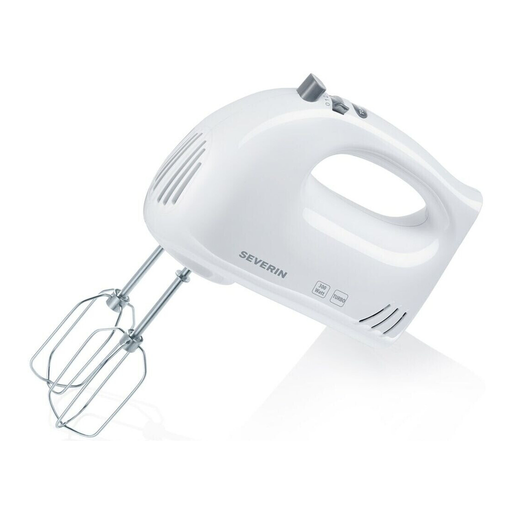
For pancake batter, the description lists two beaters and five speed settings.
It also mentions approx. 300 W, a turbo function, two dough hooks and energy class B.
 No image available
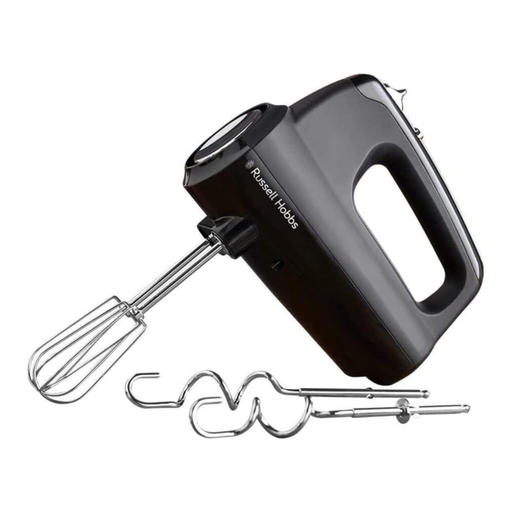
For pancake batter, the description lists two beaters and five speed settings.
It also mentions a turbo function, dishwasher-safe beaters and dough hooks, an eject button and an upright resting position.
No, you don’t need a hand mixer: Dr. Oetker’s basic recipe adds the milk gradually, whisking as you go. Whether an electric mixer suits your routine depends on how often you make the batter and which attachments you’d like to use.
Remove the beaters as instructed in the appliance manual, then check the care instructions for those specific attachments. Bosch describes some parts of the MFQ4030 as dishwasher-safe; Philips states that none of the parts for the HR3741/00 are dishwasher-safe.
The Federal Office of Consumer Protection and Food Safety advises eating cooked food promptly or chilling it again quickly. In warm weather, and especially when serving pancakes with perishable fillings, plan how to keep them cool and transport them hygienically. The mixer makes no difference to this.
No, you shouldn’t eat raw batter. The German Federal Institute for Risk Assessment reports that pathogens have been found in flour and dough and advises against eating unbaked dough. Young children are among the groups most at risk.