
Lieferung heute & morgen

Qualitätsgarantie

Willkommens-Angebote freischalten: KOSTENLOSE Lieferung | Bis zu 80 % RABATT | Kostenlose 30-Tage-JoyPlus-Testphase
App herunterladen
Anyone looking to buy pans and roasting dishes is faced with a wide choice of materials, coatings and shapes. A frying pan for quick everyday cooking, a casserole for long cooking times or an oven dish for baking all serve different purposes. The design is not the only important factor. You also need to consider whether the cookware is suitable for your hob, oven, household size and cleaning preferences.
Not every aluminium pan is automatically suitable for induction. Although aluminium conducts heat well, it is not magnetically activated by an induction hob on its own. The product therefore usually needs a suitable base, such as an integrated stainless steel plate. Claims such as ‘suitable for all hob types’ should therefore be checked in the technical product description.
An ovenproof pan may still have certain restrictions. Plastic or Bakelite handles, glass lids and coatings often have their own temperature limits. Before moving cookware from the hob to the oven, check the manufacturer’s information on maximum temperature, grill function and lids.
A non-stick pan makes frying and cleaning easier, but it still requires careful use. Metal turners, abrasive cleaners and intense heating when empty can damage the surface. The term ‘scratch-resistant’ also does not mean that every type of mechanical stress will have no consequences.
For induction-compatible cookware, compatibility should be stated explicitly. A flat base also improves contact with the cooking zone. For even cooking, the base thickness, material construction and matching diameter are more important than purely promotional claims.
A frying pan with a diameter of 24 to 28 cm is suitable for many households and everyday portions. A 30 cm pan offers more cooking space, but requires sufficient room on the hob and in the sink. A high rim is useful when preparing vegetables, pasta or sauces.
A casserole or oven roaster should be suited to the quantity of food being cooked. An oval roasting dish can accommodate a whole chicken or larger joints of meat. A 23 cm baking tin with a capacity of 1.4 litres, on the other hand, is more suitable for cakes, bread, gratins or smaller bakes.
A well-fitting lid retains heat and moisture inside the dish. With a pan with lid, a glass lid is practical because you can monitor the cooking process without removing it. Also check:
Cleaning instructions are part of the buying decision. Washing coated and enamelled surfaces by hand with a soft sponge can help extend their service life, even when the product is listed as dishwasher-safe.
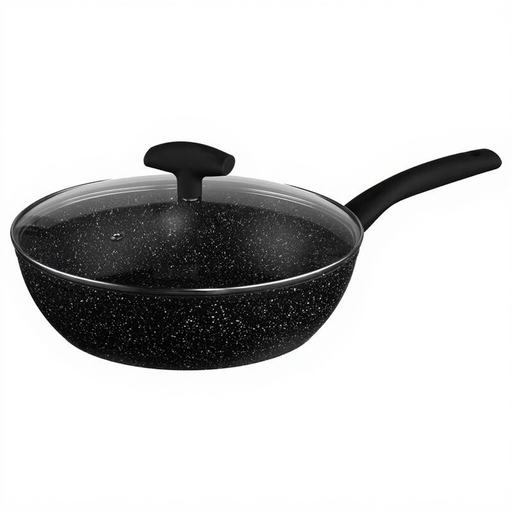
Why this product suits this profile: The 28 cm pan combines a practical size with a lid and, according to the product details, is suitable for gas, electric, ceramic and induction hobs.
The stainless steel induction base addresses a common concern with aluminium pans. The glass lid and recommendation to wash it by hand should also be taken into account.
Forged aluminium, practical 28 cm diameter, non-stick coating and soft-touch handles.
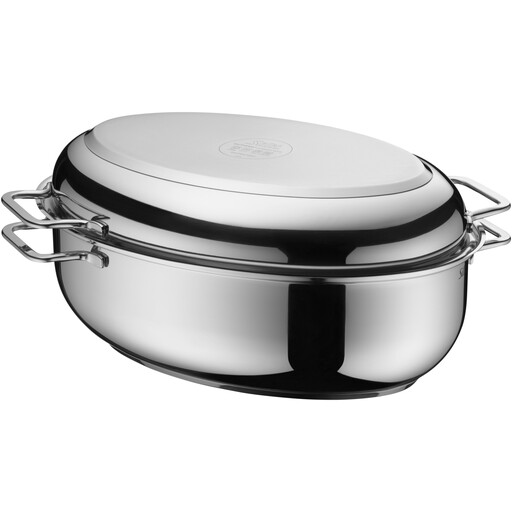
Why this product suits this profile: The stainless steel roasting dish is designed for larger meals and, according to the product description, can be used both on the hob and in the oven.
Clear information about hob and oven use reduces the risk of transferring food to an unsuitable dish. The wide pouring rim helps with controlled serving.
18/10 stainless steel, deep oval shape and reversible lid, which can also be used separately as a shallow frying pan.
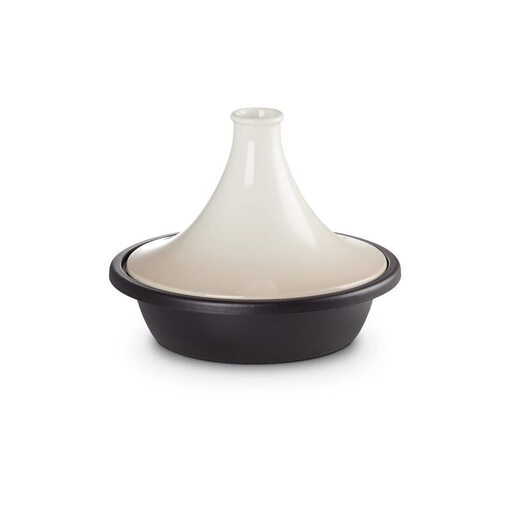
Why this product suits this profile: This cast iron tagine is designed for households that want to cook dishes slowly, keep them warm and serve them directly at the table.
The specifications state the 31 cm diameter, a capacity of 3.3 litres and suitability for induction and the oven. Its weight of 5.49 kg should be considered before buying.
Enamelled cast iron, conical stoneware lid, use on all hob types and in the oven up to 260 °C.
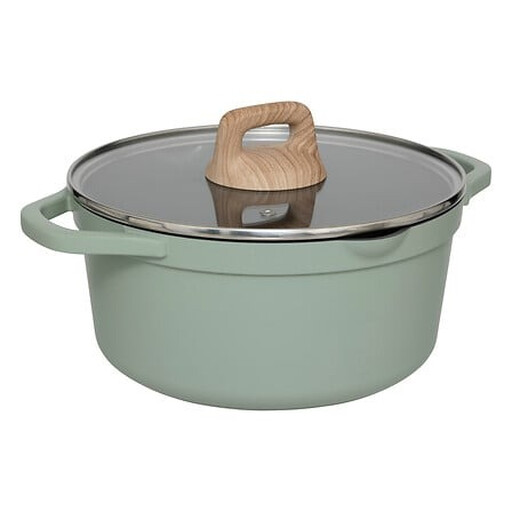
Why this product suits this profile: The 24 cm cast aluminium casserole is suitable for braising, sautéing, roasting and slow cooking in manageable portions.
The product details clearly specify the material, dimensions, lid and intended uses. This makes it easier to compare the cookware with your existing hob size and the volume you need.
Even heat distribution thanks to cast aluminium, a glass lid and a 24 cm format for everyday casseroles.
We have put together a complete, regularly updated list of products that fully meet these strict selection criteria and the safety regulations applicable in the EU.
A pan is suitable for induction when the manufacturer explicitly states this. Aluminium usually requires a magnetic stainless steel base. Cast iron and many stainless steel models generally work on induction hobs, but they must also be identified as compatible.
For several people, a capacity of around 3 to 5 litres and a diameter or length of approximately 28 to 40 cm is often suitable. The right choice depends on portion sizes, oven dimensions and the shape of the food being cooked. An oval oven roaster is particularly useful for long or large ingredients.
A non-stick pan usually allows for easy cleaning and food to be released effortlessly. Stainless steel is generally more resistant to kitchen utensils and high temperatures, but requires suitable control of temperature and fat when searing. The deciding factors are therefore your cooking habits, the level of care required and the intended use.