Origami photographers without a lighting kit
You want to photograph individual folded pieces on a small table and need a light with a suitable modifier and stand.


If you don’t already have a light, a compact continuous-light kit is a natural place to start — provided the stand and open softbox will fit beside your table. If you have a light that’s explicitly compatible, a single light modifier may be all you need. To keep the folds visible, position the soft light so that some distinct transitions between light and shadow remain.
You want to photograph individual folded pieces on a small table and need a light with a suitable modifier and stand.
You want to keep using your existing light and are looking for a modifier that’s explicitly compatible and can be set up beside your subject.
You regularly photograph small paper objects and are weighing up a light box with a limited shooting area against lighting you can position freely.
First, decide how much shadow you want to show the folds, and where the light and stand can fit beside your table. Then consider your existing equipment, the colours of the paper and exactly what’s included.
| What you need | What to check before buying | Who is this important to? |
|---|---|---|
| Keeping the folds visible | Look for a diffuser and the flexibility to position the light to the side; assess a test shot taken from your planned camera angle. | If you want to show the three-dimensional shape, shadows should be soft but still distinct. Around 34% of consumers would put showing the shape first. |
| Setting up in a tight space | Allow room beside the table for the open softbox and stand, and make sure you can position everything securely. | On a small table, you still need space beside the subject for the light and stand. Around 27% of consumers would prioritise the space required. |
| Using equipment you already own | Check the light and modifier models, as well as the specified fitting; a similar appearance doesn’t guarantee they’ll fit together. | If you already own a light, you’ll want to keep using it with a modifier that’s explicitly compatible. Around 13% of consumers would put this consideration first. |
| Matching the paper colours | Check the colour temperature of the specific model and set the white balance to suit the paper you’re actually using. | With coloured paper, you’ll want to control the lighting and set the white balance accordingly. Around 13% of consumers would prioritise matching the paper colours. |
| Checking what’s included | Compare the list of included parts: light, diffuser, stand, power supply and any adapters. | If you still need a light and stand, you’ll want to know exactly what the kit contains. Around 13% of consumers would put a complete, compatible set of components first. |
Shadows help show the three-dimensional shape of folded paper art. A photo light box or front lighting can make that effect less pronounced.
Check the folds in a test shot and try changing the light position before adding more lights.
A modifier doesn’t produce light by itself. What’s included varies, so depending on your setup, you may also need a compatible light or stand.
Check the parts list for the specific offer against the equipment you already own.
NEEWER’s German SF40 page specifies E27, while a separate EU page specifies E26. For the amaran COB 60x S, the stated illuminance value applies to the reflector, not a softbox setup.
Check the specifications for the exact version on offer, and only compare light output values when they’ve been measured under the same conditions.
NEEWER describes the SF40 as a compact continuous-light softbox kit. The LB30B/LB40B range is a photo light box rather than a softbox you can position freely.
SmallRig’s guide specifies that the RA-R4545 mini is for users with compatible lights from the RC-60 and RC-100 ranges.
amaran describes the COB 60x S as an adjustable continuous light with a Bowens mount, and lists compatible softboxes separately.
The Godox UL-BOX range includes modifiers in sizes such as 40 × 40 cm and 45 × 60 cm.
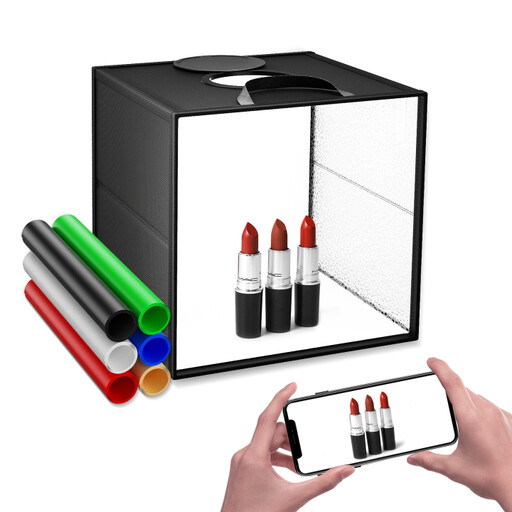
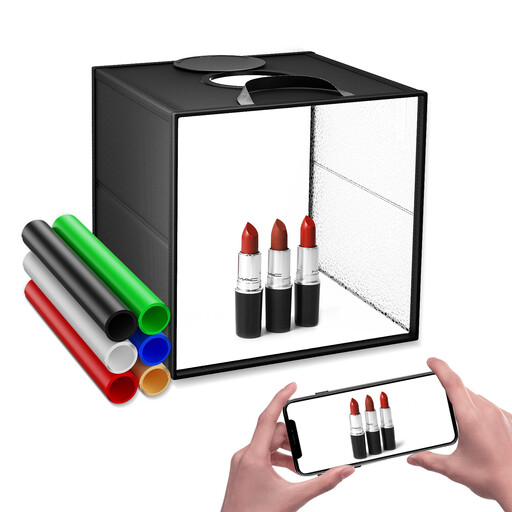
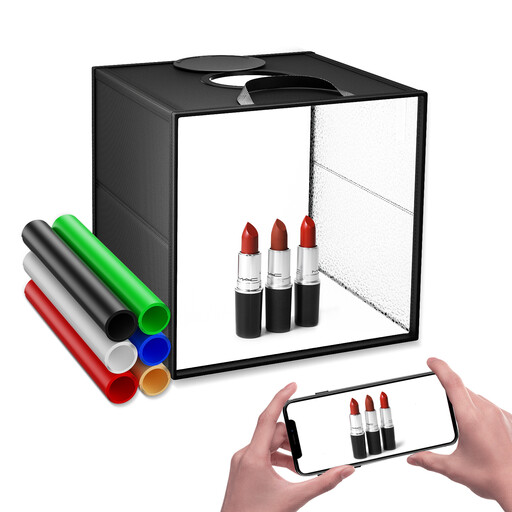
The products below are photo light boxes for small tabletop shots. They offer a limited shooting area rather than a softbox you can position freely beside your subject. Bear this in mind if you want shadows to show the paper folds.
 No image available
For small tabletop subjects, when you want a foldable photo light box with a choice of backgrounds. The limited options for positioning the light can make it harder to direct shadows to show the folds.
30 × 30 cm; dimmable light; six coloured backgrounds.
 No image available
For regular tabletop shots, if you prefer a photo light box with soft light and adjustable brightness. Its design limits how freely you can position the light to emphasise individual folds.
Diffusion cloths; coloured backgrounds; adjustable brightness.
 No image available
For small subjects and changing angles, if you want to use a foldable photo light box with soft light. Even lighting can reduce the shadows that give folded paper a sense of depth.
Coloured backgrounds; adjustable brightness.
Position the diffused light source to one side and check a shot from your usual camera angle. If one side is too dark, Canon Europe recommends using a white card as a reflector. Don’t automatically fill in every shadow if it helps show the folds.
Only if you already have a compatible light. The SmallRig RA-R4545 mini guide lists the modifier and its accessories, but not a light. Check model compatibility and what’s included with every offer.
Make sure the stand and mount hold the light securely in the intended position, then photograph the actual paper from your usual camera angle. Check the shadows in the folds and the colours before photographing several pieces with the same settings.
The relevant requirements are the EU regulations that apply to the specific electrical product. As the European Commission explains, CE marking is only required when relevant harmonised legislation calls for it. The Bundesnetzagentur’s market surveillance checks, among other things, manufacturer details, any required instructions and warnings in German, and conformity documents. The fact that a product is described as LED doesn’t, by itself, tell you which requirements apply in a particular case.
According to Verbraucherzentrale, consumers buying online generally have a 14-day right to withdraw from the contract, starting when they receive the goods; exceptions may apply in individual cases. Your statutory rights against the seller are separate from any voluntary manufacturer’s guarantee.