
Lieferung heute & morgen

Qualitätsgarantie

Willkommens-Angebote freischalten: KOSTENLOSE Lieferung | Bis zu 80 % RABATT | Kostenlose 30-Tage-JoyPlus-Testphase
App herunterladen
Paper disposable plates make serving easier at parties, barbecues, picnics and in everyday life. However, not every paper plate is suitable for every type of food. Thin plates can give way under moist dishes, an unsuitable coating may rule out microwave use, and smaller diameters are often not large enough for main courses.
Before buying, it is therefore worth checking the material, size, grease resistance and disposal requirements. The following advice will help households, hosts and event organisers avoid unnecessary purchases.
A 15 cm plate is mainly suitable for cake, fruit, snacks or desserts. Larger formats are more practical for a complete meal. A 23 cm disposable plate or a 9-inch paper plate offers more space for side dishes and main courses.
The size should not be chosen solely according to the number of people. It is also important to consider whether you will be serving dry snacks, greasy food, salads with dressing or hot dishes.
Paper disposable plates may have an inner coating. Depending on the design, this can improve grease or moisture resistance, but on its own it says nothing about whether the plate is suitable for microwave use. Buyers should look specifically for a corresponding statement from the manufacturer.
According to the product description, the white 23 cm plates from Jeden Tag are not suitable for microwave use or boiling liquids. They are therefore intended for serving, not heating.
The description biodegradable disposable plates refers to the material properties of the particular product. It does not automatically mean that the plates can be disposed of in the food-waste bin or home compost in every local authority area. Food residue, coatings and regional disposal requirements may all play a role.
For sugarcane plates, you should therefore check the specific product information and the guidance provided by your local waste disposal service.
Paper plates are often made from cardboard or fibre-based materials. A basic design is usually sufficient for dry snacks. For hot, greasy or moist foods, details such as grease-resistant paper plates, water resistance or a sturdy construction are important.
“Heavy Duty” indicates a reinforced design in the product name, but it does not replace checking whether the plate is suitable for your specific intended use. For barbecue food or dishes with sauce, the plate should offer enough surface area and have a stable shape.
For the plates described here, 9 inches is approximately 22.5 cm. In practical use, there is therefore only a small difference in size between 23 cm and 9 inches.
If you want to heat food directly on the plate, you need a version explicitly labelled as microwave-safe. This information should come from the manufacturer and must not be inferred from the material name.
The usage instructions for the particular product also apply to microwave-safe disposable plates. Very hot liquids or particularly long heating times may be unsuitable depending on the construction.
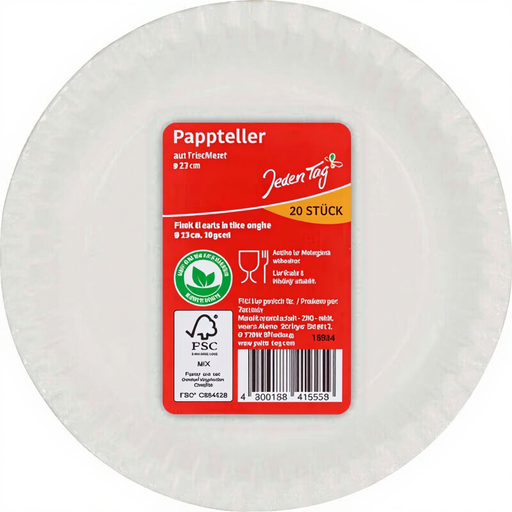
Why this product suits this profile: The pack of 20 white paper plates with a diameter of 23 cm covers typical uses at parties, picnics, barbecues and in everyday life.
The clearly stated diameter makes portion planning easier. The product description also specifies a food-safe inner coating and explicitly states that the plates are not suitable for microwave use.
23 cm diameter, 20 plates per pack and, according to the product information, suitable for hot and cold food. Do not use with boiling liquids.
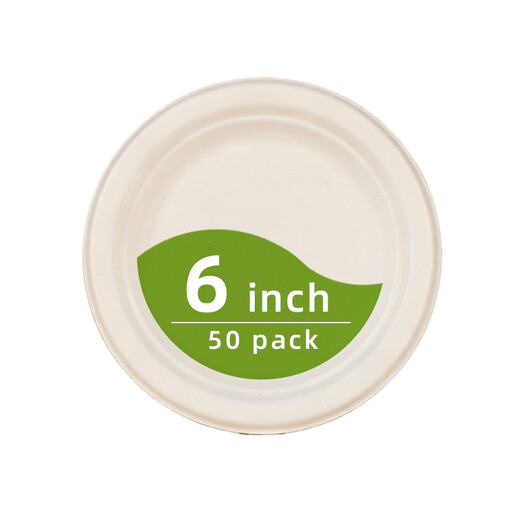
Why this product suits this profile: The pack of 50 plates with a 15 cm diameter is designed for lots of small portions and is suitable for desserts, cake, snacks and buffets with several guests.
The product name specifies the material, quantity and diameter. This makes it easier to check before buying whether the plates are intended for small portions rather than complete main courses.
50 plates per pack and sugarcane material according to the product name. This design is intended for dessert and snack portions.
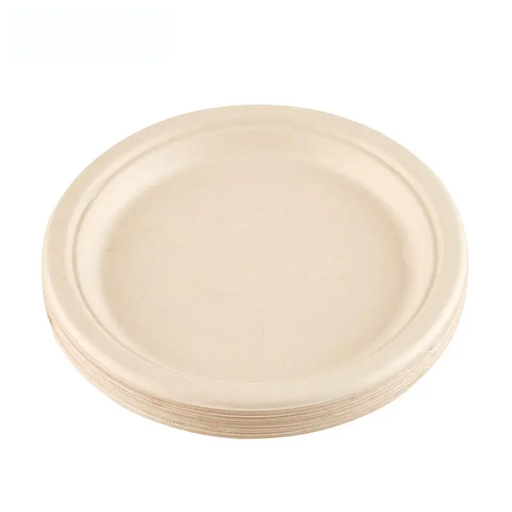
Why this product suits this profile: According to the product information, the food-grade sugarcane fibre plates have a diameter of approximately 22.5 cm and are intended for parties, picnics, events and everyday use.
The product information explicitly states that the plates are microwave-safe and resistant to water and oil. This makes the key usage limits clearer before purchase.
Approximately 9 inches or 22.5 cm in diameter, described as biodegradable and microwave-safe according to the product information. Disposal should follow local requirements.
We have put together a complete, regularly updated list of products that fully meet these strict selection criteria and the safety regulations applicable in the EU.
For main courses, disposable plates measuring approximately 22.5 to 23 cm are generally more practical. They provide enough room for a portion with side dishes. 15 cm plates are better suited to desserts, slices of cake and snacks.
Not as a general rule. Only products with an explicit statement from the manufacturer confirming microwave suitability should be used for this purpose. According to the product information, the 23 cm paper plates from Jeden Tag described here are not suitable for microwave use. By contrast, the Ochama plates measuring approximately 9 inches are described as microwave-safe according to the product information.
The term biodegradable suggests a particular material property, but it does not determine the disposal method on its own. The product information and the rules set by your local waste disposal service are decisive. Sugarcane plates should therefore not be placed in the food-waste bin or home compost without checking first.