Folders dealing with visible hand shadows
If you film from above by a window, your hands may block the daylight. First, check whether a reflector is enough. If you need an extra light, choose one that suits the size of your folding area.


Start with indirect window light and a white reflector before buying an extra light: often, all you need to do is brighten the shadows on the side furthest from the window. If you need more control over changing daylight, choose based on the size of your folding area, how you want to shape the light, colour temperature and secure mounting. A panel is usually more straightforward to set up, while a COB light with a softbox offers greater flexibility but takes up more space.
If you film from above by a window, your hands may block the daylight. First, check whether a reflector is enough. If you need an extra light, choose one that suits the size of your folding area.
If you use different paper colours or film longer sequences of steps, adjustable colour temperature can be useful. Match the white balance to the actual lighting conditions.
If you often move your setup, check that the light, mount and power supply will fit alongside your camera and leave room for your hands.
Best for: When indirect daylight provides enough light for your folding area and you only need to brighten the shadow side.
The trade-off: You won’t need an extra light, but the direction and strength of daylight can change.
Best for: When you want to brighten a specific tabletop area or reduce hand shadows in a fixed location.
The trade-off: With a panel that has a table clamp, its height and angle may limit the space available above your folding area.
Best for: When you want to shape the light over a larger area or adjust the distance from your folding area.
The trade-off: Light modifiers, compatible fittings and secure mounting all take up extra space.
Best for: When you move between filming locations or only want to brighten a small area.
The trade-off: A compact design alone doesn’t guarantee even lighting across your entire folding area.
First, check whether window light and a reflector brighten the shadows enough. Adobe recommends using reflectors or diffusion to soften harsh shadows. If you add a light, consider the actual area in the frame, the white balance and whether your setup leaves your hands and camera unobstructed.
| What you’re looking for | What to check before buying | Who it matters to |
|---|---|---|
| Soft light and clearly visible fold lines | Size of the illuminated area; dimming or diffusion; secure positioning of the mount. | If your hands cast harsh shadows while you fold, you’ll still want to see the fold lines clearly. Around 36% of consumers prioritise soft light and visible folding steps. |
| Accurate paper colours | Colour temperature range of the specific model; test shot with white and coloured paper; white balance at your filming location. | If you use coloured paper, you’ll want to avoid colours looking different under window light and artificial light. Around 29% of consumers put accurate paper colours first. |
| Consistent light during longer filming sessions | Power supply and what’s included; test video at your planned frame rate and dimming level; whether you can adjust the extra light. | For longer lessons, you’ll want to be able to control the lighting throughout the recording. Around 21% of consumers prioritise consistent light throughout a filming session. |
| Space, mounting and portability | Table clamp or tripod fitting; clear line of sight and room to move; mounts and power supply actually included. | If your work table is small or you move between filming locations, your setup needs to work with your camera and hands. Around 14% of consumers focus on space requirements and portability. |
For coloured paper, a Kelvin rating is only a starting point: Adobe and Canon Europe explain that the way light affects colour can vary depending on the filming conditions. Check the colours in a test shot and set the white balance to suit the scene.
Wattage alone doesn’t tell you how soft shadows will look on the paper and your hands. Adobe explains that larger light sources produce softer light. A COB point light doesn’t become a panel light just because it has a high wattage rating.
Assess the shadows in a test shot. If you choose a COB light, check whether you’ll need a suitable light modifier and a secure mount.
A light modifier and suitable mount, if purchased separately, will take up extra space in your setup.
Window light and room lighting can look different, and your camera’s white balance affects how colours appear too. Adobe and Canon Europe recommend assessing colour for the specific filming conditions.
Take a test shot with your paper in your actual filming location and set the white balance for those lighting conditions.
Ulanzi lists a colour temperature range of 3200–5500 K for the VL81, while Joybuy Germany’s product description gives 3200–5600 K. Specifications can therefore differ even for products with the same model name.
Before buying, check the exact version and its specifications against the product documentation.
Desk panels such as the Key Light Air MK.2 are worth considering for a fixed filming location.
Bi-colour panels in the LP range, such as the LP400Bi, are an option for an adjustable setup by a window.
Point light sources such as the COB 60x S are suited to setups where a light modifier is used to illuminate the folding area.
Panels such as the PL60B are worth considering as adjustable fill lights for filming by a window.
Compact video lights such as the VL81 are designed for portable setups and small areas that need fill light.
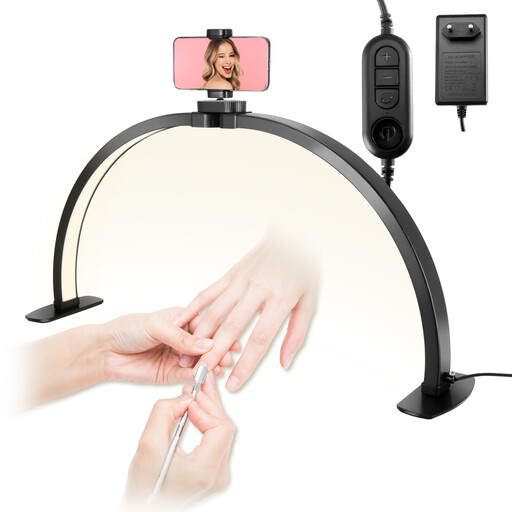
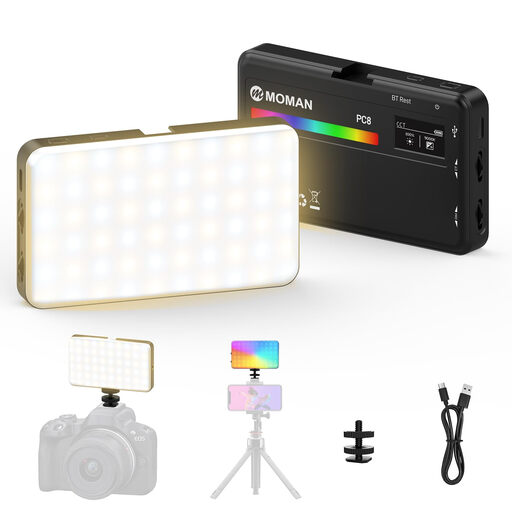
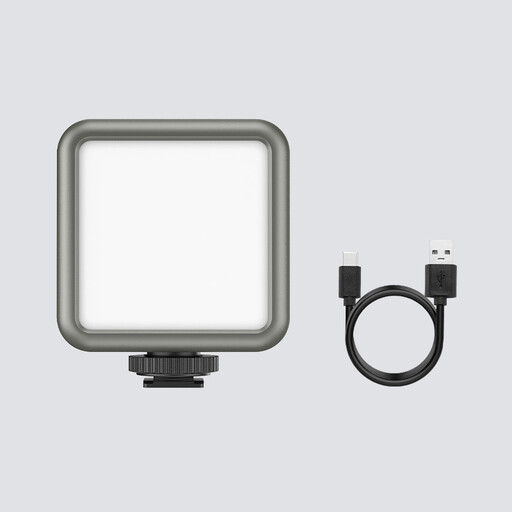
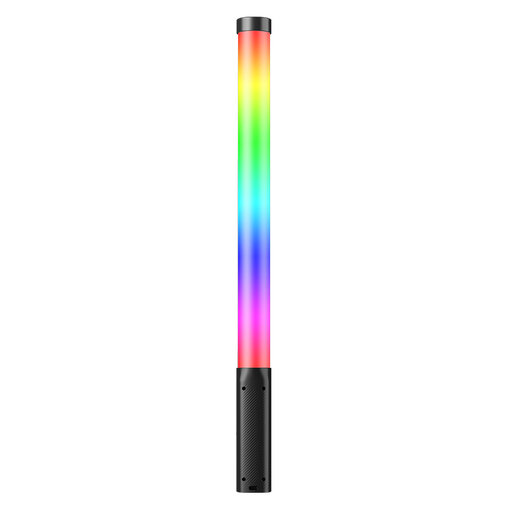
The following Joybuy options range from a 30-inch table light to compact camera and handheld video lights.
 No image available
As a table light with a phone holder, it’s worth considering for a fixed filming location. Whether it illuminates your entire folding area depends on your setup.
30 inches; three colour temperatures from 3000–6000 K; ten dimming levels.
 No image available
As a portable video light, it’s worth considering if you’re looking for a compact option for filming in different locations.
Colour temperature range 2500–9000 K; built-in 3100-mAh battery; adjustable brightness.
 No image available
This compact video light can work well as an addition for small filming areas. Check how it performs as the main light for your entire folding area using your own framing.
2000-mAh battery; colour temperature range 2500–9500 K; RGB and dimmable; magnet on the back.
 No image available
This handheld design is worth considering as a portable addition when filming. Check that you can position it securely in your setup.
10 W; 360 lux at 0.5 m; 3300-mAh battery; RGB; colour temperature range 2500–9000 K.
Not necessarily. First, try indirect window light and a white reflector on the shadow side. Take a short test shot to check that the fold lines and your hands are still easy to see.
Check the paper colours at your actual filming location, match your extra light to the existing light and set the white balance to suit the scene. A Kelvin rating can’t replace checking how the colours look in the current window light.
Check the clamp or tripod fitting, cable routing and the space your hands need to move. For the LP400Bi and LP600Bi, Godox recommends a dry, well-ventilated setup and disconnecting the power before cleaning, among other things. Follow the manual for the exact version you buy.
For products that must carry a CE marking under relevant EU rules, the manufacturer is responsible for conformity assessment, the EU Declaration of Conformity and the marking. The European Commission advises checking which rules apply to the specific product. CE is not an independent test of light output.
Electrical and electronic waste must be collected separately from general waste. Germany’s Federal Ministry for the Environment explains that private consumers can return old appliances free of charge. If you return one to a retailer without buying a new product, the retailer’s obligation to accept it depends, among other things, on the appliance’s size and whether the retailer is required to take it back.