
Lieferung heute & morgen

Qualitätsgarantie

Willkommens-Angebote freischalten: KOSTENLOSE Lieferung | Bis zu 80 % RABATT | Kostenlose 30-Tage-JoyPlus-Testphase
App herunterladen
A good parasol not only provides shade but also offers reliable protection from UV radiation and can withstand more than just a light breeze. However, the market is overwhelming, and many products don't live up to their descriptions. As a Joybuy Product Recommendation Officer, I see every day what features distinguish a durable umbrella from a short-lived one. In this guide, I'll show you the three main pitfalls to watch out for and how to find the perfect model for your garden, balcony, or for when you're on the go.
Many buyers focus on price or appearance, overlooking critical technical flaws that only become apparent with use.
To avoid these mistakes, you should check three central features before buying. These determine the durability, safety, and functionality of your parasol.
The Ultraviolet Protection Factor (UPF) indicates how much UV radiation the fabric blocks. A value of UPF 50+ means that less than 1/50th (or under 2%) of UV rays can penetrate the fabric. This is the highest protection standard available. Look for specifications like "certified according to AS/NZS 4399" or similar standards that prove reliable protection. A simple polyester canopy without a special coating typically does not achieve this value.
A wind-resistant parasol depends heavily on its frame and canopy.
The right type of parasol depends on its intended use and your needs.
Based on these objective criteria, we have identified a few models that represent well-thought-out solutions for specific requirement profiles.
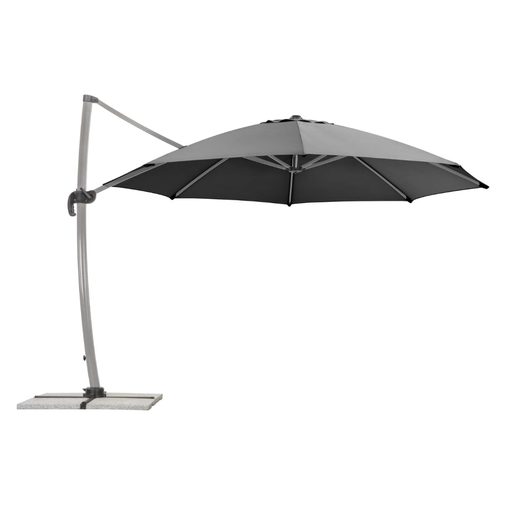
Why it's a great fit: With a 350 cm diameter, this cantilever parasol provides a large shaded area without a central pole getting in the way. The 360° rotation via a foot pedal and its tilting capability allow for flexible positioning throughout the day.
The powder-coated aluminium frame and the included base stand (for paving slabs) ensure high stability, avoiding the pitfall of an unstable construction. The canopy is certified according to AS/NZS 4399, providing reliable UV protection.
Large diameter (350 cm), 360° rotatable, tiltable. Includes a protective cover and a base stand (slabs not included).
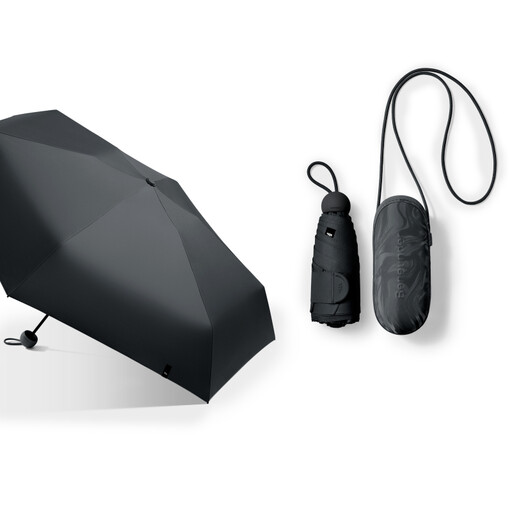
Why it's a great fit: With a folded size of just 19 cm and a weight of approx. 248 g, this compact umbrella is extremely portable. It is designed for the daily commute or for travel where both sun and rain protection are needed.
Despite its compact size, the umbrella features a fibreglass-aluminium alloy frame, making it wind- and water-repellent. The L.R.C black coating provides high UV protection, debunking the fallacy that small umbrellas can't offer good protection.
Extremely compact (19 cm folded), very lightweight (approx. 248 g). Includes a capsule case for transport.
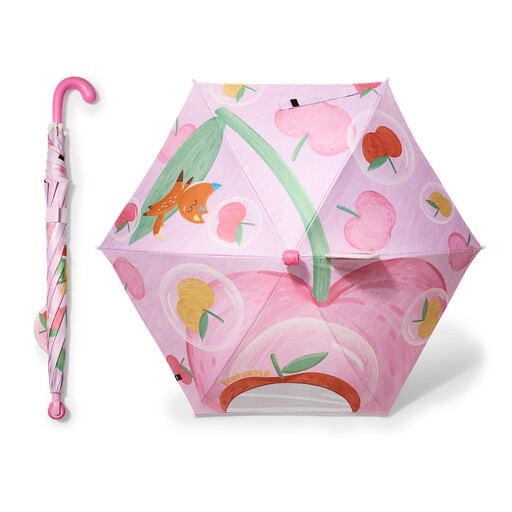
Why it's a great fit: This umbrella was designed specifically for children. It is lightweight (approx. 271 g), easy to open, and has safety features like rounded tips to prevent injuries.
It addresses the pitfall of impractical handling with a child-friendly design and a smooth mechanism. According to the manufacturer, the L.R.C coating offers UPF 50+ protection that blocks ≥99.9% of UV rays, ensuring reliable sun safety.
Child-safe design with rounded tips, lightweight, high UV protection (UPF 50+). Transparent viewing window for a clear line of sight.
We have compiled a complete, up-to-date list of products that fully meet these strict selection criteria and safety regulations.
UPF stands for "Ultraviolet Protection Factor" and is a measure of sun protection for textiles. A UPF 50+ rating means the material blocks more than 98% of harmful UV radiation. This is the highest standard and offers very high protection for the skin, comparable to sunscreen but as a physical barrier.
Proper anchoring is crucial for stability. A center-pole parasol requires a base whose weight is appropriate for the parasol's diameter. As a rule of thumb, you should allow for at least 10 kg of weight per meter of parasol diameter (e.g., a 30 kg base for a 3 m parasol). Cantilever parasols need special base stands weighted down with heavy paving slabs (often 50x50 cm) to prevent them from tipping over in the wind. Always close the parasol when strong winds pick up.
Wind stability depends heavily on the construction, material, and anchoring. A high-quality, well-anchored garden parasol with an aluminium or fibreglass frame and a wind vent can withstand light to moderate gusts of wind. Manufacturers rarely provide exact specifications in wind speeds (Beaufort scale) because local conditions (open field vs. sheltered patio) vary greatly. As a general rule, every parasol should be closed and secured during strong winds or severe weather warnings to prevent damage.