Choosing a parasol requires an analysis of technical parameters tailored to your specific location and individual needs. Factors such as material specifications, mechanical features, and the UV protection factor are crucial for the product's longevity and performance. This guide breaks down the key criteria to help you make an informed decision.
Buyer's Guide: What to Look for in a Parasol
A parasol's functionality is defined by the interplay of its size, shape, material, and ease of use. A systematic review of these features is essential for selecting the right model.
1. Parasol Size and Shape: Round or Square?
The geometry of the canopy should be based on the area you need to shade.
- Round Parasol: A round parasol creates a classic, central shaded area, making it well-suited for round tables or as a freestanding element in the garden. The diameter is the key measurement here.
- Square Parasol: A square parasol is often the more efficient solution for balconies, patios, or for shading rectangular dining sets. It allows for seamless coverage right up to walls or into corners. Models like the balcony parasol are often designed in a rectangular or half-round shape to save space.
As a rule of thumb for sizing: the parasol should extend beyond the area to be shaded by at least 50 cm on all sides to provide adequate protection as the sun moves.
2. Material and UV Protection: Technical Specifications
The canopy is the functional heart of the parasol. Its quality is measured by two main criteria:
- Fabric Density: Measured in grams per square metre (g/m²), the density determines the fabric's tear resistance and durability. Values from 160 g/m² are considered a solid baseline. High-quality polyester or polyacrylic fabrics are also often treated to be water-repellent and mould-resistant.
- UV Protection: A parasol's UV protection is rated using the Ultraviolet Protection Factor (UPF). A UPF of 50+ means the fabric allows less than 1/50th (or under 2%) of UV radiation to pass through. Products tested according to standards like AS/NZS4399 offer verified protection.
3. Operating Mechanism: Crank and Tilt Function
Ease of use is a key feature for daily operation.
- Parasol with Crank: An integrated crank mechanism allows for effortless and smooth opening and closing of the parasol. This is particularly advantageous for large models like a garden parasol or market parasol.
- Tilting Parasol: A tilt function in the pole allows the canopy to be angled sideways. This feature is essential for providing optimal shade from the low-lying sun in the morning or evening. Some models even offer a dual-sided or multi-level tilt.
4. Frame and Stability: Material and Mounting
The frame bears the entire load and must be able to withstand wind. Aluminium is lightweight and rust-proof, while powder-coated steel offers high stability. The number of ribs (usually 6 or 8) also contributes to stability. However, a suitable and sufficiently heavy parasol base is crucial. The recommended minimum weight of the base increases with the parasol's diameter.
Our Product Selection for 2026
Based on an analysis of technical specifications and practical utility, we present three models suitable for different applications.
1. Schneider Schirme Parasol Salerno mezza 150x150cm
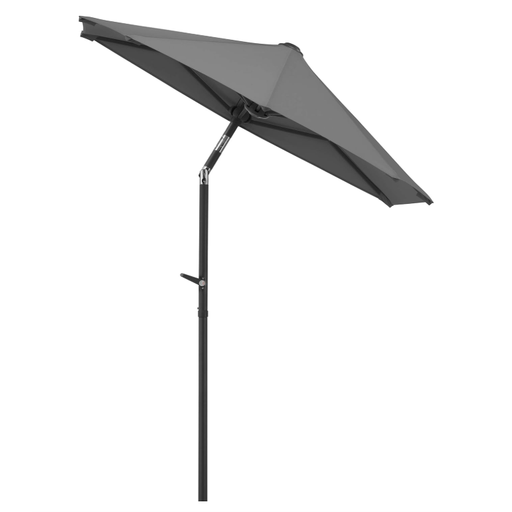
- Why we recommend this product: With its 150x150 cm square shape and dual-tilt function, the Schneider Salerno mezza is specifically designed for the demands of a balcony. The metal joints, offset by 90°, allow for exceptionally flexible shade alignment. The powder-coated steel frame and 38 mm diameter pole ensure a robust construction.
- Pros:
- Compact, square shape: Ideal for placement close to the edge of a parasol for the balcony.
- Dual-tilt function: Maximum flexibility in positioning.
- Crank mechanism: Convenient opening and closing.
- Water-repellent cover: 100% polyester with a mould-resistant treatment.
- Who it's for: Users with rectangular balconies or small patios who need a precise and flexible shading solution with a high degree of user convenience. The anthracite parasol colour also has a modern look and is resilient to showing dirt.
2. OUTFIT Market Parasol Ø3M with Crank and Tilt Function
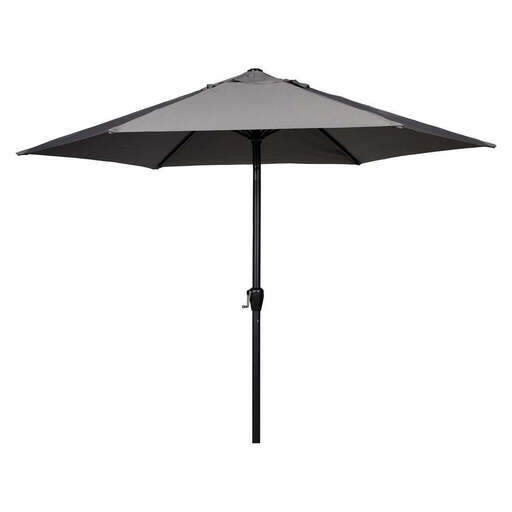
- Why we recommend this product: This model from OUTFIT offers extensive shade with its 3-metre diameter, making it ideal for gardens and large patios. The parasol combines a high UV protection factor of UV50+ with a lightweight yet sturdy aluminium pole (Ø 48 mm). Operation is simplified by the integrated crank and side-tilt function.
- Pros:
- Large diameter: 300 cm for an expansive shaded area.
- High UV protection: UV50+ for effective protection against solar radiation.
- Lightweight aluminium frame: Rust-proof and easy to handle.
- Crank and tilt function: Standard for high convenience on large parasols.
- Who it's for: Homeowners with a garden or large patio who need a classic market parasol with wide shade coverage and reliable UV protection.
3. Woltu Balcony Parasol Ø 155cm with UV Protection 50+
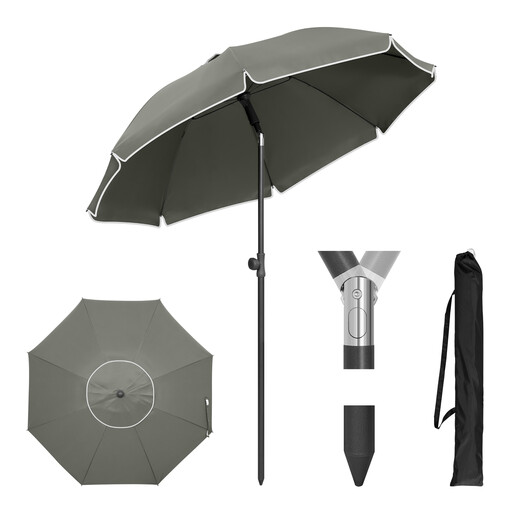
- Why we recommend this product: The Woltu parasol stands out for its portability and flexibility. With a 155 cm diameter, a lightweight design, and an included carrying bag, it's suitable not only for the balcony but also for the beach or park. The tool-free click system allows for assembly in under a minute. According to the manufacturer, its UPF50+ protection blocks over 99% of UV rays.
- Pros:
- Highly portable: Lightweight and includes a carrying bag.
- Excellent UV protection: UPF50+.
- Flexible adjustment: Height-adjustable and can be tilted 35° to either side.
- Quick assembly: Tool-free click system.
- Who it's for: Individuals looking for a mobile and versatile shading solution for various locations like the balcony, garden, or outings, who value quick setup and takedown.
Discover More Models and Accessories
The models presented here cover specific use cases. If your requirements differ—for instance, in terms of size, design, or special mounting solutions—you can find a wider selection in our main category. There, you will find other types of parasols as well as matching accessories like bases and protective covers.
Discover more Garden Furniture and Parasols.
Frequently Asked Questions (FAQ)
1. What does UV protection 50+ mean for a parasol? A UPF (Ultraviolet Protection Factor) of 50+ is the highest protection category for textiles. It indicates that the fabric allows less than 2% of harmful UVA and UVB rays to penetrate. This offers a high level of skin protection but does not completely replace the need for sunscreen, as scattered and reflected light still pose a risk.
2. How do I secure a parasol safely? Secure mounting depends on the type of parasol and its location. For freestanding parasols, a base with sufficient weight (often 40 kg or more for large models) is required. On balconies, special railing mounts can also be used. The parasol should always be closed in rising winds or gusts to prevent damage and accidents.
3. What parasol size is suitable for my balcony? For a standard balcony, compact models with a diameter of 150 cm to 200 cm or rectangular parasols around 150x200 cm are often ideal. A half-round balcony parasol can be placed directly against the building wall, saving valuable space. Measure the available area on your balcony and ensure there is enough room to move around the parasol.

