
Lieferung heute & morgen

Qualitätsgarantie

Willkommens-Angebote freischalten: KOSTENLOSE Lieferung | Bis zu 80 % RABATT | Kostenlose 30-Tage-JoyPlus-Testphase
App herunterladen
A parasol should provide shade, be easy to use and suit the outdoor space you have available. In practice, however, the wrong purchase is often down to something other than the fabric itself: the parasol may be the wrong size, the base may be too light, or the mechanism may leave too little room to move where you plan to use it.
Three common marketing pitfalls can lead to unnecessary expense:
For a round garden parasol, the diameter is key. A 300 cm parasol can shade a larger seating area, but it needs plenty of clear space and a sturdy base. According to the product specifications, the Schneider Umbrella Genua 300/6 has a diameter of around 300 cm, is about 255 cm tall and weighs approximately 12.4 kg. The supplied cross base also requires four concrete slabs, with a recommended total weight of at least 80 kg.
Compact shapes are often more practical on balconies. A 150 x 150 cm parasol covers a square area and can be positioned closer to a wall or railing. A rectangular parasol or a half parasol can also be a good choice if space is narrow. Before buying, check:
Stability depends on more than the frame material. The key factors are canopy size, pole diameter, base, ballast and location. A crank-operated parasol is easy to open, but it needs a suitable base just as much as a model with a tensioning mechanism.
For example, the product specifications state that the Schneider Blacklight 270/8 needs a base weighing at least 40 kg. The JOYFURNOS Outdoor Offset Patio Umbrella requires up to 80 kg of additional weights, which are not included, according to the product description. Be sure to factor this into the total cost.
A cantilever parasol leaves more legroom beneath the canopy because its pole is positioned to the side. However, this puts greater strain on the arm and base. If your parasol tilts, use the tilt function only in the conditions specified. If the wind picks up, close and secure the parasol.
Polyester is widely used for parasols. The fabric weight, coating, seams and care instructions are all worth checking. A water-repellent parasol can protect you from light rain, but that doesn’t automatically make it suitable for prolonged downpours.
Some of the models listed state a UPF 50+ rating and refer to the AS/NZS 4399 testing standard. Treat these as product-specific or manufacturer-provided information. According to the product description, the WOLTU Balcony Parasol has a UPF 50+ fabric made from 160-g/m² polyester. The manufacturer states that the fabric blocks over 99% of harmful UV radiation. These figures refer to the stated product properties and are no substitute for general sun protection.
Removable covers and easy cleaning can help your parasol last longer. According to the product specifications, the Schneider Blacklight has a removable cover that can be hand-washed. For other models, cleaning with a damp cloth or mild soapy water is recommended.
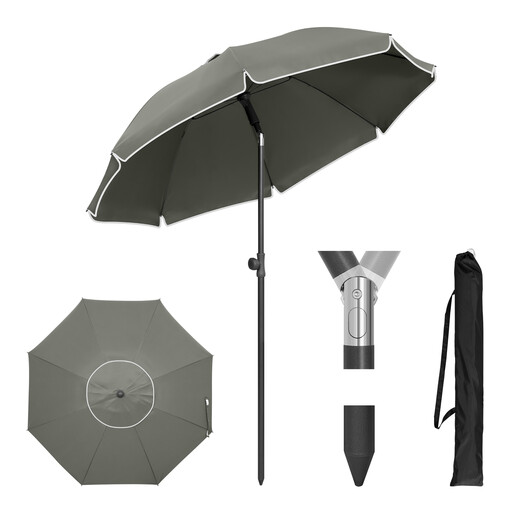
Why it suits this profile: This compact model is suitable for balconies, gardens, patios or the beach, and comes with a carry bag for easy transport.
Its 155 cm diameter keeps the space it takes up to a minimum. The integrated vent and information about the required ballast help you plan realistically.
According to the product specifications: UPF 50+, 35° tilt in both directions, adjustable height, water-repellent fabric and a carry bag.

Why it suits this profile: With a diameter of around 270 cm, this model provides a larger area of shade for your patio or garden.
The product specifications clearly state the minimum base weight required: 40 kg. This means you can plan for a suitable base before you buy.
Aluminium frame, powder-coated finish, crank mechanism and removable polyester cover for hand-washing.
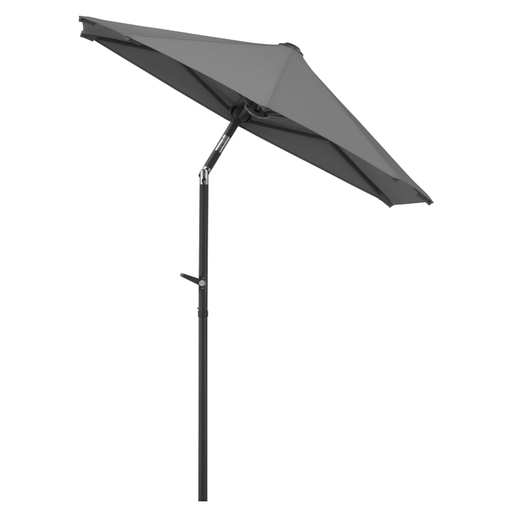
Why it suits this profile: This half parasol is designed for narrow spaces and positioning close to a wall.
At around 150 x 150 cm, its square canopy takes up less space than a large round garden parasol. The crank mechanism makes it easier to operate when space is limited.
Two offset metal joints, a tilt function, water-repellent polyester fabric and a protective cover included.
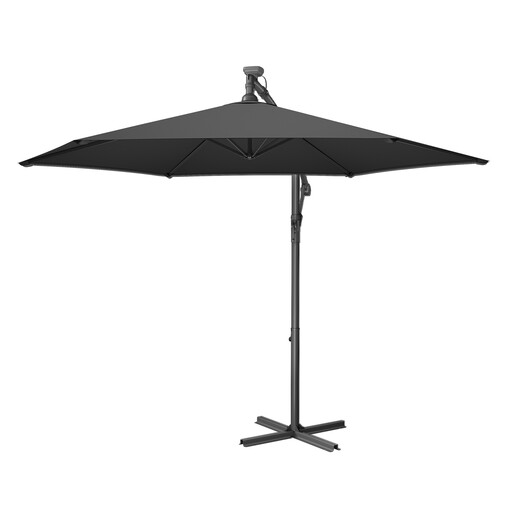
Why it suits this profile: The side-mounted pole leaves plenty of room beneath the canopy, making this model suitable for freestanding seating areas on the patio.
The product description notes that additional weights of up to 80 kg are not included. It also advises against using the tilt function in wind or rain.
3 m canopy diameter, crank, tilting design and cross base included; UPF 50+ and 180-g/m² polyester according to the product specifications.
We’ve put together a complete, regularly updated list of products that meet these strict selection criteria and fully comply with the safety regulations in force in the EU.
It depends on the canopy size, design and location. Smaller balcony models have different requirements from parasols with a diameter of 270 or 300 cm. Always follow the manufacturer’s recommendations. Larger models may need a base weighing 40 kg or more; some cantilever parasols require up to 80 kg of additional weights.
There’s no single answer. Its lifespan depends on UV exposure, wind, moisture, material quality and care. Close the parasol in windy or stormy weather, and if you’re going to be away for a while. A protective cover, dry storage and cleaning according to the manufacturer’s instructions can help protect the materials.
A crank makes a parasol easier to open and close, particularly if it has a large canopy or you use it regularly. Before buying, though, check that there’s enough room to operate the crank on your balcony, by the wall or beside your seating area.