
Lieferung heute & morgen

Qualitätsgarantie

Willkommens-Angebote freischalten: KOSTENLOSE Lieferung | Bis zu 80 % RABATT | Kostenlose 30-Tage-JoyPlus-Testphase
App herunterladen
A paring knife is one of the most frequently used tools in the kitchen. It peels potatoes, removes stalks, cuts up fruit and handles small jobs that would be awkward with a large kitchen knife. But when choosing one, the brand or advertised sharpness isn’t all that matters. The blade shape and length, handle material and suitability for the tasks you have in mind are what really count.
An 8 cm paring knife is compact and ideal for small ingredients, peeling and precise trimming. A 10 cm paring knife gives you a little more reach, making it useful for larger apples, peppers or longer cuts. But a longer blade isn’t automatically easier to handle. For delicate tasks, a knife that’s too large can be harder to control.
A straight-edge paring knife cuts through firm and soft ingredients with control, making it a versatile choice for peeling, trimming and dicing. A serrated paring knife grips smooth skins and delicate surfaces more effectively, such as those of tomatoes and ripe fruit. If you focus only on the advertised sharpness, you might miss the fact that the blade edge isn’t suited to the tasks you’ll use it for most.
A dishwasher-safe paring knife can make cleaning easier. However, high temperatures, detergents and contact with other cutlery can put extra strain on the blade edge. That’s why many products are recommended for hand washing, even if the manufacturer says they can go in the dishwasher.
For everyday food preparation, 8 to 10 cm is often enough. A pointed blade makes it easier to remove eyes, seeds and stalks. Check the product details carefully: the knife’s overall length is not the same as its blade length.
A straight-edge paring knife is versatile and particularly well suited to clean, drawing cuts. A serrated blade can be a better choice for tomatoes, peaches and other foods with smooth skins, as the teeth grip the surface.
A fruit knife and a paring knife have many uses in common. The term “peeler knife”, on the other hand, is used in different ways. So always check the actual blade shape rather than relying on the name used in the shop.
A paring knife with a plastic handle is usually lightweight and easy to clean. Polypropylene is listed as the handle material on several Victorinox models. Look for a non-slip surface, a secure join between the handle and blade, and a shape that feels comfortable in your hand, even during longer food-preparation sessions.
For stainless steel blades, check the details on rust resistance and care. Whatever the material, dry the knife after washing, don’t leave it loose in a drawer, and avoid using glass, stone or ceramic chopping boards. Wooden or plastic boards are kinder to the blade edge.
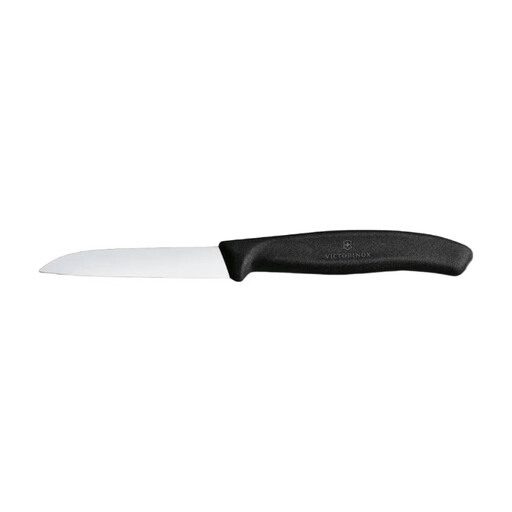
Why this product suits this profile: This single 8 cm knife is a straightforward choice for households looking for a compact paring knife for everyday cutting and peeling.
The straight 8 cm blade is clearly specified rather than being promoted as an ill-fitting all-purpose size. The polypropylene handle material and dishwasher suitability are also listed.
Stainless steel blade, 8 cm blade length, lightweight design and an ergonomic plastic handle for controlled kitchen tasks.
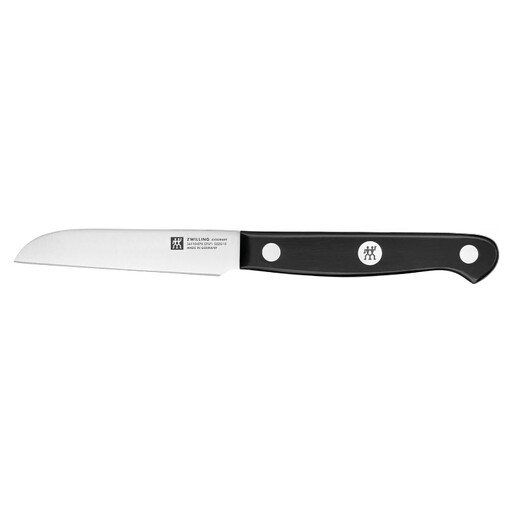
Why this product suits this profile: If you’re looking for a compact knife and specific details on materials and construction, this model has a stainless steel blade with FRIODUR ice-hardening and a plastic handle.
The product details specify the blade length, edge type, hardness range and care instructions. This lets you make your choice based on verifiable information, not just marketing claims.
8 cm blade, V-edge, FRIODUR ice-hardened stainless steel and stated dishwasher suitability; hand washing is still recommended.
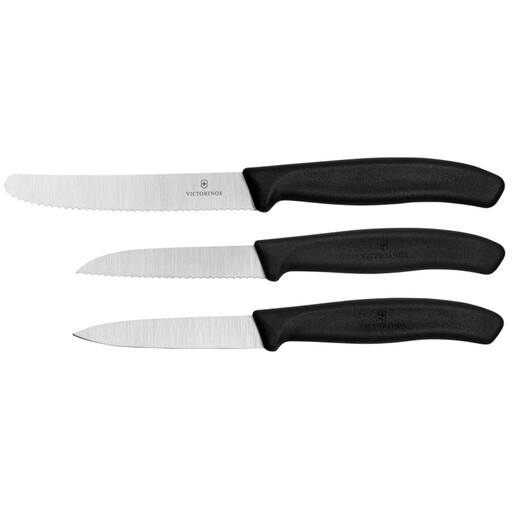
Why this product suits this profile: This set is designed for households and frequent users who want the right blade for different cutting tasks, without having to choose several separate products.
The set shows the difference between straight and serrated edges. It includes two 8 cm paring knives and an 11 cm serrated knife for a range of ingredients.
Three knives with ergonomic plastic handles and stainless steel blades, stated to be dishwasher-safe for a variety of food-preparation tasks.
We’ve put together a complete, regularly updated list of products that meet these strict selection criteria and fully comply with the safety regulations in force in the EU.
For most households, 8 to 10 cm is a practical choice. An 8 cm blade offers more control with small ingredients and peeling tasks. A 10 cm blade is useful if you regularly prepare larger pieces of fruit and vegetables.
It depends on what you’ll use it for. A straight-edge paring knife is versatile and suitable for peeling, trimming and dicing. A serrated paring knife can be useful for tomatoes, soft fruit and smooth skins. If you regularly switch between different tasks, a paring knife set with both types of blade is a practical option.
How long the blade edge lasts depends on how you use it, your chopping board, how you clean the knife and where you store it. Hard surfaces, loose storage and harsh cleaning can put extra strain on the blade edge. Hand washing, using a suitable chopping board and regularly sharpening straight blades that are suitable for it can help keep your knife in good working order for longer.