
Lieferung heute & morgen

Qualitätsgarantie

Willkommens-Angebote freischalten: KOSTENLOSE Lieferung | Bis zu 80 % RABATT | Kostenlose 30-Tage-JoyPlus-Testphase
App herunterladen
A paring knife is used every day for peeling, removing cores, slicing and garnishing. Even so, many shoppers choose one based only on its colour, brand name or bold marketing claims. This can leave you with a blade that’s too short for the tasks you have in mind, a slippery handle or a knife that’s unnecessarily difficult to clean.
This buying guide explains which features really matter in a small kitchen knife and which models may suit different needs.
An 8 cm paring knife is easy to control and well suited to small fruit, garlic, mushrooms and precise cutting tasks. If you regularly prepare larger apples, peppers or medium-sized pieces of vegetables, a 10 cm paring knife may be more efficient.
A short blade isn’t automatically impractical. It often gives you better control for delicate tasks. What matters is whether you mainly use your knife for precise garnishing and removing cores, or regularly cut up larger ingredients.
A paring knife with a serrated edge can be useful for tomatoes, peaches, figs and other soft fruit. Its teeth catch the skin, so you don’t need to apply much pressure for the first cut.
For peeling, removing cores, dicing and decorative cuts, a paring knife with a straight blade is usually more versatile. Its smooth edge allows for precise control and is easier to sharpen with suitable tools. A serrated edge is a useful addition for specific tasks, but it won’t be the right choice as your only blade in every kitchen.
A dishwasher-safe paring knife can make cleaning easier. However, long wash cycles, high temperatures and contact with other cutlery can put extra strain on the blade and handle. That’s why several product descriptions recommend hand-washing, even for knives that are dishwasher-safe.
To help your knife last longer, wash it in warm water with mild washing-up liquid, dry it straight away and store it safely. Don’t use it on glass or marble, or any other hard surface.
A peeling knife is primarily designed for removing skins. Depending on its blade shape, a fruit knife can handle similar tasks. A garnishing knife is particularly useful if decorative cuts and fine detail are your priority.
Stainless steel is commonly used for kitchen knives. Check the product description for specific details about blade length, edge and material. Brand terms such as FRIODUR and SIGMAFORGE describe the treatment or manufacturing process used for certain ZWILLING models. They don’t replace the need to check the practical details.
Dry a stainless-steel blade thoroughly after washing. Terms such as “ice-hardened” or “corrosion-resistant” describe technical features of a particular model; they don’t guarantee that a knife will stay sharp if it isn’t cared for properly.
An ergonomically shaped plastic or polypropylene handle can make a knife feel light and easy to control. Also check:
If you use a knife regularly, it’s worth looking beyond the price and considering the combination of blade length, handle design and care requirements.
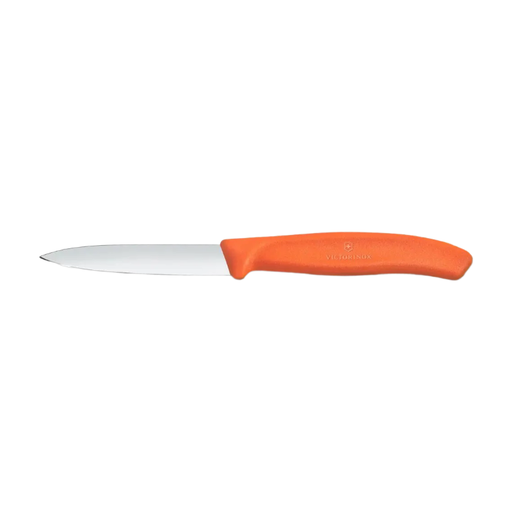
Why it suits this profile: The 8 cm blade and lightweight, ergonomic plastic handle are ideal for everyday cutting and peeling, without any unnecessary extras.
The product details clearly state the blade length, stainless-steel construction and dishwasher-safe design. That means you don’t have to choose based solely on colour or marketing claims.
8 cm straight blade, ergonomic handle and dishwasher-safe design.
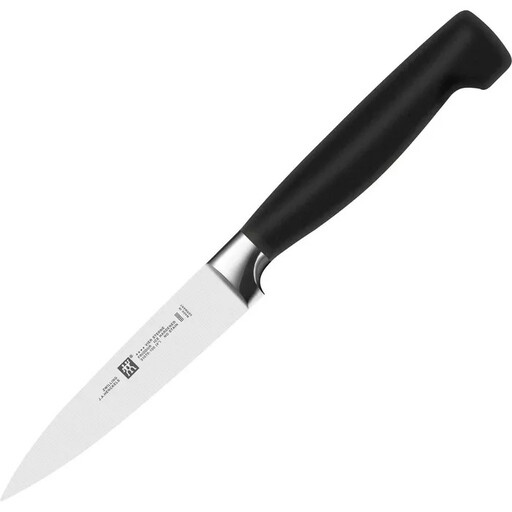
Why it suits this profile: The 10 cm blade gives you more room to work with fruit and vegetables, as well as for smaller portioning tasks. The seamless plastic handle is designed for controlled handling.
The description specifies the one-piece construction, FRIODUR treatment and recommended hand-washing. This makes it easier to assess the knife’s construction and care requirements.
10 cm blade, SIGMAFORGE construction, FRIODUR treatment and ergonomic handle.
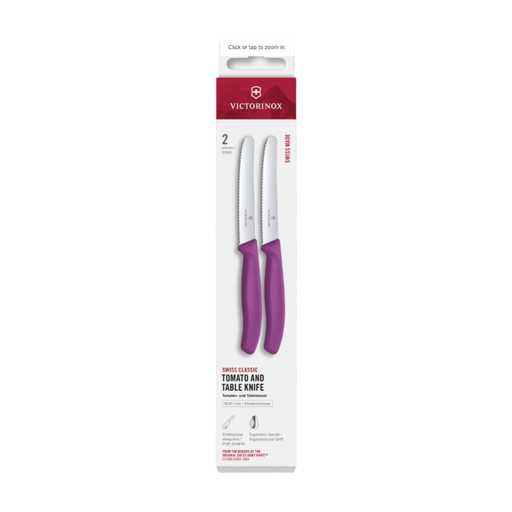
Why it suits this profile: The two 11 cm serrated knives are a practical addition for households that often cut soft fruit and vegetables with firmer skins.
The serrated edge isn’t presented as an all-purpose blade, but as a specific choice for soft fruit and delicate foods.
Two knives, 11 cm serrated blades, lightweight polypropylene handles and dishwasher-safe design.

Why it suits this profile: The pointed 10 cm blade is designed for peeling, removing cores and garnishing. It’s a good choice if you often work with fine detail.
The product details specifically recommend hand-washing and safe storage, and explain that the knife is designed for use with fruit and vegetables.
10 cm blade made from special stainless steel, precision V-edge and ergonomic plastic handle.
We’ve put together a complete, regularly updated list of products that meet these strict selection criteria and the safety regulations in force across the EU.
Clean your knife as soon as possible after use and dry it thoroughly. A knife drawer with a blade guard, a knife block or a suitable magnetic strip will prevent it from coming into contact with other cutlery. Always use a stable chopping board.
The blade is sharp, so don’t use it for levering, bending or cutting frozen food. Keep the knife out of children’s reach. There are also specific rules about carrying knives in public; these are separate from the need to store your knife safely at home.
For many everyday tasks, 8 cm is a practical starting point. A 10 cm blade gives you more reach and can be more comfortable for cutting larger fruit and vegetables. For very delicate tasks, a 6 or 7 cm blade may also be suitable.
It depends on what you’re cutting. A serrated edge is particularly suited to soft fruit with firm skins. A straight blade is more versatile for peeling, dicing, removing cores and garnishing, and can be sharpened more precisely.
How long the edge stays sharp depends on how often you use it, your chopping board, the food you cut and how you care for the knife. Wooden or plastic boards, hand-washing and safe storage help protect the blade. If the knife starts cutting less effectively despite being cleaned as usual, it may be time to have it professionally sharpened.