What to look for when buying
Full-size oven
A good fit if: you want to spread larger quantities across a tray or cook other dishes at the same time.
Worth bearing in mind: A large oven isn’t automatically the best choice for a single small portion. The German consumer advice centre notes that the energy consumption shown on the energy label is based on a standard cycle.
Freestanding mini oven
A good fit if: you want to roast small to medium portions fresh in separate batches and have a suitable place to put the appliance.
Worth bearing in mind: A smaller tray may mean cooking in more batches, and not every model has a keep-warm setting.
Compact air fryer
A good fit if: you mainly want to roast or reheat small portions later, and can spread the vegetables out on the supplied tray or basket.
Worth bearing in mind: The capacity in litres doesn’t tell you how much room there is on the tray or in the basket. Don’t assume cooking times from a conventional oven will work without checking.
When cooking parsnips for staggered mealtimes, your choice mainly depends on whether you’ll cook fresh batches one after another, store a later portion safely, or cook a larger quantity all at once. The figures below refer to consumers choosing an oven for this scenario.
| Priority |
What to look for when buying |
Who this matters most to |
| A fresh portion at mealtime |
Timer, heating modes and tray surface; check that your planned quantity will fit without overcrowding. |
If I want to serve the parsnips as freshly cooked as possible at each mealtime, I’d rather plan another suitable batch. Around 36% of consumers prioritise a freshly cooked portion. |
| Safe handling of a later portion |
Consider whether the food should be kept safely hot until mealtime, or cooled quickly and reheated thoroughly later. |
If a portion has to wait for longer, I want to know how to handle it safely until the next meal. Around 29% of consumers prioritise the safe handling of a later portion. |
| A suitable roasting surface |
Compare the dimensions of the tray or basket; the capacity in litres alone won’t tell you how much room there is to spread vegetables out in a single layer. |
If I want to roast a particular quantity all at once, it needs to fit on the tray or in the basket. Around 21% of consumers put usable surface area first. |
| Energy use across multiple batches |
For ovens, compare kWh per standard cycle on a like-for-like basis, and consider the actual running time and number of batches too. |
When cooking several small batches, I want to compare energy use with how I’ll actually use the appliance, rather than looking only at the wattage. Around 14% of consumers prioritise the energy use of repeated batches. |
For safe food handling, the BfR recommends keeping food hot at a minimum of 60 °C throughout. For longer storage, it recommends cooling food quickly to below 7 °C. When reheating it later, it recommends at least 70 °C throughout for two minutes. These are food-safety recommendations, not a guaranteed performance level for an appliance function.
Joybuy products
The products below include freestanding mini ovens and compact air fryers for small to medium portions, with batches that can be planned separately.
 No image available
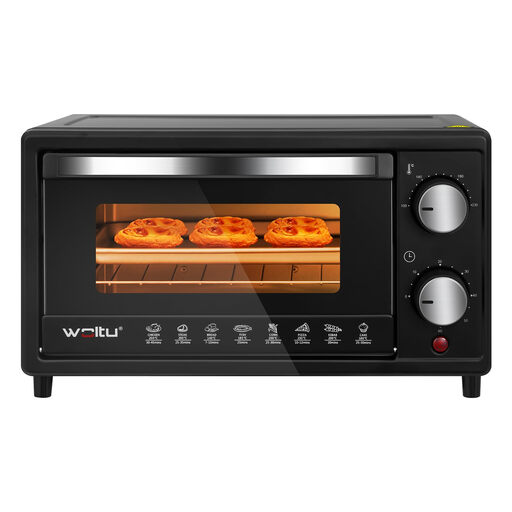
WOLTU mini oven with pizza function, 10 l
For small portions; the product description says it’s sized for meals for 1–2 people.
10 l; temperature range 100–230 °C; timer up to 60 minutes; baking tray and wire rack included.
View at Joybuy
 No image available
WOLTU mini oven, 28 l
The product description says it’s sized for meals for 3–4 people; also check the usable tray surface.
28 l; temperature range 100–230 °C; three heating modes; timer up to 60 minutes.
View at Joybuy
 No image available
ROUNY air fryer oven, 6.5 l
A compact option for vegetables and individual roasting batches; the right quantity also depends on the usable surface of the tray or basket.
6.5 l; temperature range 80–200 °C; timer up to 60 minutes; stainless steel basket listed.
View at Joybuy
 No image available
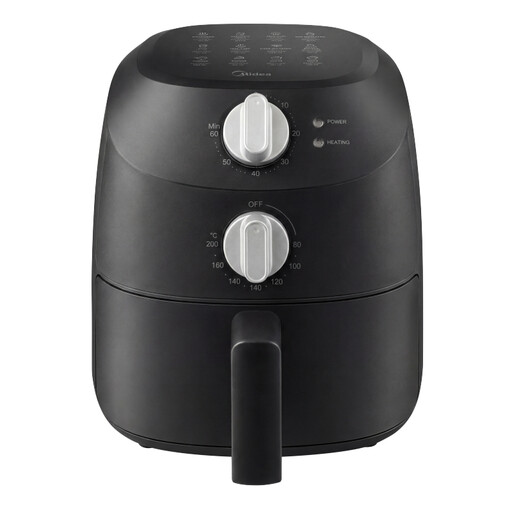
Midea air fryer, 2 l, 1150 W
The product description says it’s sized for small portions for 1–2 people, and lists roasting and reheating among its functions.
2 l; 1150 W; timer up to 60 minutes. The wattage alone doesn’t tell you how much energy an entire recipe will use.
View at Joybuy
 No image available
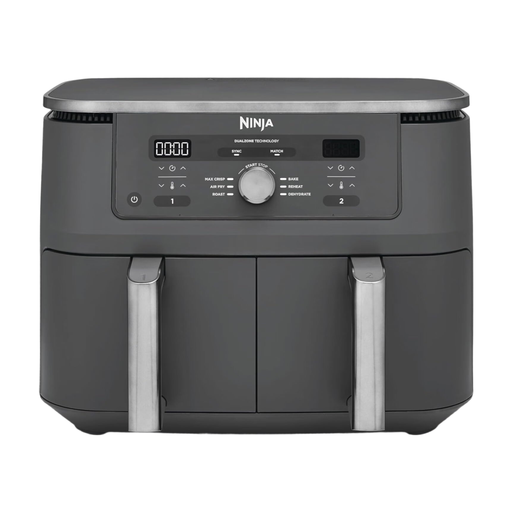
Ninja Dual Zone Digital Air Fryer DZ400EU, 9.5 l
Two independently controlled cooking zones can be used to coordinate dishes that need different timings; functions include roasting and reheating.
9.5 l total capacity, with two 4.75 l drawers. The ‘Warm’ setting doesn’t prove that food reaches at least 60 °C throughout.
View at Joybuy
Frequently asked questions
What temperature should I start with for oven-roasted parsnips?
The REWE recipe for four portions uses 200 °C top and bottom heat and a cooking time of around 30 minutes, turning the parsnips after 15 minutes. This recipe hasn’t been tested for every mini oven or air fryer, so check how they’re cooking and browning in your appliance.
Is a keep-warm function enough if someone is eating later?
Not on its own: the BfR recommends keeping food at a minimum of 60 °C throughout. For longer storage, it recommends cooling food quickly to below 7 °C. When reheating it later, it recommends at least 70 °C throughout for two minutes. These are food-safety recommendations, not a guarantee about an appliance’s automatic settings.
How can I tell whether there’s enough room for my portion?
Compare the dimensions of the tray or basket with the space your parsnips need when spread out in a single layer. The capacity in litres describes the oven’s internal volume, not the usable surface area. A REWE recipe spreads the parsnips across a baking tray; a different surface area may mean you need to cook them in another batch.
How do I compare the energy use of different ovens?
Compare energy figures on a like-for-like basis, and take the number of batches and actual running time into account. The German consumer advice centre explains that the energy label gives consumption per standard cycle for top and bottom heat and fan-assisted cooking; it doesn’t directly tell you how much energy your parsnip recipe will use.


