
Lieferung heute & morgen

Qualitätsgarantie

Willkommens-Angebote freischalten: KOSTENLOSE Lieferung | Bis zu 80 % RABATT | Kostenlose 30-Tage-JoyPlus-Testphase
App herunterladen
Party games and card games should be quick to explain, involve plenty of people and still come off the shelf after the first play. In practice, though, some games don’t suit the size of your group, need extra technology or include content that isn’t appropriate for younger players. Choosing carefully based on player numbers, age rating, playing time and format can help you avoid buying the wrong game.
“Suitable for groups” doesn’t automatically mean a game will work with ten or more people. Some group card games are designed for two to six players, while others only really work with three or more. So always check:
For example, a game for 2 to 6 players is a good choice for a small games night, but may not be suitable for a larger birthday gathering.
Board games for ages 12 and up may include themes such as crime, accidents or dark humour. That doesn’t automatically make them suitable for every family or youth group. For party games for adults, also check whether the age rating is 18+.
For families with children, games for ages 8 and up featuring age-appropriate puzzles are a better choice. The age rating isn’t just marketing information: it gives you a clear indication of the language, themes and small parts included.
Some music games require a smartphone app. Others need a timer, scoring tokens or enough space to lay everything out. Before you buy, check whether you’ll need:
Compact card games are especially handy for trips. A game that requires an app, on the other hand, may be less suitable for a car journey without a reliable signal.
The most important combination is number of players, minimum age and average playing time. For an impromptu get-together, quick board games with clear rules are often a better choice than games with lengthy rulebooks. Cooperative puzzle games can work well for family evenings when adults and children want to play together.
Also check whether the stated playing time applies to one round or a complete game. With card games featuring individual cases or challenges, it’s usually easy to adjust the playing time.
A large number of cards can add variety, but doesn’t in itself tell you how replayable a game will be. What matters is whether the cards feature different challenges, scenarios or pieces of music.
Practical game mechanics include:
If you’re looking for fun card games for a mixed group, check that the humour and challenges will make sense to everyone and be acceptable to all the players.
Size and weight matter if you’re travelling or have regular games nights. Small card boxes are easier to pack in a rucksack or bag. Paper and cardboard should be stored somewhere dry and not cleaned with liquids.
For games with small cards or tokens, bear in mind: Not suitable for children under three, if the manufacturer warns that small parts could be swallowed. Always follow the specific safety and material information on the packaging.
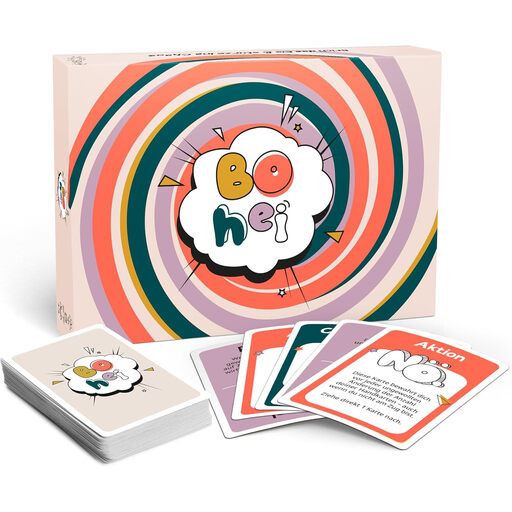
Why this product suits this profile: This card game is designed for 3 to 8 players aged 12 and over. It includes 110 cards and a set of instructions in a compact box, making it a great fit for spontaneous games nights with friends or family.
The player numbers and minimum age are clearly stated. The game’s structure is easy to understand, with three types of cards: actions, challenges and rules.
Compact format, no batteries required, for 3 to 8 players, age rating 12+.
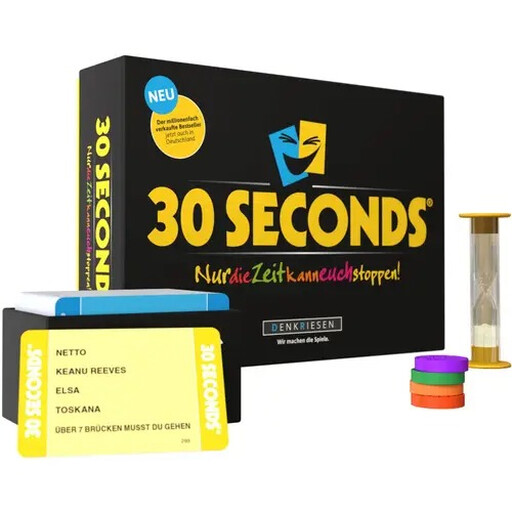
Why this product suits this profile: This team game features a 30-second timer and 2,400 terms, with a stated playing time of around 30 minutes. It’s designed for at least 3 players aged 12 and over and, according to the product information, can accommodate up to 16 people.
The timer, number of terms, minimum number of players and playing time are all clearly stated. That makes it easy to judge before buying whether it’s a good fit for your group.
Team-based rounds, a 30-second time limit, 2,400 terms and designed for larger groups.

Why this product suits this profile: This music game is designed for 2 to 10 players aged 16 and over, and includes more than 300 music cards. Players put the cards in chronological order; listening to the music requires the Hitster app, a smartphone and Spotify.
The technical requirements are stated clearly. If you want to play without a smartphone or the internet, you can rule out this version before buying.
Over 300 music cards, for 2 to 10 players, with gameplay based on a chronological music timeline.
Other options worth considering include moses. Black Stories Junior Top Secret! and black stories Junior Quatsch & Co. for children aged 8 and over. Both editions feature 50 puzzle cards and yes-or-no questions. For teenagers and adults aged 12 and over, options include Black Stories True Crime, Black Stories Real Crime and Black Stories Shit Happens. The themes vary, so it’s worth checking the description for each one.
Goliath Verdammt Nochmal is intended for adults aged 18 and over. It includes 200 situation cards featuring dark humour, so it should only be played with a group that’s comfortable with this kind of content. For a compact alternative for 2 to 6 players aged 12 and over, consider Arschkarte: Wer hat die Arschkarte gezogen.
We’ve put together a complete, regularly updated list of products that meet these strict selection criteria and fully comply with the safety regulations in force across the EU.
Games for 2 or 3 players are enough for smaller groups. For parties with six or more guests, team games or versions with a higher maximum player count are more practical. Also check whether everyone can take part at the same time.
Compact puzzle and card games without a board are usually a good choice for train journeys, holidays or longer stays away from home. Look for a small box, low weight and as few extra pieces as possible. For music games, you’ll also need to check whether a smartphone, app and internet access will be available.
How long they last depends mainly on the quality of the cards, how they’re stored and how often they’re used. Keep cards dry, away from direct sunlight and safely in their original box. Liquids and excessive bending can damage paper and cardboard. If you play often, it’s worth keeping everything organised so that no cards go missing.