A guide to relevant brands
The models below illustrate different tank, basket and care specifications; the features of individual appliances shouldn’t be taken as a general judgement of the brand.
CASO Design
The IceMaster Pro 3301 and IceChef Compact 3401 are worth considering if different tank sizes matter for your plans.
- CASO lists a 2.2 l tank for the IceMaster Pro 3301 and a 1 l tank for the IceChef Compact 3401; both are specified as producing around 500 g per hour.
- The IceChef Compact 3401’s dimensions differ within the product description. Computer Bild reported that the tested IceMaster Pro 3301 lacked self-cleaning and offered little variation in ice size; this assessment applies to the model tested.
Gastroback
The Bartender Pro 41143 is worth considering for repeated batches if you need a larger tank and a removable basket.
- Gastroback specifies a 2.8-l water tank, a basket capacity of around 1.5 kg and daily output of approximately 12–15 kg in 24 hours for this model.
- Computer Bild criticised the amount of space taken up by the Bartender Pro it tested. The model number given there, 441143, differs from Gastroback’s item number, 41143; check the exact appliance identity.
Unold
The Freeze 48935 is an option if you’re interested in display indicators, a residual-water drain and a function for rinsing the water circuit.
- Unold specifies up to around 60 ice cubes per hour, a basket capacity of around 700 g and a function for rinsing the water circuit.
- Cubes per hour and basket weight can’t be compared directly with kilograms per 24 hours. The rinse function doesn’t automatically replace the rest of the cleaning routine.
Klarstein
The ChillOut 10035319 may interest hosts looking for display indicators, a residual-water drain and a rinse function.
- Klarstein specifies up to around 60 ice cubes per hour and a basket capacity of around 700 g.
- The container capacity listed for this model is inconsistent: the title states 0.6 l, while the specifications give 1.5 l for the ice storage container. Check the specific product documentation to confirm the basket capacity you need.
Countertop ice makers for a steady supply
This Joybuy selection features countertop ice makers for producing repeated batches during your party. When planning, check the stated cycle time and basket capacity for each model; daily output is not the same as ice ready to use straight away.
 No image available
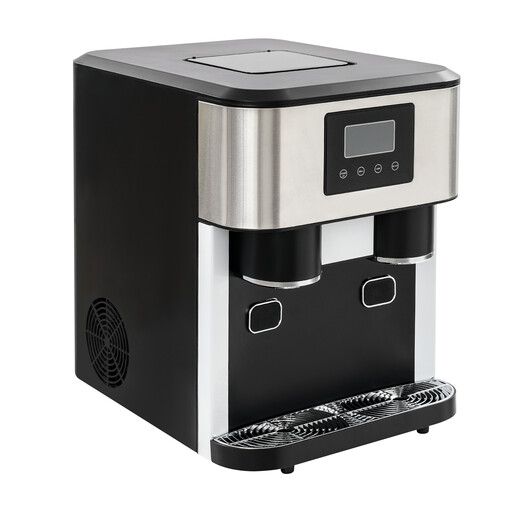
3-in-1 countertop ice maker
For different drinks, the description lists bullet ice, crushed ice and cold water.
According to the description, it makes 16 ice cubes per batch in 7–9 minutes at room temperatures below 77°F. An LCD panel indicates when the ice container is full or the water is low.
View at Joybuy
 No image available
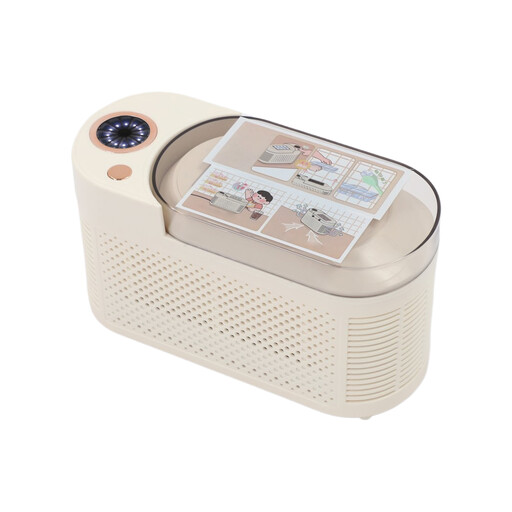
120 W countertop ice maker
For use at home or on the go, the description lists eight square ice cubes per cycle.
The description specifies 120 W, along with a mains adapter for indoor use and a 12 V car cable. It also lists a transparent lid and ice tongs.
View at Joybuy
 No image available
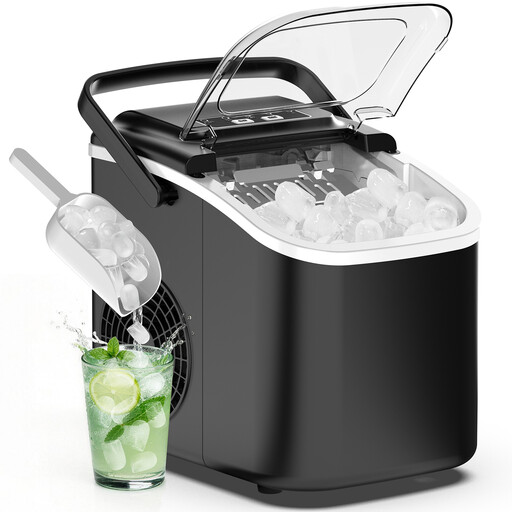
Countertop ice maker with two ice sizes
For making batches during a party, the description lists eight cubes in six minutes and up to 12 kg per day.
The ice container holds 0.5 kg, according to the description. Two ice sizes and a self-cleaning function are listed; daily output is not the amount immediately available in the basket.
View at Joybuy
 No image available
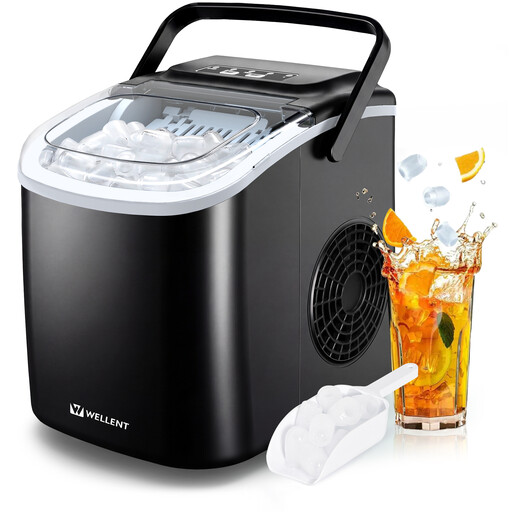
Countertop ice maker with 0.8 l tank
For keeping the ice coming, the description states that the first cubes are ready after six minutes and that it makes up to 12 kg per day.
The tank holds 0.8 l and the basket 0.45 kg. Two ice sizes and a self-cleaning function are listed; indicators show when the basket is full and when it needs refilling.
View at Joybuy
 No image available
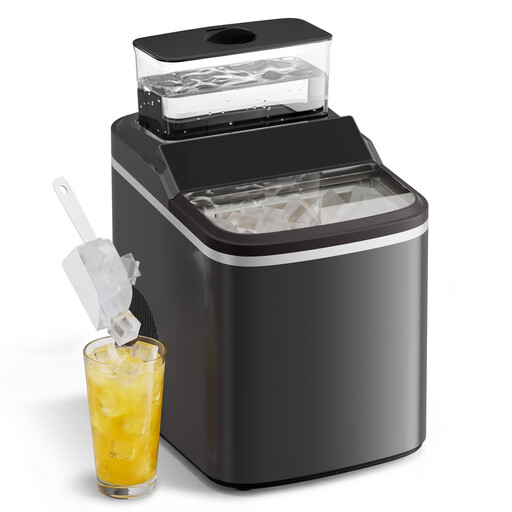
Countertop ice maker with external water tank
For larger batches, the product title states that it makes 12 ice cubes in 8–15 minutes and up to 18 kg per 24 hours.
The title specifies an external 1.5 l water tank and a 0.75 kg ice basket. It also lists a timer function and automatic cleaning; daily output is not the amount immediately available in the basket.
View at Joybuy
Frequently asked questions
Is 12 kg of ice per 24 hours enough to have a supply ready when the party starts?
Not necessarily: daily output doesn’t tell you how much ice is in the basket at a particular time. Also compare cycle time, basket capacity, the time available to prepare and freezer space. Gastroback specifies around 12–15 kg in 24 hours for the Bartender Pro 41143, but a basket capacity of around 1.5 kg.
How should I store ice made in advance until it’s time to serve?
Store ice made in advance in the freezer, hygienically covered, and use clean utensils to handle it. The German Federal Institute for Risk Assessment offers guidance on chilling and storing food safely; an ice maker’s basket capacity doesn’t automatically mean it is suitable for freezer storage.
Do I still need to clean an appliance with a cleaning function myself?
Yes. Follow the instructions for the basket, tank and water-carrying parts. Unold describes the Freeze 48935 function as rinsing the water circuit; this doesn’t mean that every surface that comes into contact with ice is cleaned automatically.
What requirements apply in Germany to food-contact materials and electrical safety?
For products placed on the EU market, materials that come into contact with food are covered by Regulation (EC) No 1935/2004. According to the European Commission, electrical equipment with an AC voltage of 50 to 1000 V falls within the scope of the Low Voltage Directive in relation to electrical risks. These general requirements do not constitute proof of compliance for a specific product listing.
Is a voluntary manufacturer’s guarantee the same as statutory consumer rights?
No. In the event of a fault, your statutory rights are generally against the seller; a guarantee is an additional voluntary offer and is subject to its own terms. The Verbraucherzentrale (German consumer advice centre) clearly distinguishes between these claims.


