
Lieferung heute & morgen

Qualitätsgarantie

Willkommens-Angebote freischalten: KOSTENLOSE Lieferung | Bis zu 80 % RABATT | Kostenlose 30-Tage-JoyPlus-Testphase
App herunterladen
Organising a party, picnic, or kids' birthday involves many decisions. One that is often underestimated is choosing the right plates. The wrong choice not only leads to soggy plates and spilled food but can also create unnecessary waste and strain your budget. Before you make a hasty purchase, you should be aware of the most common pitfalls that lurk when selecting party plates.
Many buyers grab the first paper plates they see, only to find they can't withstand barbecue sauce. Another problem is misleading sustainability claims. A plate advertised as "eco-friendly" isn't necessarily a good choice if it doesn't break down under real-world conditions. Finally, suitability for the occasion is often overlooked: a small cake plate is impractical for a full dinner, while an uncoated plate is unsuitable for greasy foods.
To avoid these problems, you should base your selection on a few objective criteria. Instead of being guided by marketing terms, focus on the following three core parameters.
The material is the decisive factor for a plate's functionality. Each material has specific properties that make it more or less suitable for certain purposes.
disposable plates are often sturdier and more resistant to moisture and heat than simple paper plates. They are well-suited for hot main courses. Products labelled as biodegradable offer an alternative to conventional materials.camping dinnerware or regular garden parties, reusable plastic plates are a durable option. Look for the "BPA-free" label to ensure they do not contain any harmful plasticisers. Their robustness makes them ideal for transport and outdoor use.camping dinnerware and for children, stainless steel plates are a shatterproof, hygienic, and very durable choice. They are easy to clean and do not absorb odours or stains.Regardless of the material, food-grade quality is a non-negotiable requirement. In the EU, all materials that come into contact with food must meet strict regulations.
The dimensions of the plate must match the planned meal. A standard diameter of approx. 23 cm is ideal for main courses like grilled meat with salad or a buffet. Smaller plates with a diameter of 15 to 18 cm, on the other hand, are better suited for cake, desserts, or small snacks.
A raised edge prevents food with sauce or salads from sliding off the plate. For buffets or meals with multiple components, partitioned plates can be very practical for keeping different foods neatly separated.
Terms like "biodegradable" or "compostable" are often used interchangeably but have different meanings.
Check with your local waste management authority whether compostable tableware can be disposed of in the organic waste bin. The most eco-friendly choice is often a reusable product, provided it is used regularly.
Here are some product recommendations tailored to the needs of different user profiles.
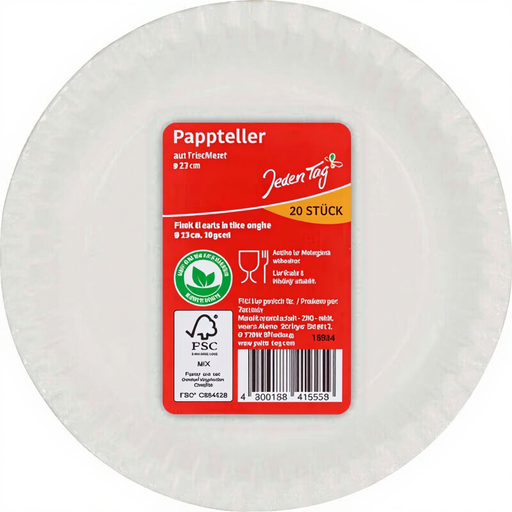
Why This Fits Their Persona: Ideal for organisers of club events or large family gatherings who need a straightforward and cost-effective solution for a large number of guests.
Thanks to its food-safe inner coating, it avoids the "soggy plate trap." The plate holds its shape even with salads or sauces and makes no misleading environmental claims.
The 23 cm diameter is designed for main courses. The value for money is excellent for large quantities.
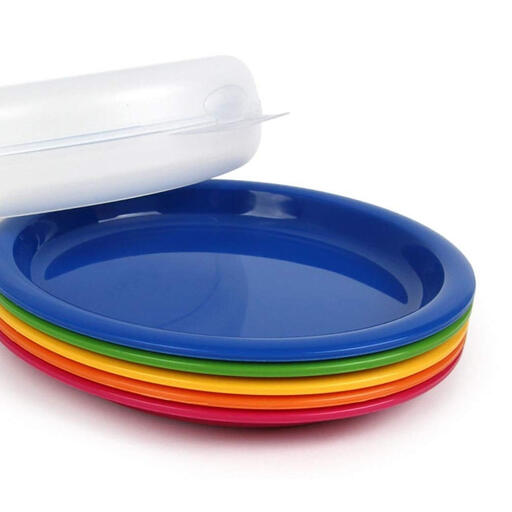
Why This Fits Their Persona: Perfect for families who often camp, picnic, or eat in the garden and are looking for a durable, reusable, and easy-to-transport solution.
As a distinctly reusable product, it bypasses the single-use waste problem. The high-quality, BPA-free plastic is shatterproof and durable, unlike fragile crockery or flimsy disposable plates.
The set is dishwasher-safe, stackable, and comes with a practical storage case for clean and easy transport.
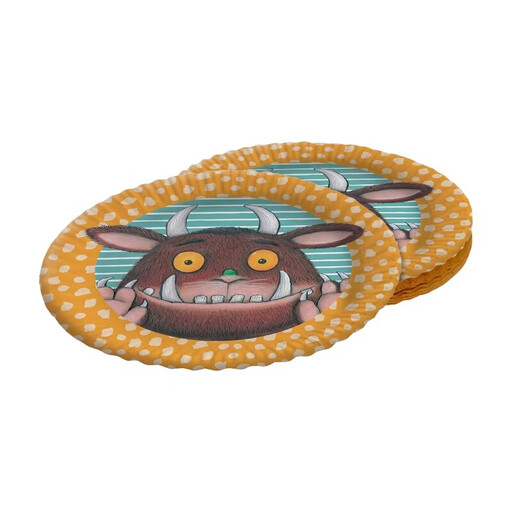
Why This Fits Their Persona: Parents looking for a `kids' birthday party plate` with a specific theme to create a cohesive and appealing party atmosphere for children.
These plates avoid the trap of being boring. While a plain white plate is functional, the popular Gruffalo theme adds value that resonates well with children. The sturdy cardboard is designed for typical party food like cake and snacks.
The appealing design is the main advantage. With a 23 cm diameter, the plates are large enough for a decent portion of party food.
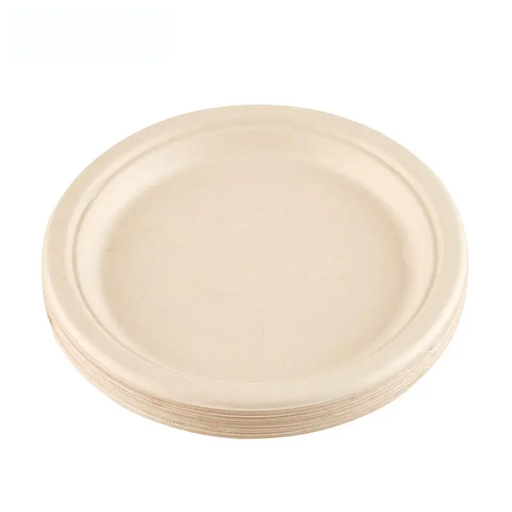
Why This Fits Their Persona: For hosts who value convenience at parties and picnics but also want a more environmentally friendly alternative to conventional disposable tableware.
This product avoids the "greenwashing trap" with a clear material declaration: it's made from sugarcane pulp. It is also water and oil-resistant, which minimises the risk of soggy plates.
The plates are made from a renewable resource, are biodegradable, and are also microwave-safe, allowing for flexible use.
We have compiled a complete, up-to-date list of products that fully meet these strict selection criteria and safety regulations.
There's no simple answer. A paper plate from sustainable forestry (identifiable by seals like FSC or PEFC) can be a good choice, especially if it's uncoated and compostable. However, coated plates are harder to recycle. A reusable plastic plate has a much better environmental footprint if used often, as the manufacturing energy is spread over many uses. The decision depends on the intended frequency of use and local disposal options.
Check the manufacturer's material description. Plates made from sugarcane fibres (bagasse), palm leaf, or bamboo plates are naturally very heat-resistant and stable. Coated heavy-duty paper plates can also be suitable for warm foods, as long as they are not boiling hot. Uncoated paper plates are unsuitable for very hot or liquid foods like soup. Reusable plates made of plastic or stainless steel are a safe choice here.
This depends on the regulations in your municipality or city. Many products certified as "industrially compostable" (e.g., according to DIN EN 13432) require high temperatures that are only reached in industrial facilities. They do not decompose in a home compost pile. Before disposing of such tableware in the organic waste bin, you should check with your local waste management company to see if this is permitted.