
Lieferung heute & morgen

Qualitätsgarantie

Willkommens-Angebote freischalten: KOSTENLOSE Lieferung | Bis zu 80 % RABATT | Kostenlose 30-Tage-JoyPlus-Testphase
App herunterladen
Whether it's a trip to the countryside, a multi-day camping adventure, or a relaxing day of fishing—fresh food and cool drinks are essential. A passive cooler that works without electricity is a practical solution for this. But the market is flooded with models whose performance claims often don't hold up to reality. As your Joybuy Product Recommendation Officer, I'll help you separate the wheat from the chaff and make an informed decision.
Many buyers experience the same disappointment: the advertised multi-day cooling ends after just a few hours, the handle breaks under load, or it turns out the material is unsuitable for direct contact with food. Before you invest, you should know the three most common pitfalls:
To avoid a bad purchase, you should focus on objective and verifiable features. These three parameters are crucial for the performance and longevity of your insulated cooler.
A cooler's ability to retain cold depends directly on the insulating material and its thickness. Simple styrofoam inserts offer only minimal insulation. For long-lasting cooling performance, an insulation of high-density polyurethane foam (PU foam) is required. This material completely fills the cavity between the inner and outer walls, effectively minimising heat exchange. Ensure that not only the walls but also the lid and base are comprehensively insulated, as this is where thermal bridges often occur.
A durable cooler is characterised by stable and long-lasting components. The handle should be designed to safely support the weight of a fully loaded box. Reinforced corners protect against impacts and wear and tear during outdoor use, for example, when camping or as a cooler for fishing. The most important element for efficiency, however, is the lid seal. A continuous, elastic silicone gasket seals the lid tightly, preventing cold air from escaping and warm air from entering. This is a key factor that significantly extends the cooling duration.
If you plan to store food directly in the cooler, material quality is non-negotiable. Look for the "food-grade" label or materials like PP (Polypropylene) for the interior. This material is safe for direct contact with food and does not release any unwanted substances. Such a food-grade thermal cooler is hygienic and safe for the whole family, whether it's for a picnic cooler or a car cooler.
Based on these objective criteria, we have identified models that are suitable for specific use cases.
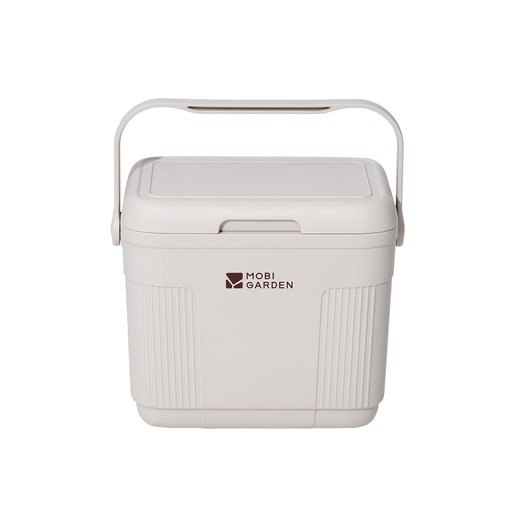
Why it's a great fit: With a 22L capacity, this insulated cooler offers enough space for a family of 4 to 6 for a weekend. It's a great choice for camping trips or long car journeys where reliability is key.
The cooler uses high-density PU foam insulation and a silicone gasket to minimise cold loss. The food-grade PP body and reinforced corners address issues of material and construction quality.
Internal slots for the two included ice packs optimise cooling performance and space utilisation. The sturdy rotating handle makes it easy to carry, even when fully loaded.
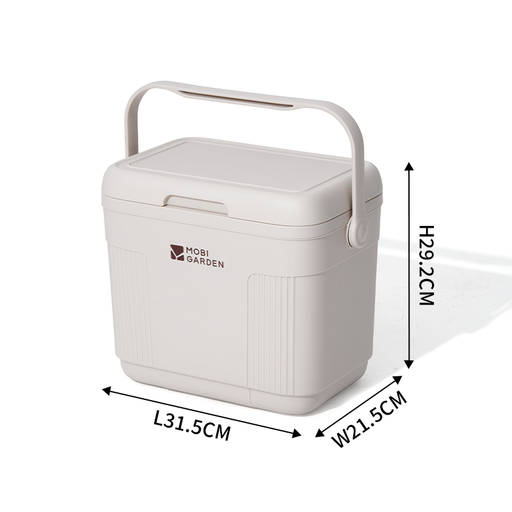
Why it's a great fit: The compact 10-litre size is perfect for day trips, a picnic for two, or as a personal cooler for fishing. It's lightweight, easy to handle, and fits effortlessly in the car boot.
Despite its smaller size, this model makes no compromises on core features: a PU insulation layer, a silicone gasket, and a food-grade PP body ensure safety and reliable cooling performance.
High portability combined with solid insulation performance. The single-piece handle and low weight make transport effortless without sacrificing essential cooling capability.
We've compiled a complete, up-to-date list of products that fully meet these strict selection criteria and German safety regulations.
To achieve the best possible performance, you should follow a few tips:
The actual cooling duration depends on many factors: the quality of the insulation and seal, the outside temperature, the ratio of ice to contents, and how often the cooler is opened. Manufacturer claims like "up to 36–48 hours" should be seen as maximum values under ideal conditions. For realistic use on a warm summer day, it's wise to expect a somewhat shorter, but still sufficient, cooling performance of one to two days, provided a high-quality cooler is used with enough ice packs.
No, using dry ice in most standard plastic coolers is not recommended. Dry ice sublimates into carbon dioxide gas, which can lead to a dangerous pressure build-up in an airtight container. Additionally, the extremely low temperatures (-78.5°C or -109.3°F) can make the plastic brittle and cause it to crack. Always adhere to the manufacturer's safety instructions.