Kneading pasta dough in a small space
If you mainly want to prepare dough at your holiday home, check the appliance’s footprint, storage space and dough hook. The size of an appliance alone doesn’t tell you how much firm pasta dough it can handle.


For making pasta dough at your holiday home, a stand mixer with a dough hook is enough if you mainly want to knead the dough and then roll it out by hand. If space is limited, a compact appliance may be a good option. You’ll need a suitable attachment to make pasta sheets or ribbon pasta, while a pasta maker combines kneading and shaping but won’t replace a versatile stand mixer.
If you mainly want to prepare dough at your holiday home, check the appliance’s footprint, storage space and dough hook. The size of an appliance alone doesn’t tell you how much firm pasta dough it can handle.
If you want to make pasta sheets or ribbon pasta after kneading, you could consider a suitable attachment or a specialist pasta maker. Check the accessories and model compatibility separately.
If you’re planning larger quantities, compare the recipe weight with the specifications for the specific appliance, and make sure there’s enough space in your holiday kitchen.
| Buying consideration | What to check | Who should pay particular attention? |
|---|---|---|
| Kneading pasta dough | Check whether a dough hook is included and what quantity is recommended for the specific type of dough. | If I mainly want to knead firm pasta dough at my holiday home, the right tool and recipe quantity matter to me. Around 31% of consumers put dough preparation first. |
| Worktop space and transport | Compare the appliance’s dimensions and weight with the available worktop space, storage and transport options. | If you need to set up the appliance in a small holiday kitchen and put it away afterwards, its dimensions are especially important. Around 25% of consumers prioritise the space it takes up. |
| Rolling and cutting | Check that the attachment is compatible and see which rollers and cutting tools are included. | If I want to roll or cut pasta directly with the appliance, the accessories need to fit the main unit. Around 19% of consumers put shaping pasta first. |
| Quantities for guests | Compare the total recipe weight with the appliance’s specifications for the dough in question. | If you’re cooking for several guests, check whether the recipe needs to be divided into one or more batches. Around 13% of consumers prioritise larger quantities. |
| Cleaning | Check whether each individual part is dishwasher-safe and follow its cleaning instructions. | If you only use the appliance occasionally at your holiday home, cleaning the parts you’ve used could be a deciding factor. Around 12% of consumers prioritise easy cleaning. |
Bowl capacity and the maximum dough quantity are two different specifications. A stated capacity for bread dough doesn’t automatically mean the appliance can handle the same quantity of firm pasta dough.
Compare your recipe with the instructions for the specific model and make several batches if needed.
Making several batches takes extra time and means repeating the same steps.
A dough hook prepares the dough, but rolling and cutting involve additional steps. You’ll need the right tools for these or will have to work the dough by hand.
Check that the main unit and attachments are compatible, and see exactly what’s included.
Extra rollers or cutting tools take up space and may need to be bought separately.
A statement about cleaning removable parts doesn’t automatically apply to every component. For example, Philips excludes the front cover of the HR2665/93 from its statement about dishwasher-safe removable parts.
Follow the cleaning instructions for every part you plan to use.
Bosch offers compact and larger stand mixers for kneading. Separate pasta accessories are available for certain MUM5 models.
The Chef KVC3100S is a stand mixer with a bowl and dough hook, suitable for preparing dough and a range of other kitchen tasks.
The Artisan 5KSM175PSEBK is available with several mixing tools, including a dough hook.
Smeg offers a separate pasta roller set for specific stand mixer ranges listed by the brand.
The HR2665/93 pasta maker is designed for mixing and shaping pasta, rather than the wide range of tasks handled by a general-purpose stand mixer.
This selection includes stand mixers and dough mixers with dough-preparation features mentioned in their product titles. Whether an appliance suits your recipe and holiday kitchen depends on factors including its instructions, footprint and what’s included.
 No image available
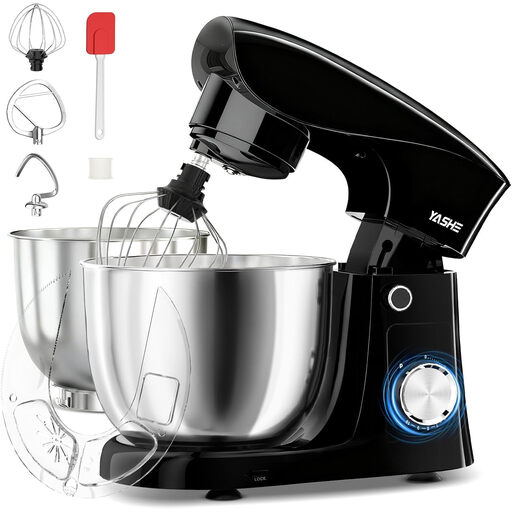
The product title lists a dough hook for preparing dough. Check your recipe against the instructions for the specific model.
 No image available
The product title lists a dough hook. Before deciding on quantities, check the instructions for your pasta dough.
 No image available
The product title lists a dough hook. Check the instructions for the specific model to make sure it’s suitable for your recipe.
 No image available
The product title describes the appliance as a dough mixer and pasta machine. Check the instructions to see which steps and pasta shapes the specific model can handle.
 No image available
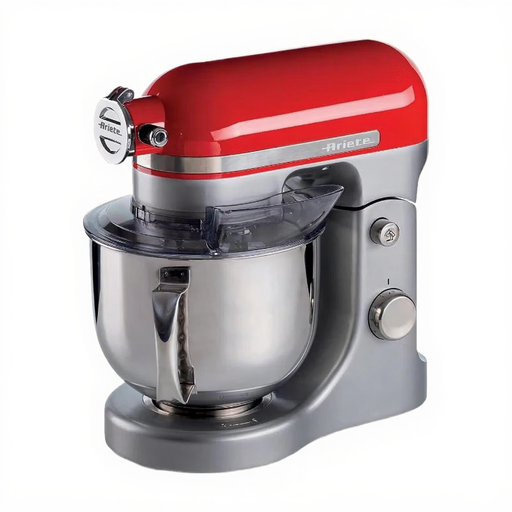
The product description lists stiff doughs as one of its uses and includes a dough hook. Compare the recipe quantity with the instructions for the model.
No, you don’t necessarily need a pasta attachment to knead dough. In a spaghetti recipe, KitchenAid Germany describes kneading as a step before rolling and cutting. You can decide separately whether you want to do these additional steps with the appliance.
Don’t assume you can based solely on a general quantity or one specifically given for bread dough. Compare your recipe with the instructions for the specific model and divide the quantity into several batches if needed.
Check each part individually. Bosch Home Appliances Germany describes the bowl and mixing tools of the MUMS2VM00 as dishwasher-safe. For the Philips HR2665/93, the manufacturer excludes the front cover from its statement about dishwasher-safe removable parts.
No. The European Union explains that the CE mark is the manufacturer’s declaration that the product meets the relevant EU requirements; it isn’t an independent quality mark. Whether the mark and compliance requirements apply to a specific appliance needs to be assessed product by product.
If a product is faulty, the seller is generally your point of contact for your statutory rights. The Verbraucherzentrale distinguishes these rights from a voluntary guarantee. The remedy available will depend on the specific fault and the applicable requirements.