Who might benefit from having their own chest freezer?

People living alone who regularly freeze sauce

If you cook several portions at once, you need freezer space that suits the amount you actually store. The Consumer Advice Centre and the Federal Centre for Nutrition both highlight how much you need to store and freezing food in portions as important points to consider.

People living alone with limited space

If you need extra freezer space, make sure the appliance’s external dimensions, the route for getting it into place and the clearance needed to open the lid all work together. Klarstein’s product details show a range of compact chest freezer sizes.

Occasional batch cooks

If you only freeze pasta sauce now and again, start by checking whether your existing freezer compartment has enough room. The Consumer Advice Centre recommends choosing an appliance size that matches your actual needs.

What should you consider when choosing one?

Use your existing freezer compartment

A good choice if: you only freeze individual portions occasionally and they fit without having to move other food out of the way.

The trade-off: you won’t need another appliance, but the space you already have may limit how much you can cook at once.

Compact chest freezer

A good choice if: you regularly build up a separate stock of sauce portions and have enough room to position the appliance and open its lid.

The trade-off: a small chest freezer gives you extra freezer space, but it will still use electricity on an ongoing basis.

Larger chest freezer or small upright freezer

A good choice if: you regularly add other foods or freeze larger batches. An upright freezer may be a better fit if opening a lid upwards would be awkward where you plan to put it.

The trade-off: extra capacity may be unnecessary if you don’t need much space. Compare the specific models’ external dimensions and energy labels.

What matters What to check before buying Who it matters most to
Usable capacity that suits your needs Count your containers and any other food you plan to store; don’t confuse usable capacity with freezing capacity. The Consumer Advice Centre gives 50 to 80 litres per person as a rough guide. If I want to store several portions regularly, I need enough room without choosing an oversized chest freezer. Around 33% of consumers put usable capacity at the top of their list.
Space and access to the lid Measure the external dimensions, the route for getting the appliance into place and the clearance needed to open the lid. If my kitchen or utility room is short on space, the appliance needs to fit and be easy to access in its intended position. Around 27% of consumers check space and lid access first.
Ongoing electricity consumption Compare the annual energy consumption in kWh/year and the efficiency class on the labels for specific appliances; calculate the cost using your own electricity tariff. If I’m only storing a few extra portions, I want to factor in the electricity used by another appliance that runs all the time. Around 20% of consumers put running costs first.
Finding your portions again Look for a basket or other storage features, and plan to use freezer-safe, easy-to-label containers; leave room in containers for liquid sauce. If I freeze lots of small containers, I want to be able to identify and remove individual portions easily. Around 20% of consumers prioritise easy access to individual portions.

Common misconceptions and practical tips

  • Treating litres per person as a minimum size

    The Consumer Advice Centre gives 50 to 80 litres per person as a rough guide. The usable capacity you need depends on how much food you actually plan to freeze.

    First work out how many portions of sauce and other foods need to fit at the same time. If you only need extra space occasionally, check whether your existing freezer compartment is enough.

    An unnecessarily large appliance takes up space and uses electricity all year round.

  • Comparing only the efficiency class or purchase price

    The EU energy label also shows annual energy consumption in kWh. Actual consumption depends on factors including how the appliance is used and where it is placed.

    Compare the annual consumption of specific models and calculate the cost using your own electricity tariff, rather than estimating the cost from the efficiency class alone.

  • Confusing a defrost water drain with automatic defrosting

    A drain makes it easier to deal with defrost water, but it doesn’t mean the chest freezer never needs defrosting.

    Before buying, read the instructions for the specific model to find out about defrosting and where to position it.

  • Freezing liquid sauce in full or unlabelled containers

    Liquid needs room in the container. Without a label, it can be harder to identify portions later.

    Use freezer-safe containers, leave room at the top and label the contents and date. For liquid foods, the Consumer Advice Centre recommends filling containers to around three-quarters full.

Brands to consider

Klarstein

The Iceblokk range includes different compact chest freezer sizes: Klarstein lists usable capacities of 51 and 78 litres.

  • Klarstein says the 51-litre model has a hanging basket and defrost water drain. The manufacturer also lists a hanging basket for the 78-litre model.
  • These features don’t confirm a particular freezing performance or electricity cost. Compare the energy consumption and dimensions of the specific model.

Beko

According to Beko’s German product page, the CF100EWN offers 98 litres of freezer space and is 54.5 cm wide.

  • Beko describes this as a freestanding chest freezer with static cooling and an E energy efficiency class.
  • Check the annual energy consumption and space required for the specific model in the listing. Width alone doesn’t tell you whether it suits your needs.

Exquisit

According to the manufacturer, the GT100-010E is a compact chest freezer with a basket and defrost water drain.

  • A defrost water drain can make it easier to deal with water when defrosting.
  • Exquisit’s product page gives different usable capacity figures for the GT100-010E: 95 and 96 litres. Check the product data sheet for the specific model before deciding.

Amica

According to Amica’s German manufacturer page, the GT 311 105 W is a chest freezer with a total capacity of 99 litres.

  • Amica lists dimensions of 54.5 × 83.5 × 47.6 cm and an E energy efficiency class for this model.
  • Information about larger chest freezers shouldn’t be applied to this specific 99-litre model.

Joybuy products for extra freezer space

The models below provide extra freezer space for a regular stock of sauce or other foods. Alongside chest freezers, the selection also includes smaller upright models.

Exquisit chest freezer with 142 l usable capacity

Exquisit chest freezer, 142 l, 4-star freezer compartment

The extra capacity may suit you if you regularly freeze larger batches or store other food as well.

Listed specifications include 142 l usable capacity, a freezing capacity of 7 kg/24 h and 182 kWh/year; efficiency class E. Dimensions: 70.5 × 84.5 × 55 cm. Defrosting is manual.

View at Joybuy

CHiQ chest freezer with 99 l usable capacity and a 4-star freezer compartment

CHiQ chest freezer, 99 l, 4-star freezer compartment

This model offers more usable capacity than a mini freezer, making it suitable for regularly freezing portions and storing other food.

Listed specifications include 99 l usable capacity, a freezing capacity of 4.5 kg/24 h and efficiency class E. Features include a wire basket and a suspended-opening lid.

View at Joybuy
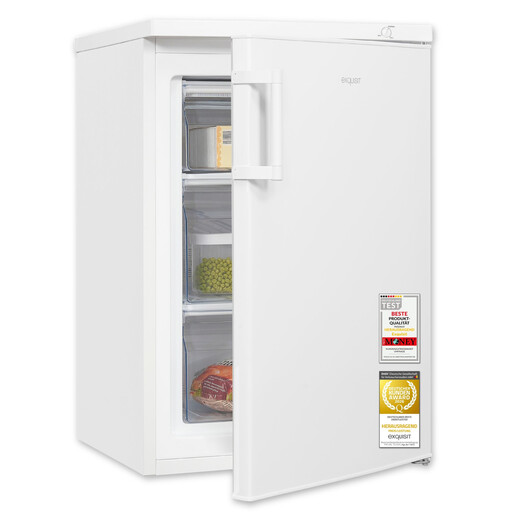
Exquisit GS581-H-010E upright freezer with 85 l usable capacity

Exquisit GS581-H-010E upright freezer, 85 l

An upright design may be a good alternative if opening a chest freezer lid upwards would be awkward where you plan to put it.

Listed specifications include 85 l usable capacity, a freezing capacity of 4.0 kg/24 h and efficiency class E. Three drawers make it easier to keep food separate; defrosting is manual.

View at Joybuy
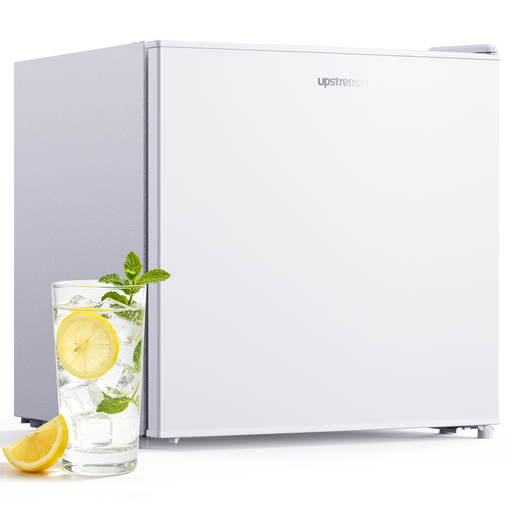
Upstreman UF35 upright freezer with 35 l usable capacity

Upstreman UF35 upright freezer, 35 l

Its compact capacity may suit a few portions of sauce if you don’t plan to store much else.

Listed features include 35 l usable capacity and a 4-star freezer compartment. The internal compartment is removable and the door is reversible; dimensions are 47.5 × 44.2 × 48.8 cm. There’s limited room for other food.

View at Joybuy

COMFEE’ RCU40WH2(E) upright freezer with 31 l usable capacity

COMFEE' RCU40WH2(E) upright freezer, 31 l

The small usable capacity may be enough for a few individual portions, as long as you don’t plan to add larger stocks of food.

Listed specifications include 31 l usable capacity, a freezing capacity of up to 2 kg/24 h and 147 kWh/year; efficiency class E. The door is reversible and the feet are adjustable.

View at Joybuy

Frequently asked questions

How should I prepare cooled pasta sauce for freezing?

Divide the sauce into portions in freezer-safe containers and label them with the contents, quantity and date. The Federal Institute for Risk Assessment recommends rapidly cooling hot food to below 7 °C before storing it for longer periods. For liquid foods, the Consumer Advice Centre recommends filling containers to around three-quarters full.

What temperature and storage time are suitable for cooked sauce?

The Consumer Advice Centre gives −18 °C as the optimum temperature for freezers and up to three months as a general guide for cooked food. This doesn’t guarantee that every sauce will keep for that long; the ingredients and how the food is handled also matter.

How can I compare ongoing electricity costs?

Multiply the specific model’s annual energy consumption in kWh/year by your electricity price per kWh. This gives you an estimated annual cost; actual consumption may vary depending on how the appliance is used and where it is placed.

Do new freezers in Germany need an EU energy label?

EU energy labelling and ecodesign requirements apply to household refrigerators and freezers. According to the European Commission, the energy label has used classes A to G since 1 March 2021. This labelling requirement applies to the appliance category; it doesn’t mean that a specific listing has already been checked.

What can I do with an old chest freezer when buying a new one?

You can take old electrical appliances to an authorised collection point, such as a local recycling centre. The Federal Ministry for the Environment also explains that retailers have take-back obligations in certain circumstances. These can include taking back an equivalent old appliance when a new one is bought from a retailer covered by the rules. Check the arrangements for your order and delivery in advance.