Sauce on a single cooking zone
You mainly want to heat a saucepan of sauce on an additional, space-saving hob, and cook the pasta on another hob or later.


For a single portion of pasta sauce, a portable single hob may be enough if you cook the pasta on another hob or at a different time. If you want to cook the sauce and pasta at the same time, you’ll need two usable cooking zones. Also check that your pan is compatible with the heating technology, and that you have the space and connection required for a portable or built-in hob.
You mainly want to heat a saucepan of sauce on an additional, space-saving hob, and cook the pasta on another hob or later.
You want to heat both pans at once, so you’ll need two usable cooking zones and enough space for them.
You want to keep your sauce pan; its base and diameter should be compatible with the heating technology and the specifications for the model in question.
A good fit if: you have a suitable induction pan and cook the pasta elsewhere or at a different time.
Consider: a single hob has just one cooking zone; the pan base and diameter must be compatible with the model.
A good fit if: you regularly want to heat the sauce and pasta water at the same time.
Consider: you’ll need more worktop space and a suitable connection; both pans must be induction-compatible.
A good fit if: you’re looking for a portable single hob for a pan that isn’t suitable for induction.
Consider: a ceramic glass surface doesn’t automatically mean the hob uses induction; the ROMMELSBACHER CT 2203/TC has one cooking zone with a dual-circuit zone.
A good fit if: you regularly want to use several pans at once and are planning a permanent installation.
Consider: cut-out dimensions and connection requirements vary by model; the Bosch and Siemens models covered here are specified without a plug and must be connected by a qualified electrician.
| What you need | What to check before buying | Who it matters most to |
|---|---|---|
| One cooking zone for the sauce | Number of zones and available space; suitable pan size and the specific model’s timer function. | If I’m only heating the sauce pan on the additional appliance, I’d rather have a suitable single hob than extra zones I won’t use. Around 33% of consumers put a single cooking zone for the sauce first. |
| Cook with two pans at once | Two usable cooking zones; check the appliance dimensions and connection requirements. | If I want the sauce and pasta to be ready at the same time, I need space for both pans. Around 25% of consumers prioritise cooking on two zones at once. |
| Use the pan I already own | Check the pan base and diameter against the heating technology and model specifications. | If I want to keep using my sauce pan, I’ll first check whether its base is compatible with the heating technology I’ve chosen. Around 25% of consumers prioritise compatibility with their existing pan. |
| Install a hob permanently | Check the cut-out dimensions and the full model’s connection rating; plan for installation by a qualified electrician where required. | If I want to keep several pans on the hob, it needs to fit the planned cut-out and meet the connection requirements. Around 17% of consumers prioritise a built-in hob with several zones. |
Manufacturer specifications show why it’s important to compare exact models: ROMMELSBACHER specifies a ferromagnetic pan base and a 120–230 mm cooking zone for the CT 2010/IN; CASO lists a pan diameter of 12–24 cm for the Touch 2000. These figures apply only to the models named. Power settings and timers are operating features, but they don’t show how evenly a particular sauce will simmer.
Both induction hobs and appliances with radiant heating can have a ceramic glass surface. For induction, the pan base must be compatible with the appliance in question.
Check the heating technology and requirements against the full model number.
If your existing pan isn’t induction-compatible, you may need to buy a suitable pan for an induction hob.
A single hob can’t heat two pans on separate zones at the same time.
Before you buy, decide whether you want to cook the pasta at the same time as the sauce or prepare them one after the other.
The Bosch and Siemens built-in hobs covered here are specified without a plug; the cut-out and connection requirements depend on the model.
Before choosing an appliance, check the planned cut-out and electrical installation with a qualified electrician.
Power setting specifications describe how the appliance is operated, but don’t confirm the temperature of a particular sauce in the pan you’re using.
Compare the controls, and keep an eye on the sauce and stir it as it cooks.
The CT 2010/IN and CT 2203/TC ranges offer different portable single hobs: induction and HiLight radiant heating respectively.
The Touch 2000 is a portable single induction hob for a compatible sauce pan.
The DK 1031 is a portable double induction hob for two pans.
The PKN645BA2E electric hob is a built-in model with four cooking zones, including a dual-circuit zone and an oval zone.
The EX975LXC1E is a built-in 90 cm induction hob with five cooking zones and flexible areas.
The products below include portable single and double hobs, as well as built-in hobs to suit different cooking routines.
 No image available
A portable single cooking zone for a sauce pan when you’re cooking the pasta on another hob or at a different time.
The product name lists 2.100 W, 28 cm, nine heat settings and an 8-hour timer. As an induction hob, it requires compatible cookware.
 No image available
Two cooking zones are useful if you want to heat the sauce and pasta water at the same time.
The product name lists five temperature settings and keep-warm, boil and simmer functions. Suitable induction cookware is required.
 No image available
A portable radiant-heating hob as an alternative to induction if your existing pan isn’t suitable for induction.
The product name lists 3.500 W and a timer; the appliance is described as suitable for heat-resistant pans. Check the requirements for your cookware.
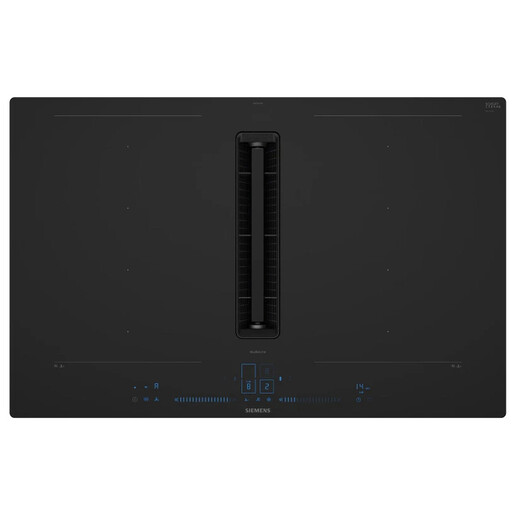 No image available
A built-in model for a permanent cooking area where you plan to use several pans.
The product name lists four cooking zones, an 80 cm width and an integrated extractor. According to the product description, professional installation and a suitable cut-out are required; the cookware must be suitable for induction.
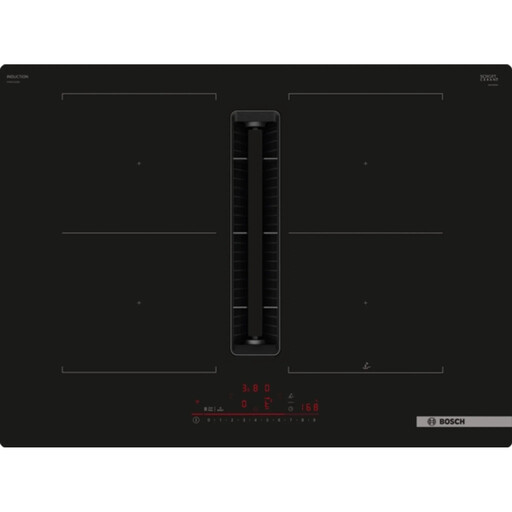 No image available
A built-in hob for a permanent cooking area where you want to use several pans at once.
The product name lists four cooking zones, a 70 cm width, an integrated extractor and CombiZone. According to the product description, professional installation and a suitable cut-out are required; the cookware must be suitable for induction.
Compare the pan base and diameter with the specifications for the exact appliance. ROMMELSBACHER requires a ferromagnetic base for the CT 2010/IN and specifies a 120–230 mm cooking zone; CASO lists pans with a diameter of 12–24 cm for the Touch 2000. These figures don’t automatically apply to other models.
For a fixed connection, HEA specifies an electrical installer registered with the energy supplier. The Bosch and Siemens built-in hobs covered here are listed without a plug and are intended to be connected by a qualified electrician. This is different from a portable hob that’s ready to plug in.
In its food hygiene guidance published in March 2026, the German Federal Institute for Risk Assessment recommends cooling hot food promptly to below 7 °C if you’re storing it for longer, and keeping perishable food chilled when you’re out and about. A hob timer is no substitute for following food hygiene guidance.
When you buy from a trader, you’re generally entitled to a minimum two-year legal guarantee from the date you receive the goods. Your Europe distinguishes this legal guarantee from a voluntary commercial guarantee; the seller is responsible for handling claims under your legal rights.
The Verbraucherzentrale explains that the EU energy label applies to the oven, not the hob. So don’t compare hobs using the energy rating of an oven sold with them.