Which lighting is right for you?

Artists who want accurate colours

If you film your pastel work over several sessions, controllable lighting and a fixed white balance can help keep your footage consistent. Canon Europe explains why white balance matters in challenging lighting conditions.

Overhead filming

When you draw while filming, position the light so your hand and tools don’t cast distracting shadows across key parts of the frame. That’s why the diffuser and the position of the light modifier are important parts of your set-up.

Filming at a small desk

If there’s little room for anything besides your camera and drawing surface, a desk-mounted panel may offer a different mounting option from a softbox on a stand. Check that you can angle the light across the whole surface.

What should you look for when buying?

Add a softbox to your existing continuous light

A good fit if: you already have a compatible light and a sturdy stand, and want to soften shadows from your hand or tools.

Keep in mind: Diffusers reduce the light output, and the connection, dimensions and space for your hand movements all need to suit your set-up.

Bi-colour continuous light with a separate softbox

A good fit if: you want artificial light to be your main source and would like to choose your light and modifier to work together.

Keep in mind: Check the contents, connection, stand and power supply for the specific combination you’re considering.

Compact LED panel

A good fit if: there’s little room on your drawing desk for a stand and a traditional softbox.

Keep in mind: A panel isn’t a softbox. Check coverage across the whole surface and shadows cast by your working hand in a test recording.

Priority What to check before buying Who is it especially relevant to?
Consistent pastel colours Colour temperature and dimming on the specific light; set the white balance against a neutral reference under the light you’ll use to film. If I want to compare pastel shades across several recordings, I look for controllable lighting and consistent white balance. Around 31% of consumers put colour consistency first.
Fewer shadows from your hand Position the softbox to the side of the drawing surface; check the connection and allow room for the stand and your hand movements. If my hand casts a shadow over key parts of the frame while I’m drawing, I want to adjust the light position and diffusion accordingly. Around 25% of consumers prioritise softer shadows from their hands.
Lighting across the whole surface Check the paper size against the available space; assess the corners in a test recording, too. If I want to show the whole drawing in the frame, the centre and edges both need to be well lit. Around 19% of consumers prioritise lighting across the entire surface.
Flicker in video Film using your intended frame rate, shutter speed and dimmer setting; check the result for banding. If I want to avoid visible banding, I test the specific combination of camera and light. Around 13% of consumers focus primarily on flicker-free video; Sony explains that flickering light sources can cause banding with certain camera settings.
Space at your drawing desk Check how the light is mounted and positioned, its power supply and what’s included with the version you choose. If there’s hardly any room beside my camera and drawing surface, I want to mount the light without an obstructive stand. Around 12% of consumers prioritise a space-saving set-up.

Common pitfalls

  • Assuming a softbox is a complete video light

    The Aputure Light Box 60x90 is a light modifier, not a light source in its own right. Without a compatible light and mounting hardware, it can’t be used like a complete video light.

    Before buying, check the package contents and connection, and make sure any stands you need will work with your existing set-up.

    Depending on the equipment you already own, you may need a separate light or stand for your set-up.

  • Taking reflector lux figures as the brightness on pastel paper

    Measurements taken with a reflector don’t automatically tell you how much light reaches your drawing behind a softbox. Aputure gives a light reduction of 1.5 and 2.5 stops for the front diffusers on the Light Box 60x90.

    Only compare measurements taken at the same distance and with the same light modifier, and assess the finished lighting in a test video.

  • Treating even lighting and visible paper texture as the same goal

    The Canadian Conservation Institute describes side lighting for an even overall view, and raking light for emphasising surface texture. These approaches create different visual effects.

    Decide whether you want to focus on the process and colours or on the pastel texture. If needed, plan separate light positions or recordings.

    You may need a second light position or an additional recording to achieve different visual effects.

  • Comparing only the maximum lumen figure on a desk panel

    Elgato states that the maximum brightness of the Key Light Air MK.2 depends on the power supply available. A high lumen figure alone doesn’t tell you how evenly your particular drawing surface will be lit.

    Check that you have a suitable power source, that the light can be mounted on your desk and that it covers the surface from your intended camera angle.

    You may need to buy a suitable power supply separately to achieve the stated maximum brightness.

Brands to consider

Aputure / amaran

Aputure’s range includes the Light Box 60x90 Bowens softbox, while the amaran 100x S is a bi-colour continuous light that you’ll need to consider separately.

  • Aputure lists light reductions of 1.5 and 2.5 stops for the two front diffusers on the Light Box 60x90. According to Aputure, the amaran 100x S has a colour temperature range of 2700–6500 K and a CRI of 95.
  • The diffusers reduce light output. Lux figures for the light apply to the specific measurement set-ups stated and don’t show the illuminance on pastel paper behind a softbox.

Godox

Godox describes the SL60IIBi as a bi-colour continuous light with a Bowens mount, and offers compatible softboxes in several shapes and sizes.

  • Godox lists a colour temperature range of 2800–6500 K, dimming from 0–100%, a CRI of ≥96 and a TLCI of ≥97 for the SL60IIBi.
  • These manufacturer specifications aren’t independent measurements taken on artwork. Make sure the light, softbox and stand work together in the combination you choose.

Elgato

The Key Light Air MK.2 is a compact panel with a desk mount. It’s an alternative if a softbox on a stand isn’t a good fit for your drawing desk.

  • Elgato lists a colour temperature range of 2900–7000 K, a CRI above 94 and a desk clamp for desks up to 6 cm thick.
  • According to Elgato, its maximum output of 2100 lm requires a sufficiently powerful power source. These manufacturer specifications don’t prove that it will light a particular pastel drawing evenly.

Rollei

Rollei describes softboxes as light modifiers for softer shadows and offers continuous lights from its LUX Bi-Color range to choose from separately.

  • Rollei lists an adjustable colour temperature of 2700–6500 K for the LUX Bi-Color range.
  • Check the connection and package contents for the specific model. These specifications don’t represent an independent test of a particular Rollei light for filming pastels.

Nanlite

According to the manufacturer’s manual, the FS-150B is a bi-colour continuous light. You’ll need to choose a compatible light modifier separately.

  • The manual lists a colour temperature range of 2700–6500 K for the FS-150B, with average CRI and TLCI figures of 96 and 97.
  • The rated output of 175 W isn’t a measure of illuminance on your drawing. Check softbox compatibility and the version on offer to make sure it suits your set-up.

Joybuy products

This selection features compact LED camera lights for adjustable lighting and flexible positioning when filming a pastel drawing. It doesn’t replace checking whether your chosen set-up will light the whole drawing surface evenly.
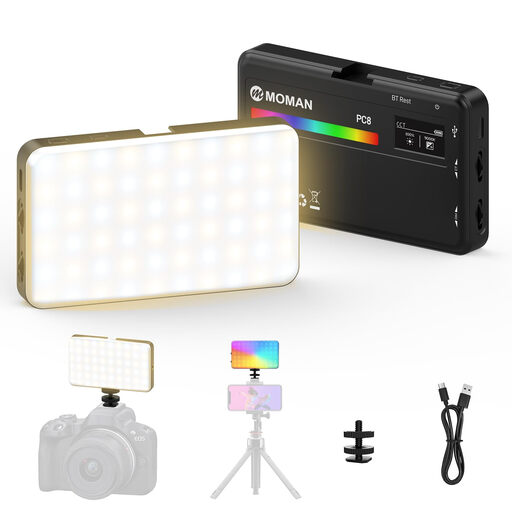
MOMAN PC8 RGB camera light

MOMAN PC8 RGB camera light

Described as a portable RGB LED video light, it may be worth considering if you need to position your light flexibly while filming.

View at Joybuy
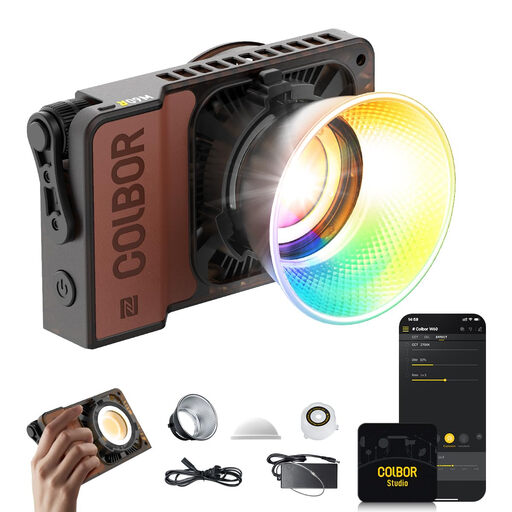
COLBOR W60R RGB video light, 60 W

COLBOR W60R RGB video light, 60 W

The product name describes it as a portable RGB video light. Check how it can be positioned in relation to your drawing surface and camera.

60 W according to the product name.

View at Joybuy
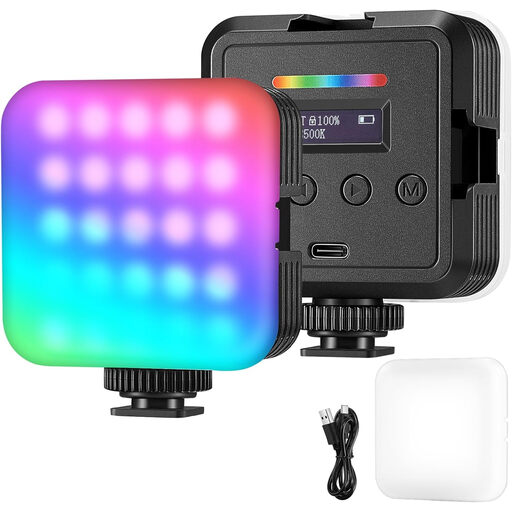
RGB video light for photography, video and streaming

RGB video light

The product name lists photography, video and streaming as possible uses. Check with a test recording whether the light covers your drawing surface as needed.

Described as a portable light with adjustable lighting modes.

View at Joybuy
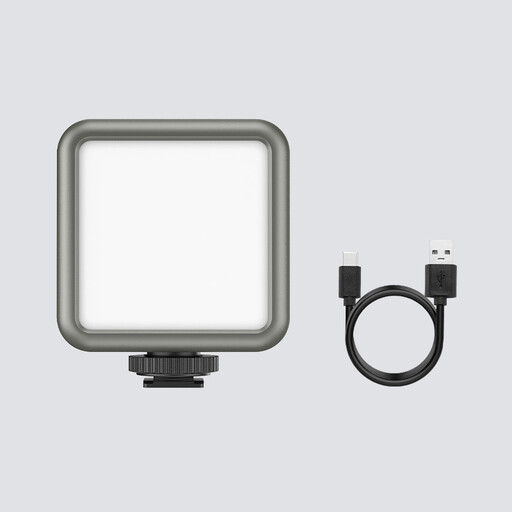
ULANZI VL49 LED video light

ULANZI VL49 LED video light

The product name describes a dimmable light with magnets on the back, which may offer another option for positioning it.

2000 mAh and 2500–9500 K according to the product name.

View at Joybuy
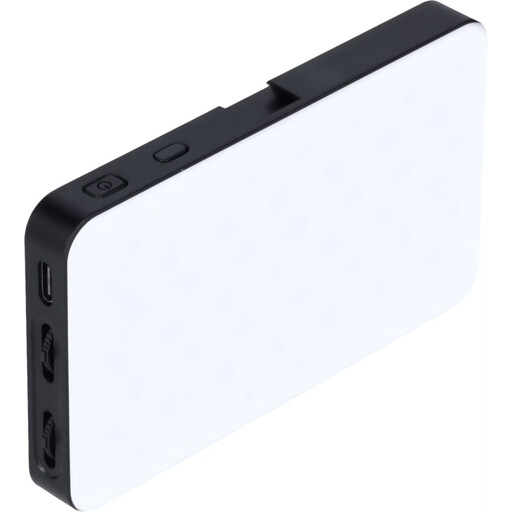
Rollei LUX Compact RGB LED Light, 8 W

Rollei LUX Compact RGB LED Light, 8 W

This compact RGB light is described as suitable for photography and video. Check that its mount works with your camera or stand set-up.

8 W according to the product name.

View at Joybuy

Frequently asked questions

Is a high CRI enough to make sure my pastel colours look right in video?

No, a CRI figure alone isn’t enough. The mix of light and your camera’s white balance also affect the footage. Film a neutral reference under the light you’ll actually use, then compare the test video with your drawing.

How should I position the light for an overall shot?

As a starting point for an evenly lit overall view, the Canadian Conservation Institute describes using two light sources positioned at the sides, at around 45°. If you also want to show the texture of the paper, you may need a separate lighting set-up with raking light from the side.

What can I do about banding in my video?

First, test your light with the camera settings and dimmer level you plan to use. Sony explains that flickering light sources can cause banding with certain camera and shutter settings. Depending on your camera model, an anti-flicker or variable shutter setting may help.

How can I protect my pastel drawing while filming and afterwards?

Limit its exposure to light to the time needed for filming, then store the artwork away from light. The Canadian Conservation Institute lists pastel as a medium used in works on paper and notes that both natural and artificial light can alter colours. This doesn’t establish a universal exposure limit for filming.