Artists working with changing window light
If you’re filming longer drawing sessions, adjustable extra lighting can help you compensate for changing daylight.


You don’t automatically need a softbox. If the window light stays consistent while you’re filming and your hand doesn’t cast distracting shadows over important parts of the image, you can start with the light you have. If the light changes, a dimmable continuous light with a suitable softbox can give you more control; on a small desk, a panel or clamp light may be more practical. Check the colour, space requirements, what’s included and the details of the specific electrical model.
If you’re filming longer drawing sessions, adjustable extra lighting can help you compensate for changing daylight.
If you want the paper and pastel colours to look true to life in your video, colour temperature and a suitable white balance are important things to check.
If you’re filming from above and have little room for a floor stand, consider the light’s size, how it attaches and how much space you need to work.
If the window light is consistent, start by checking shadows and how the image looks. If the light changes or space is limited, the right set-up is key.
A good fit if: the light stays consistent throughout filming and your hand doesn’t cover important parts of the image.
Consider: if the brightness changes, it’s harder to recreate the same shot reliably.
A good fit if: you want to be able to add controlled lighting for longer periods and have room for the light, modifier and stand.
Consider: not every deal includes the light, softbox and stand together; check that the connection is compatible.
A good fit if: there’s little room for a floor stand beside your desk and you can attach a desk clamp.
Consider: a panel isn’t a softbox. Whether it lights your entire drawing area depends on your specific set-up.
| What you need | What to check before buying | Who is this most important to? |
|---|---|---|
| Fill light and hand shadows | Use a test shot to check the whole drawing area and your usual hand positions. Make sure the light modifier is the right size for your workspace. | If my hand casts a shadow over important parts of the image, I need a light that fills the area appropriately. Around 36% of consumers say even lighting and fewer hand shadows are their main concerns. |
| The colour of the paper and pastels | Look for adjustable colour temperature and compare a test shot using a fixed camera white balance. A Kelvin rating alone doesn’t guarantee accurate colour reproduction. | If I want the paper and pastel colours to look true to life in the video, I pay attention to colour temperature and white balance. Around 29% of consumers prioritise colour. |
| Space, mounting and what’s included | Check whether the light, compatible connection, diffuser and stand or desk clamp are included. Rollei describes the diffusion fabric as making the light source larger and softer. | With limited space at my drawing desk, I want to know in advance how the light attaches and what else I’ll need. Around 21% of consumers prioritise space and what’s included. |
| Flicker or noise | Film a short test using your intended frame rate and shutter speed. Check the sound too if you’re recording audio on camera. | If I want to avoid distracting lines in my video, I test the light with my camera settings. Around 14% of consumers prioritise flicker-free video. |
A passive softbox shapes light but doesn’t produce any itself. The individual Bowens softboxes listed in the product information are described as being sold without an electric light source.
Check the full list of parts and the connection before comparing a standalone light modifier with a kit.
You may also need a compatible light, stand or mounting solution to create a complete lighting set-up.
Manufacturer ratings describe the light itself, not necessarily the result in your camera footage. Existing window light and your camera’s white balance also affect how colours appear.
Take a test shot using your actual lighting and set the white balance for those filming conditions.
The softbox also needs to fit alongside your camera, hand and drawing desk. A desk panel has different mounting requirements from a light modifier on a stand.
Measure your workspace and mounting point, and check the assembled dimensions before buying.
Continuous lights and separately available Bowens softboxes for a modular set-up.
A compact Bowens light and a separately available Light Box 45x45 for a modular set-up.
A documented bi-colour kit with two Candela 100 lights, two Balloon softboxes and stands.
Passive, Bowens-compatible BM softboxes for use with a compatible light.
A diffused desk panel with a clamp mount as an alternative to a traditional softbox.
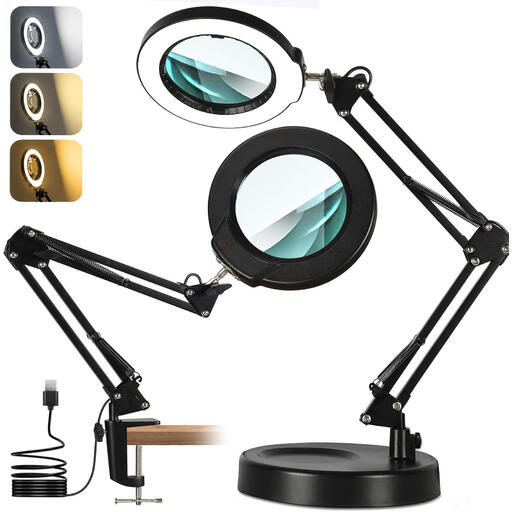
The products listed are clamp lights for your workspace, not softboxes. They may work as local fill lights; check how they illuminate your drawing area and the electrical specifications of the specific model.
 No image available
This clamp light can provide local extra lighting at your drawing desk. Check whether it illuminates the area evenly enough for your video in your own set-up.
The product title lists 72 LEDs, three light colours, ten brightness levels and 2,800–6,500 K. A clamp and stand are listed as mounting options.
Before buying, check the electrical specifications of the specific model and the safety information that applies to the product.
 No image available
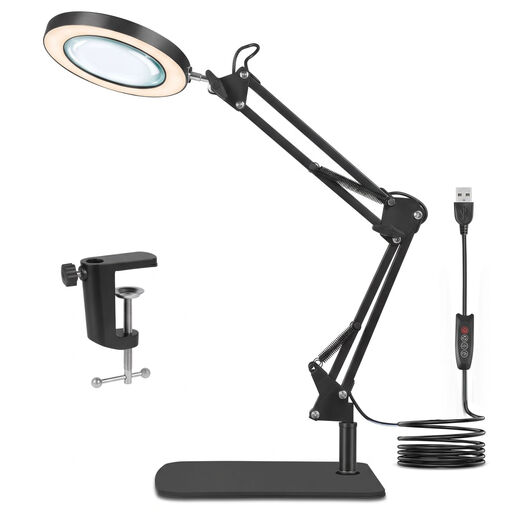
As a task light, it can provide local extra lighting at your desk, but it isn’t a softbox light modifier. Take a test shot to check whether it lights your drawing area sufficiently within your frame.
The product title lists three light colours, ten brightness levels and USB power. The description specifies 3,000, 4,500 and 6,000 K, and a clamp for surfaces up to 6.9 cm thick.
Before buying, check the electrical specifications of the specific model and the safety information that applies to the product.
Start by taking a test shot with your actual window light and additional lighting, then set the white balance for those filming conditions. An adjustable Kelvin setting on the light won’t automatically correct your camera’s white balance.
No. A passive softbox shapes light and needs a compatible light source. Check the connection, mounting and what’s included; for example, the amaran Light Box 45x45 is described as coming with diffusers and a grid, but not as a light.
Test the light using your intended frame rate and shutter speed. Nikon explains that flicker can occur when camera and light frequencies don’t match, so test your set-up with the actual camera and light combination.
Check which markings and documentation apply to the specific model. According to the European Commission, CE marking is only required for product groups covered by harmonised EU rules that require it. The German Federal Network Agency lists manufacturer details and German-language instructions and warnings among the points it checks.
The consumer advice centre Verbraucherzentrale explains that online purchases generally come with a 14-day right to cancel, starting when you receive the goods; you must notify the seller that you wish to cancel. Your statutory rights against the seller and a voluntary guarantee are separate entitlements.