Patch enthusiasts
You want to attach iron-on patches and need a dry pressing method that’s suitable for the patch and fabric. Extra steam power shouldn’t be your first selection criterion.


You don’t necessarily need a steam generator to attach individual fabric patches: a tested guide from MrPatch recommends dry heat and pressure, not extra steam. A steam generator may be worthwhile if you also regularly iron larger loads of laundry in your shared flat. First, check the patch instructions against the garment care label, then consider temperature control, steam-free operation, storage space and maintenance.
You want to attach iron-on patches and need a dry pressing method that’s suitable for the patch and fabric. Extra steam power shouldn’t be your first selection criterion.
You share an appliance and need to store both the base unit and the hose. If you only iron on patches occasionally, the amount of space the steam generator takes up is also worth considering.
You also regularly iron several items of clothing. In that case, tank capacity, ease of use and descaling become more important, but they don’t override the instructions for the patch and fabric.
A good choice if: you only occasionally press individual patches onto suitable fabrics and have limited storage space in your shared flat. The key considerations are the permitted dry heat and a firm, heat-resistant work surface.
The trade-off: It doesn’t offer the water capacity of a steam generator for regular, larger loads of laundry; extra steam power has no proven benefit when ironing on patches.
A good choice if: you often have laundry to iron as well as patches to attach, and need to adjust the settings to suit the care label and patch instructions.
The trade-off: The base unit and hose take up space and need looking after. A control dial doesn’t confirm a specific actual soleplate temperature or that the appliance is suitable for every patch.
A good choice if: you mainly want to smooth a variety of ironable garments, and the patch instructions don’t call for a separately set pressing temperature.
The trade-off: A manufacturer’s claim that an appliance is suitable for ironable fabrics doesn’t guarantee that it will work with the adhesive and backing material of every patch.
| What matters | What to check before buying | Who is it important to? |
|---|---|---|
| Protecting the patch and fabric | Check the patch instructions against the garment care label, and see whether you can avoid using steam while pressing. | When I press a patch onto a particular garment, I don’t want to damage the adhesive or fabric with unsuitable heat. That’s why around 36% of consumers put patch and fabric compatibility first. |
| Storage space and short sessions | Compare the dimensions, a safe place to rest the appliance, cord and hose storage, and the model-specific heat-up time. | With limited storage in a shared flat, I want to be able to put away the base unit and hose easily after a quick job. Around 29% of consumers place particular importance on storage space and the effort involved in short sessions. |
| Regular ironing | Distinguish continuous steam output in g/min from a steam boost; check the tank capacity, whether it can be refilled and how each model is operated. | If we regularly have several ironable garments to deal with as well as patches, water capacity and ease of use matter too. Around 21% of consumers prioritise this extra ironing in their shared flat. |
| Descaling and maintenance | Check the descaling method, any accessories required and the water quality guidance for the exact model number. | When sharing an appliance, I want to know which maintenance steps and accessories are actually needed. Around 14% of consumers say maintenance is their main concern. |
The method described by MrPatch uses dry heat and pressure. A high steam output therefore doesn’t prove that it will help a patch stick better.
Start by checking the instructions for the specific patch and the garment care label. Compare steam output only if you also plan to use the appliance for ironing laundry.
A claim that an appliance is suitable for ironable textiles doesn’t automatically confirm that the adhesive and backing material of a particular patch can withstand the same heat.
If the patch instructions specify a pressing temperature, check that it’s compatible with the model’s actual settings and the garment care label.
Rowenta describes the DG7623F0 as having a fixed tank. A Joybuy product description, however, says the tank is removable, so the information doesn’t match.
If the tank design matters to you, check the full model number and original instructions before deciding.
The CareStyle 1 IS 1012 BL may appeal to consumers looking for manual temperature control for different ironable fabrics.
The Express Essential SV6115 and Express Protect SV9202 offer different approaches to settings and features; the exact model variant is what matters.
According to Rowenta, the Compact Steam Pro DG7623 combines a compact design with manual settings.
Philips describes the PerfectCare Compact Essential GC6815/20 as a compact steam generator with OptimalTEMP and no manual temperature control.
The Vaporella Simply VS10.12 is a steam generator with temperature control on the iron and a separately refillable tank.
These Joybuy products are steam generators for consumers who want to use their appliance for ironing laundry as well as patching. Always check the instructions for the patch and fabric before pressing it on.
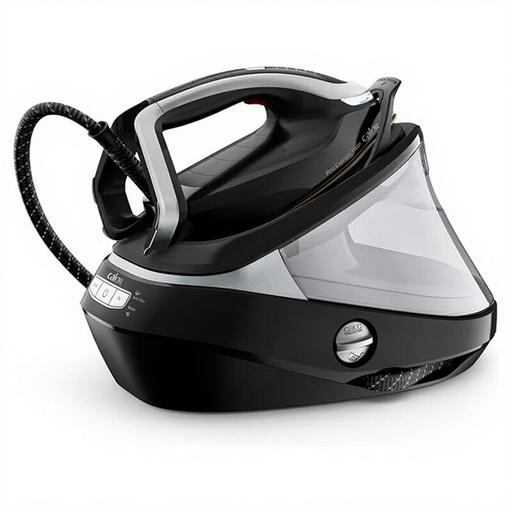 No image available
For consumers considering a steam generator for regular ironing as well; whether it’s suitable for a particular patch still depends on the patch instructions and garment care label.
Specifications stated in the product name: 3000 W, 1,2-l tank, 180 g/min continuous steam output and 800 g/min steam boost.
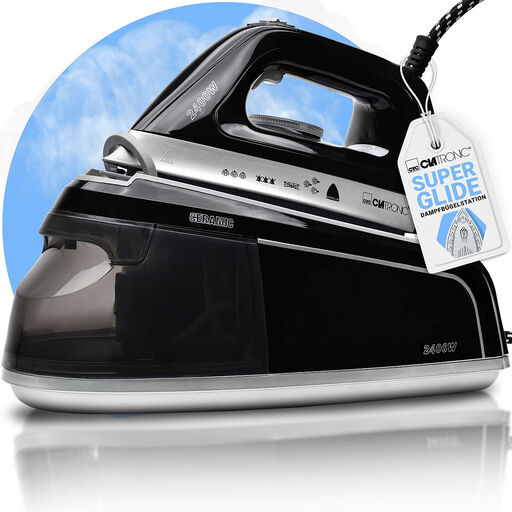 No image available
An option for consumers considering a steam generator for longer ironing sessions too. Make sure the temperature settings are compatible with the patch instructions.
Specifications stated in the product name: 3,5 bar steam pressure, 1,2-l tank, up to 80 minutes’ operating time and 2400 W.
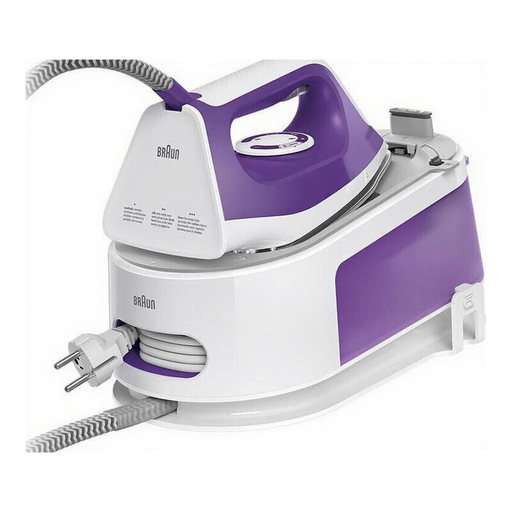 No image available
For consumers looking for a steam generator to tackle laundry in a shared flat too. If the patch instructions specify a particular temperature, check it against the appliance’s user manual.
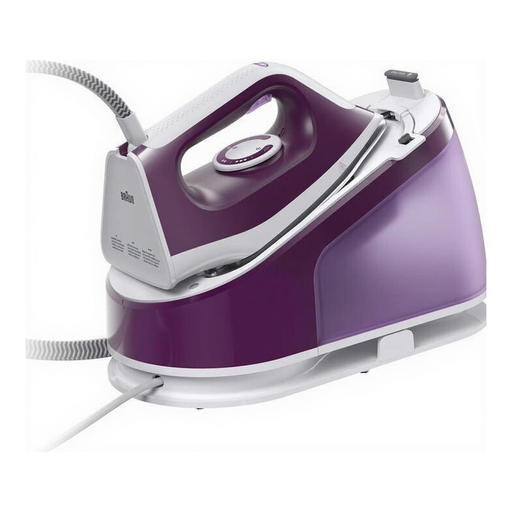 No image available
A steam generator for consumers who want to tackle laundry as well as patching. For patching, the specific instructions and garment care label are what matter.
Specifications stated in the product name: 1,7-l tank, 120 g/min continuous steam output and 3000 W.
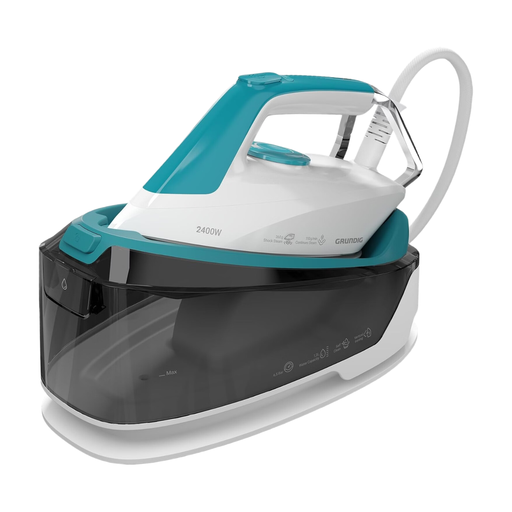 No image available
For consumers considering a steam generator for laundry in a shared flat too. Check the temperature controls and patch instructions before using the appliance to press on a patch.
Specifications stated in the product name: 2400 W, 6,5 bar, 110 g/min steam output, 360 g/min steam boost and a 1,2-l tank.
No, not as a general rule. In its instructions, MrPatch recommends switching off the steam and applying heat and pressure to the patch and fabric in line with their respective instructions. GINETEX Germany lists textiles that must not be ironed, or may only be ironed at a maximum of 120 °C without steam. Follow the instructions for your patch and the garment care label.
MrPatch recommends using a firm, heat-resistant surface and a thin protective cloth. Don’t move the iron back and forth while pressing. The time and heat depend on the instructions from the individual patch supplier; they aren’t universal settings for every appliance.
Follow the instructions for the exact model number. Philips describes different descaling methods for different product ranges and warns against opening a hot cap on the Easy De-Calc models covered in its guidance. Don’t apply this method to other brands without checking first.
When you buy as a consumer, goods ordered online generally come with a 14-day right to cancel. According to Verbraucherzentrale, your statutory rights if goods are faulty are separate from a voluntary manufacturer’s guarantee. The applicable terms and any exceptions should be checked for your specific case.
No. New mains-powered appliances placed on the market in Germany and covered by the Low Voltage Directive must meet the relevant conformity requirements; the directive applies to 50 to 1.000 V AC. The European Commission explains the scope of the directive, while the Bundesnetzagentur lists matters such as marking and product identification among the areas covered by market surveillance. This doesn’t mean an appliance is suitable for a particular patch.