
Lieferung heute & morgen

Qualitätsgarantie

Willkommens-Angebote freischalten: KOSTENLOSE Lieferung | Bis zu 80 % RABATT | Kostenlose 30-Tage-JoyPlus-Testphase
App herunterladen
A patio heater can make your patio, balcony or garden more comfortable to use on cooler evenings. But not every model is right for every outdoor space. If you focus only on wattage, design or a large coverage figure, you may overlook important details: how far the heat reaches depends on wind and seating distance, a high IP rating doesn’t guarantee safe positioning, and a fire pit needs more preparation than an electric heater.
This buying guide explains which technical details matter, common buying mistakes to avoid and which type of heater suits different needs.
A 2,000 or 3,000-watt heater can provide more heat than an 800-watt model. Outdoors, however, wind, open sides and greater distances all affect how warm it feels. Any coverage figure provided by the seller should therefore be treated as a guide, not a guarantee of even heat.
An infrared heater directs most of its heat towards a specific area. That’s useful for a seating area, but it won’t necessarily warm the whole patio. Position the heater as close as possible to your seating area, with the heat directed towards it.
The IP rating describes protection against solid objects and water. IP24, for example, indicates limited protection against water splashes, while IP65 indicates protection against dust and water jets from different directions. Neither rating means the heater can be fully submerged.
Even a heater with a higher IP rating should be stored somewhere dry after use, or at least protected from prolonged exposure to rain. Sockets, extension leads and outdoor connections also need suitable protection. Always follow the instructions supplied with the heater rather than relying on general marketing claims.
A garden fire pit, fire basket or wood-burning fire bowl provides warmth and atmosphere, but it needs suitable dry firewood, a fire-resistant surface and regular cleaning. You’ll also need to consider flying sparks, smoke and wind direction.
A fire pit with a spark guard reduces the risk of flying embers, but doesn’t eliminate it entirely. Before buying, check local rules, the distance required from buildings and neighbouring properties, and any restrictions in your building rules or tenancy agreement.
An electric heater is a good choice for a covered seating area with access to mains power, as there’s no fuel to store or ash to clear away. Infrared models usually direct the heat towards a specific area. A fan heater, by contrast, circulates warm air, which can lose its effect more quickly in windy conditions.
A fire pit provides heat without needing an electrical connection, but creates smoke and sparks and needs cleaning. In many cases, it’s unsuitable or not permitted on a balcony. If you’re renting, check your building rules first.
Look for:
You can estimate electricity costs by multiplying the power in kilowatts by the number of hours used and your electricity tariff. A 2,000-watt heater uses 2 kWh in one hour at full power. Actual costs may be lower if you use a lower setting, thermostat control or a timer.
For electric heaters, overheat protection, tip-over protection and automatic shut-off are useful safety features. Never cover the heater while it’s running, and keep it away from curtains, cushions, wood and other flammable materials.
For fire pits, useful essentials include a stable base, heat-resistant steel, a spark guard, a lid or cover, and a poker. Coatings can peel over time when exposed to high temperatures. This is normal wear and tear for many coated steel products, so bear it in mind when caring for your fire pit.
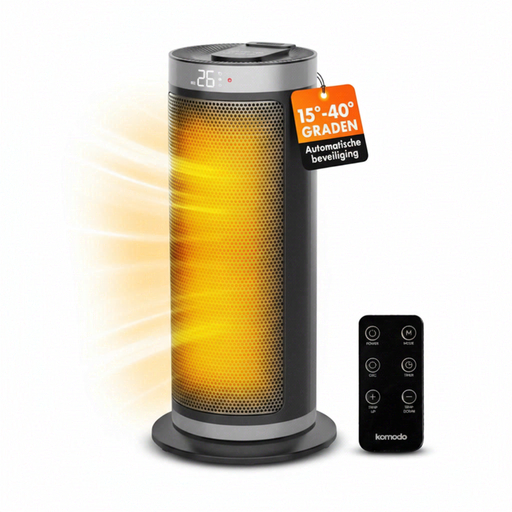
Why it suits this need: Three power settings, a thermostat, remote control and 90° oscillation make it easy to use in sheltered areas. The seller lists coverage of up to 25 m².
Adjustable power means you don’t have to run the heater constantly at full power. However, its stated coverage will be limited in open, windy areas.
750, 1500 and 2000 watts; LED display, Eco mode, remote control, overheat protection and tip-over protection.
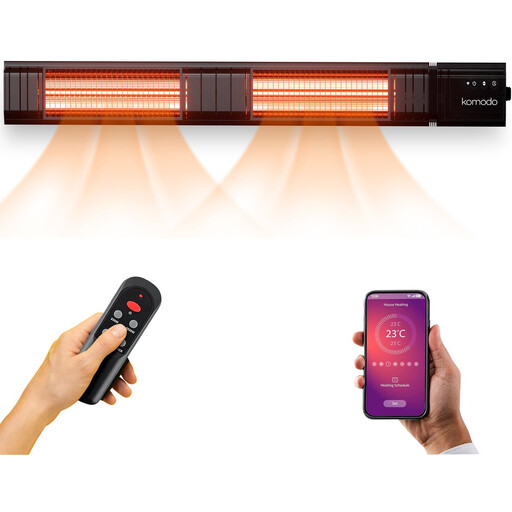
Why it suits this need: This heater is designed for people who want plenty of control and adjustment options. It offers nine heat settings, app and remote control, and a 180° swivel function.
The heat settings and timer make it easier to use the heater only when needed. IP65 means protection against dust and water jets, not submersion.
3000 watts, nine heat settings, infrared technology, a 24-hour timer and an IP65 rating.
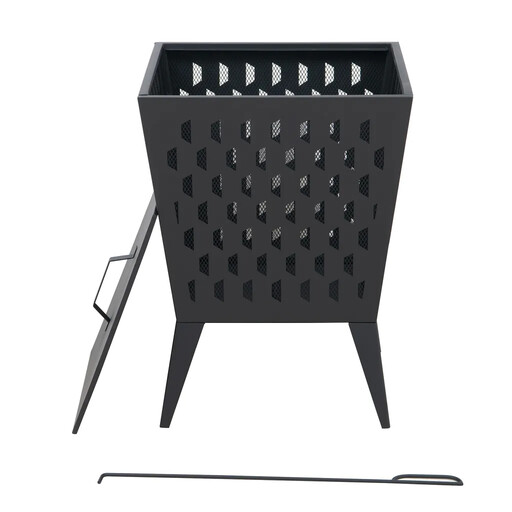
Why it suits this need: Measuring 46 × 46 × 61 cm, this compact fire pit is a good option if you’re looking for a wood-burning heat source for your garden or patio and are happy to tend the fire yourself.
A lid and poker are listed as included. You’ll still need a fire-resistant surface, and the fire must never be left unattended.
Powder-coated steel, four legs, ventilation opening, lid and poker.
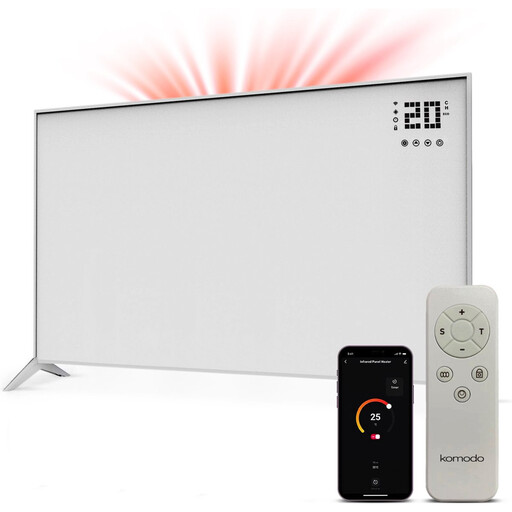
Why it suits this need: According to the product information, this 100 × 80 cm panel can be freestanding or wall-mounted, and is designed for areas of up to 20 m².
The mounting options, child lock and timer are clearly specified. The IP24 rating indicates protection against water splashes, but carefully check whether it’s suitable for a completely open, unprotected patio.
800 watts, Wi-Fi app, LED display, overheat protection, automatic shut-off, and wall or freestanding installation.
We’ve put together a complete, regularly updated list of products that meet these strict selection criteria and fully comply with the safety regulations applicable in the EU.
Consumption depends on the heater’s power and how long it runs. At full power, a 2,000-watt heater uses 2 kWh in one hour. With several power settings or thermostat control, actual consumption may be lower. For an accurate estimate, multiply the kilowatt-hours used by your current unit rate.
An infrared heater warms people and surfaces directly, so it’s often better suited to a defined seating area than a fan heater. However, strong winds reduce comfort with all outdoor heaters. A sheltered position, a suitable distance from the heater and an adjustable direction are more important than focusing on maximum power alone.
Lifespan depends on the materials, how often it’s used, how well it’s maintained and where it’s stored. Electric heaters should be kept somewhere dry and protected from damage. Steel fire pits can show wear from heat, moisture and coating damage. Regularly clearing away ash, letting the fire pit dry completely and storing it somewhere dry can help extend its life. Always follow the manufacturer’s instructions and use the product as intended.