
Lieferung heute & morgen

Qualitätsgarantie

Willkommens-Angebote freischalten: KOSTENLOSE Lieferung | Bis zu 80 % RABATT | Kostenlose 30-Tage-JoyPlus-Testphase
App herunterladen
A good patio umbrella transforms a balcony, patio, or garden into a personal oasis. But the selection is vast, and not every model lives up to its promise. An unsuitable purchase often leads to disappointment: the umbrella collapses at the first gust of wind, the fabric fades quickly, or handling it is more cumbersome than expected. As your Joybuy Product Recommendation Officer, I'll help you identify the typical pitfalls and make an informed decision.
Many buyers focus on appearance and price, overlooking crucial quality features. These three points most frequently lead to a bad purchase:
To avoid these pitfalls, you should check three core aspects before buying. These define the durability, safety, and functionality of your new patio umbrella.
The most important parameter for a patio umbrella is its protection against ultraviolet radiation. Look for certification according to a recognised standard, such as AS/NZS 4399. A UPF rating of 50+ is a reliable indicator here. It means that the fabric blocks more than 98% of UV rays. This is an objective quality feature that goes far beyond simply providing shade.
The robustness of an umbrella depends on the materials used.
The right type of umbrella depends on the location and your needs.
Based on these objective criteria, we have identified some models that are particularly suitable for specific user profiles.
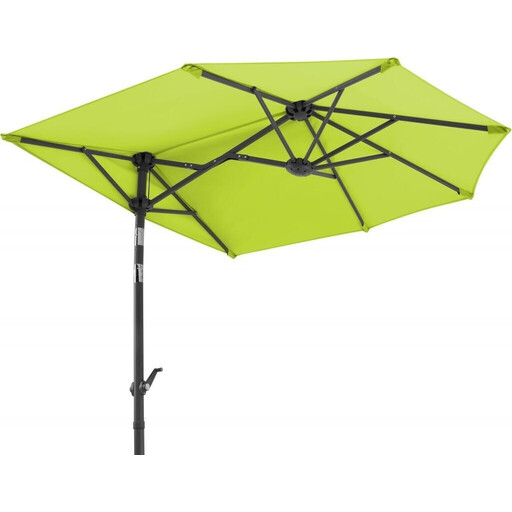
Why This Fits Their Persona: Ideal for narrow balconies or patios where a round umbrella would take up too much space. The semi-circular design allows for direct placement against the wall, maximizing usable area.
Its design as a half umbrella solves the space issue on balconies. The robust metal tilt joint and smooth crank mechanism bypass the pitfall of impractical operation in tight spaces.
According to the manufacturer, it offers certified UV protection 50+ per AS/NZS 4399. The powder-coated steel frame with a 38 mm pole diameter ensures stability.
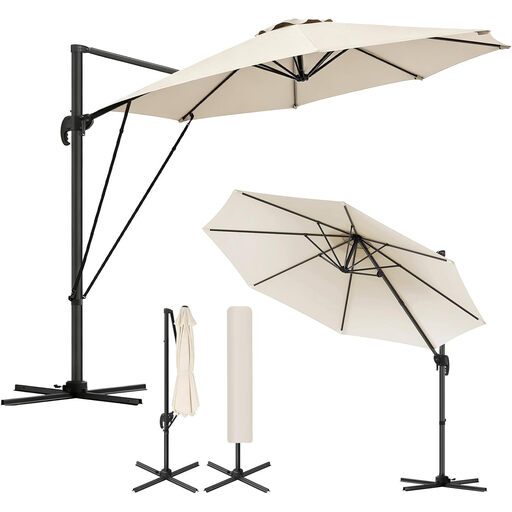
Why This Fits Their Persona: Perfect for anyone needing a large, uninterrupted shaded area for seating groups or play areas in the garden. The 360° rotation and tilt adjustment offer maximum flexibility throughout the day.
Addresses the pitfall of insufficient UV protection with a stated UPF 50+ rating. The robust construction of aluminium and iron with 8 ribs and a wind vent prevents instability.
The side pole (cantilever umbrella) creates an unobstructed area of approx. 7 m?. Operation via the foot pedal for rotation and the 5 tilt settings are extremely practical.
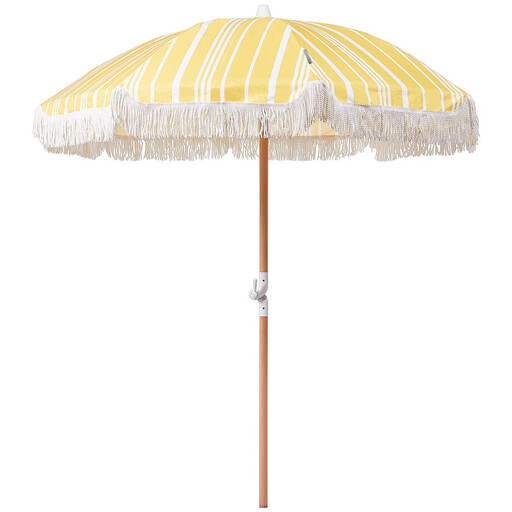
Why This Fits Their Persona: For those who want functional sun protection that also serves as a decorative element. Ideal for smaller seating areas or as a stylish shade provider next to a sun lounger.
Despite its decorative design, stability is not neglected. A sturdy wooden pole and reinforced fibreglass ribs prevent the pitfall of an unstable construction.
According to the manufacturer, the fabric offers a UV resistance of class 5 (ISO 105-B02). The tilt function allows for adjustment to the sun's position.
We've compiled a complete, up-to-date list of products that fully meet these strict selection criteria and relevant safety regulations.
The required weight depends on the size and type of the umbrella. As a rule of thumb: for a market umbrella up to 2.5 m in diameter, stands weighing 20–25 kg are often recommended. For larger umbrellas or a cantilever umbrella, at least 40 kg or more is necessary to compensate for the leverage. Always follow the specific recommendations of the manufacturer as stated in the product data.
A UV Protection Factor (UPF) of 50+ means that the fabric allows less than 1/50th (i.e., under 2%) of UV radiation to pass through. It therefore blocks more than 98% of harmful UVA and UVB rays. This is the highest protection factor awarded to textiles and offers reliable protection for the skin.
No, a patio umbrella should always be closed in windy conditions. Many manufacturers specify a maximum wind speed (e.g., 25 km/h) up to which the umbrella can be used safely. An open umbrella acts like a sail and can tip over, get damaged, or cause damage, even with a stable base. You should also close the umbrella whenever you leave it unattended.